

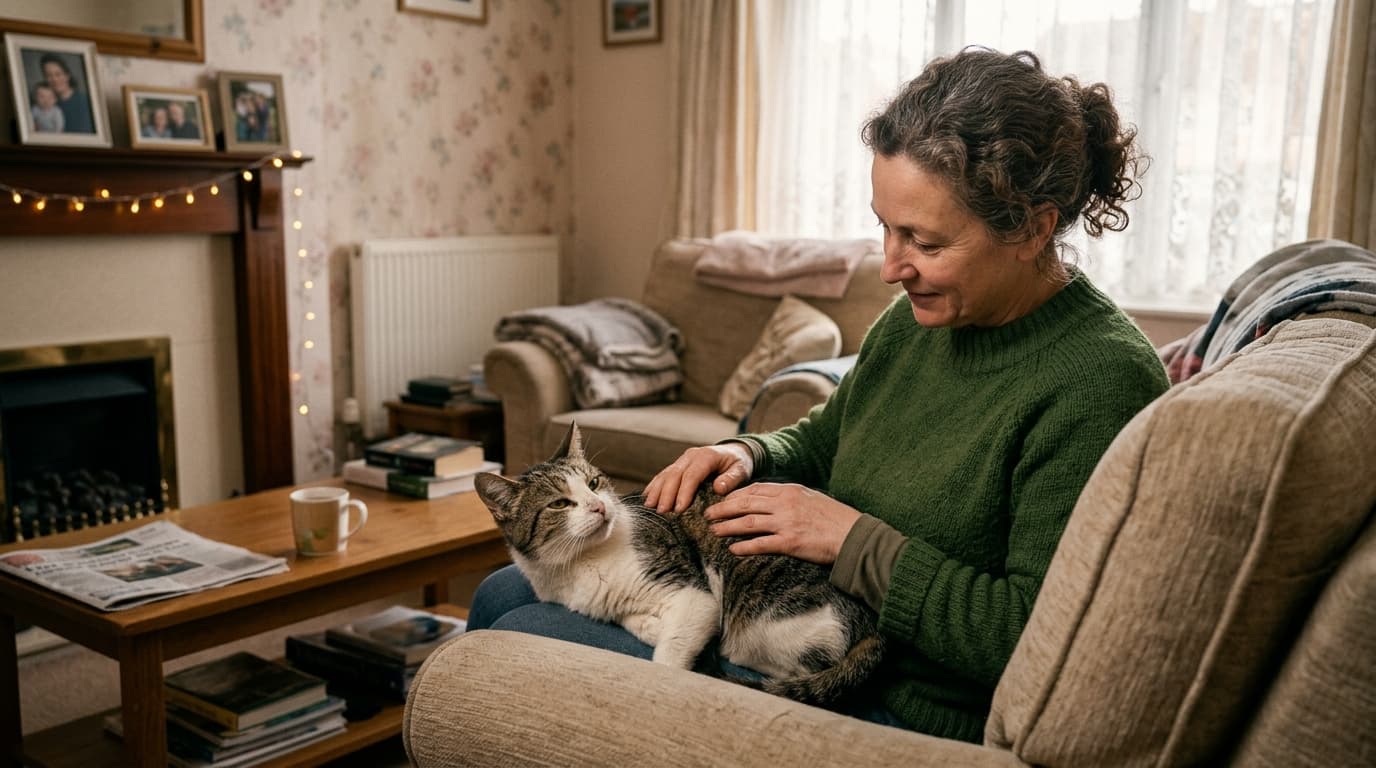
Weight and Muscle: The Home Signs That Matter Most
Alastair Greenway
BVM&S MRCVS
When an older pet slowly loses weight, it is the easiest thing in the world to put it down to age. "She's just getting on," we tell ourselves, "they get a bit lighter as they age." Sometimes that is true. But in a pet with kidney disease, gradual weight loss and the quiet wasting of muscle are among the most important signs there are, and they are exactly the signs most often dismissed. The scales and your own hands are a monitoring tool that the blood tests cannot replace, picking up a change in your pet's body that no single blood result will show you. The encouraging part is that this kind of monitoring is simple, free, and entirely within your power, and this guide shows you how to do it.
Why a dropping weight is a warning, not just ageing
In kidney disease, weight loss is not a harmless feature of growing old; it carries real meaning. Studies of cats with kidney disease have found that lower body weight and poorer body condition are associated with shorter survival, and that weight loss often begins even before the diagnosis is made and continues as the disease advances. So a pet quietly dropping weight is telling you something about how the disease is behaving, and catching that trend matters.
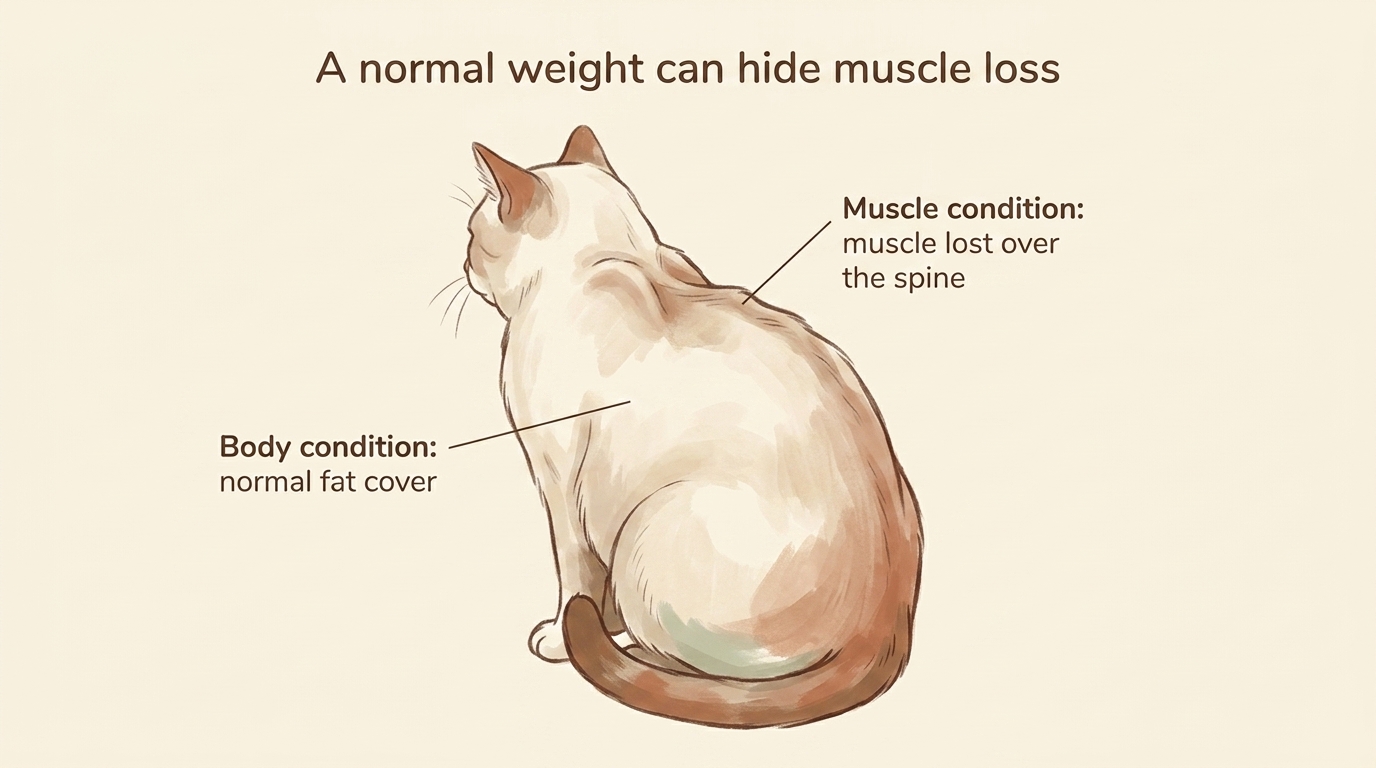
A second, subtler problem makes this even more important: muscle wasting. Chronic kidney disease, like several long-term illnesses, can cause a loss of lean muscle mass, a process related to what vets call cachexia, and it can happen even in a pet whose overall weight looks stable or who still carries some fat. Your pet can be losing precious muscle while the bathroom scales barely move, because fat is being maintained or the loss is masked. This is why "she's just old" is such a trap. The ageing pet who is "a bit thinner over her back" may in fact be losing muscle to her disease, which is a meaningful sign, not a cosmetic one. Learning to spot it is one of the most useful things an owner can do.
Body condition vs muscle condition: two different things
Here is a distinction that sounds technical but is genuinely useful once you grasp it: body condition and muscle condition are two different things, and you need to watch both.
Body condition is essentially about fat, how lean or how chubby your pet is overall, assessed on what vets call a body condition score. Muscle condition is about muscle specifically, how much lean muscle your pet has retained, assessed separately on a muscle condition score. The crucial point is that these two can move independently: a pet can have a perfectly normal body condition score, looking a reasonable weight, while being significantly muscle-wasted underneath. That is why simply glancing at whether your pet looks thin is not enough.
In practice, you assess muscle by feeling, not just looking, running your hands over the places muscle loss shows first: along the spine, over the skull and the bony ridges of the head, and across the shoulders and hips. In a muscle-wasted pet these feel less padded, more sharply bony, than they should. The WSAVA, a global veterinary body, publishes simple body condition and muscle condition charts that show you what to look and feel for, and your vet can show you how to assess your own pet. Getting into the habit of running your hands over these areas, not just eyeballing your pet, is how you catch muscle loss that the scales alone would miss.
Weighing at home, accurately
Alongside feeling for muscle, tracking your pet's actual weight at home is invaluable, because it turns a vague impression into a number you can follow, and it catches slow change long before it becomes obvious.
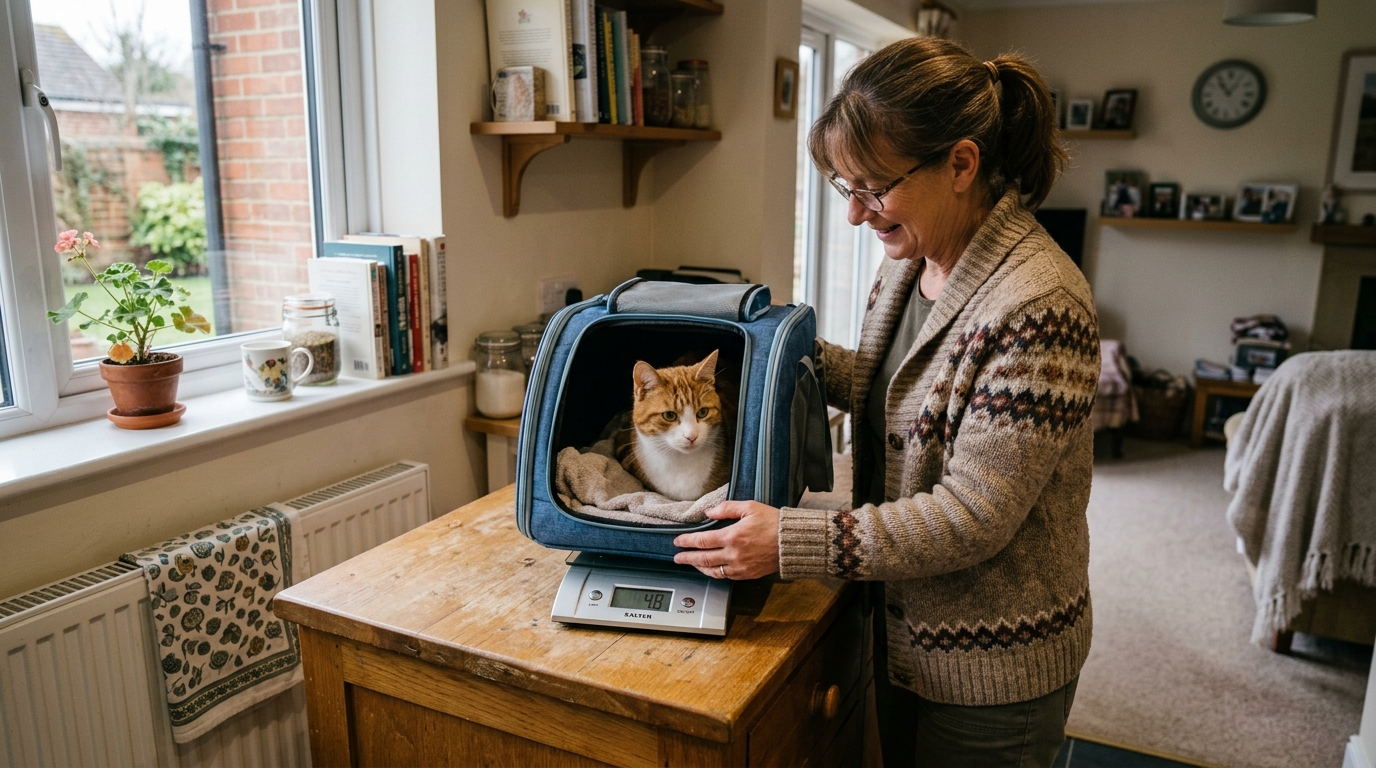
For cats and small dogs, ordinary bathroom scales are not precise enough to show the small changes that matter, so a better approach is to use baby scales or kitchen scales, or the simple weigh-the-carrier trick: weigh yourself holding your pet, then weigh yourself alone, and subtract, though for small pets a dedicated set of baby or pet scales is more reliable. The key to a meaningful trend is consistency: weigh on the same scales, in the same way, at roughly the same time, so that you are comparing like with like. How often depends on your pet and your vet's advice, but regularly enough to spot a trend, perhaps every week or two, works well for many. What counts as a meaningful change is smaller than people expect, especially in a small animal: in a cat of four or five kilograms, the loss of just a couple of hundred grams is a significant proportion of body weight, so even small drops are worth noting rather than dismissing.
Following the trend over time
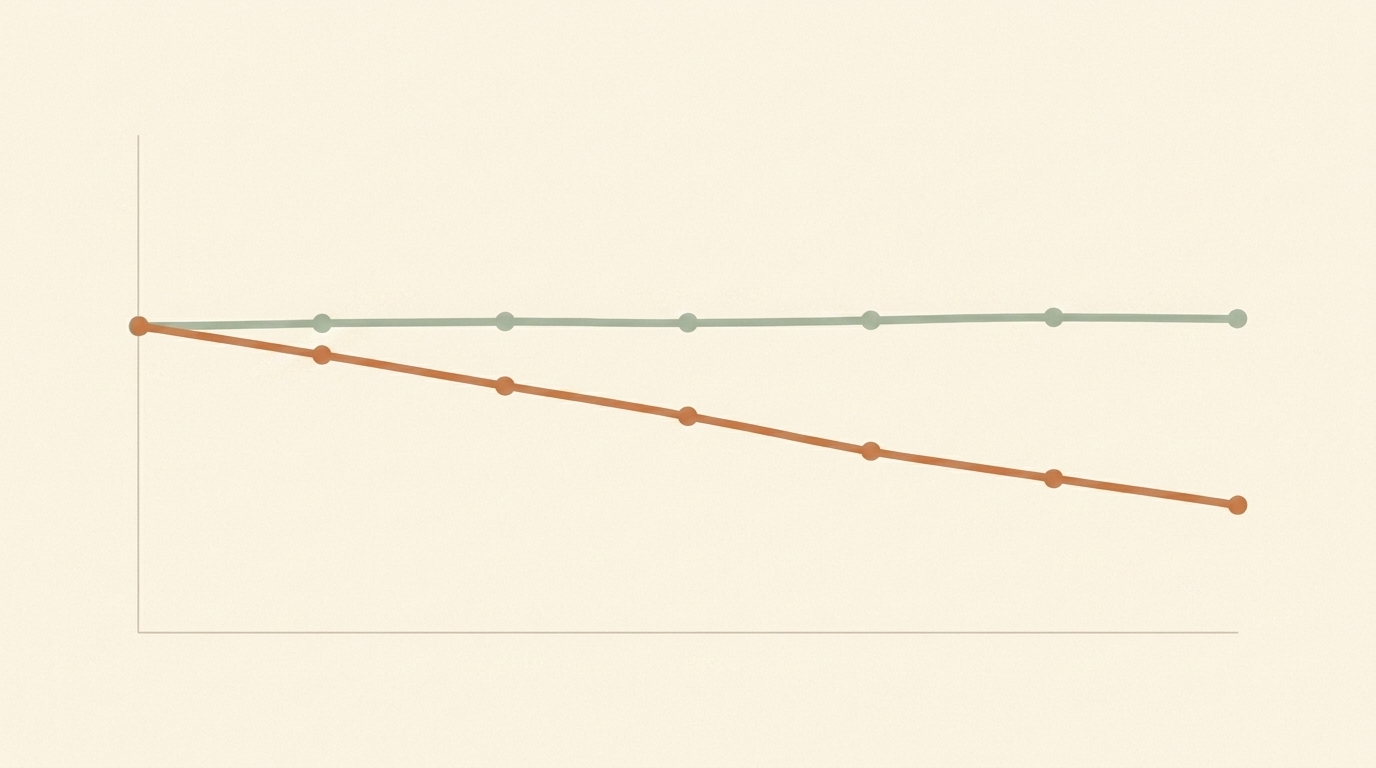
A single weight, like a single blood result, means little on its own; it is the trend over time that tells the story, so the real value comes from logging it. Note your pet's weight each time you check it, and, ideally, jot it down alongside how they are eating and any changes you have noticed, so the picture builds up together.
This is exactly the kind of record that makes our home tracker and bloodwork trend sheet useful: plotted over weeks and months, your pet's weight becomes a line you can actually see, holding steady, drifting down, or recovering, rather than a series of forgotten numbers. And it becomes genuinely valuable at appointments, because bringing your vet a clear record of your pet's weight trend, taken at home where your pet is relaxed, gives them information they simply cannot get from a single weight on the clinic scales. It feeds directly into the bigger monitoring picture that runs through kidney care, and it is one of the most useful things you can walk into a consultation holding.
When the trend turns downward
So what should you do when the trend turns downward, or you feel muscle slipping away? Treat it as useful early information and act on it, rather than waiting or assuming it cannot be helped.
A genuine, sustained fall in weight, or a clear loss of muscle, is worth a conversation with your vet, because it can prompt a helpful review of several things. It may mean your pet is not eating enough or is struggling with the renal diet, which our guide to getting a cat to eat the renal diet addresses, or that they have lost their appetite to nausea, which, as our guide to comfort medications explains, is very treatable, and treating it can protect both eating and weight. It may also point to one of the supporting problems of kidney disease, such as low potassium, anaemia, or acidity in the blood, which our guide to those issues describes and which can themselves drive weakness and wasting. A turning weight trend is not a dead end; it is a signal that opens up levers your vet can pull, from appetite support to diet adjustments to correcting an underlying imbalance.
The habit to build from all this is simple, and it takes only a few minutes: weigh, feel, and log, once a month or so, or as your vet advises. Weigh your pet consistently, run your hands over their spine, head, and shoulders to feel for muscle, and write the results down so the trend is there to see. Done regularly, this turns you into the early-warning system the blood tests cannot be, catching the changes that matter while there is the most that can be done about them, and giving your pet the benefit of being watched by the person who knows them best.
References
- Parker VJ, Freeman LM. Association between body condition and survival in dogs with acquired chronic kidney disease. Journal of Veterinary Internal Medicine, 2011.
- Freeman LM. Cachexia and sarcopenia: emerging syndromes of importance in dogs and cats. Journal of Veterinary Internal Medicine, 2012.
- Boyd LM, Langston C, Thompson K, Zivin K, Imanishi M. Survival in cats with naturally occurring chronic kidney disease (2000-2002). Journal of Veterinary Internal Medicine, 2008.
- Freeman LM, et al. Evaluation of weight loss over time in cats with chronic kidney disease. Journal of Veterinary Internal Medicine, 2016.
- WSAVA Global Nutrition Committee. Body Condition Score and Muscle Condition Score assessment tools. World Small Animal Veterinary Association.
See where your pet stands today
Tracking is the other half of managing kidney disease. Drop in the latest bloods to see the IRIS stage, then follow the trend as treatment settles in.
Check the IRIS stageYou're not doing this alone
Compare treatment journeys and talk to owners managing kidney disease. Free to join.
Join PetsLikeMine