

The Medications Used in IVDD (and the Steroid Question)
Alastair Greenway
BVM&S MRCVS
When a dog is treated for IVDD, especially without surgery, medication does a lot of the quiet work alongside the rest. Good pain relief is not a luxury here; it keeps your dog comfortable, helps them stay still enough to heal, and makes the long weeks of recovery bearable for you both. This guide explains the medicines commonly used in IVDD, what each one actually does in plain terms, and it tackles head-on a question many owners ask, often because they have read older advice: what about steroids? The current answer to that has changed, and the evidence behind the change is now strong enough to explain properly. None of this is a prescribing guide, your vet chooses and doses the medicines, but knowing the modern approach helps you understand the plan and spot when something is not working.
How vets treat the pain today
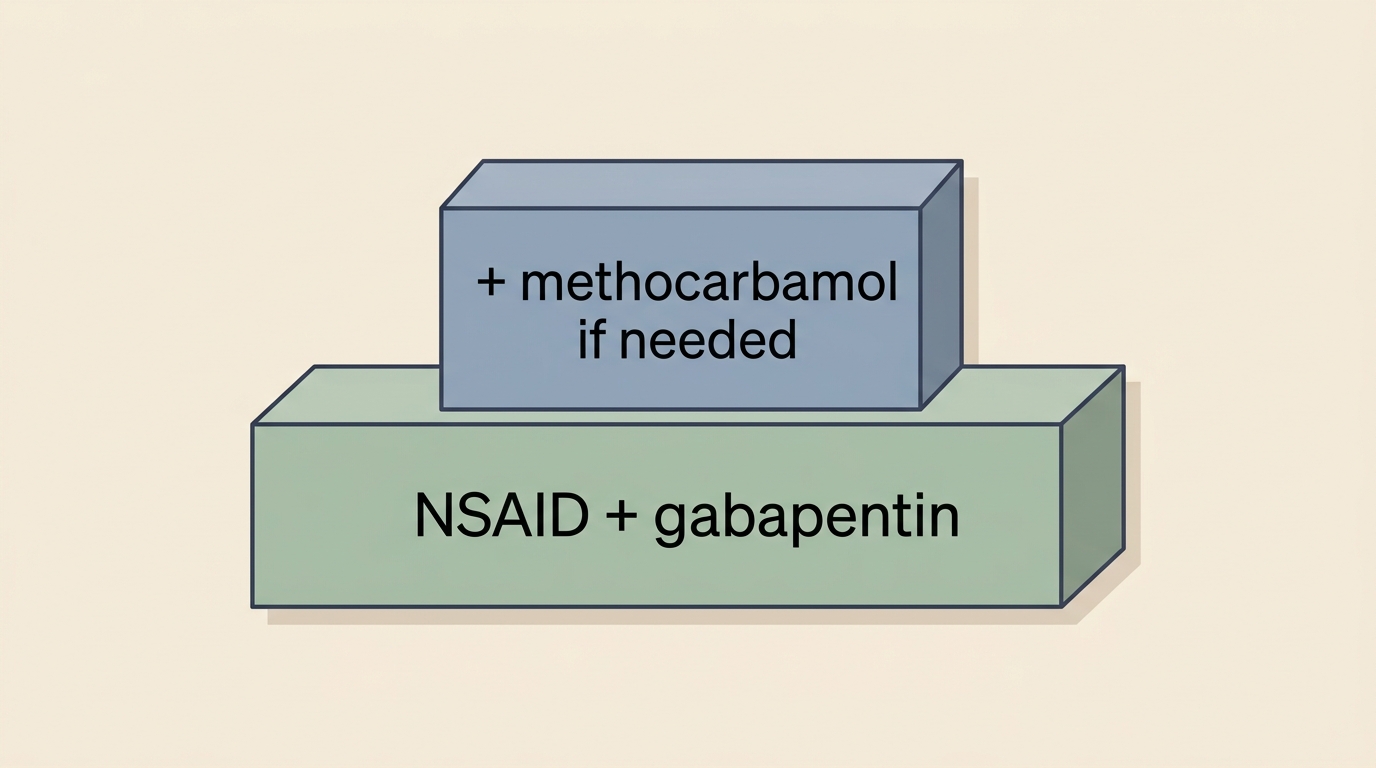
Pain relief in IVDD today is built around a small, well-chosen combination rather than a single drug, an approach vets call multimodal, meaning several medicines that work in different ways and complement each other. The modern first-line combination is an anti-inflammatory painkiller, usually with gabapentin added, and sometimes a muscle relaxant called methocarbamol. Each has a distinct job, and it helps to know what each is for.
At the centre of it sits the anti-inflammatory, a non-steroidal anti-inflammatory drug, or NSAID, such as meloxicam, carprofen, or robenacoxib. A herniated disc causes inflammation around the spinal cord, and that inflammation is a major source of both pain and further irritation, so an NSAID does double duty: it relieves pain and it dampens the inflammation itself. This is why an NSAID is the foundation of treatment for most dogs.
Gabapentin is the second common piece, and it targets a different kind of pain. Spinal problems often cause nerve pain, the burning, tingling, shooting discomfort that comes from irritated or compressed nerves, and gabapentin is used to calm exactly that nerve-related pain, which ordinary painkillers handle less well. Adding it to an NSAID covers two different pain pathways at once, which is the whole point of the multimodal idea. A practical note: gabapentin commonly causes some drowsiness, especially at first, which is expected rather than alarming and often settles, though you should mention it to your vet if it is marked.
Methocarbamol is the third, used in some dogs but not all. It is a muscle relaxant, and its job is to ease the painful muscle spasms that can grip the back around an injured disc. It tends to be added when a dog has noticeable muscle spasm rather than given routinely, so not every dog will be on it. Together, these make up the modern toolkit: an NSAID for inflammation and pain, gabapentin for nerve pain, and methocarbamol where there is spasm.
So what about steroids?
Now the question that causes real confusion, because the advice has genuinely changed and a lot of older information is still floating about: should a dog with IVDD be on steroids? For many years, steroids, corticosteroids such as prednisolone or dexamethasone, were a reflexive go-to for spinal problems, on the logic that they powerfully reduce inflammation. So it is entirely understandable that owners, or even older sources, still expect them. But the modern veterinary position has moved firmly away from this, and the evidence behind that shift is worth knowing, because it is more solid than a mere change of fashion.
When high-dose steroids were finally put to a proper test for acute spinal cord injury, the results did not support them. In a placebo-controlled, randomised, blinded trial, the strongest kind of study there is, high-dose methylprednisolone given to dogs paralysed by disc herniation showed no benefit over a dummy treatment. There is, at present, no proven medical drug that reverses the secondary damage to the spinal cord, which is precisely why prompt, appropriate treatment and, where indicated, surgery matter more than any injection.
Worse, steroids in this setting carry real harm rather than being merely unhelpful. Dachshunds given high-dose steroids around spinal surgery suffered significantly more gastrointestinal complications and needed more gut-protective medication than those that did not. High doses of dexamethasone in dogs with acute spinal injury have been linked to fatal perforation of the bowel, and there is evidence that steroid use is associated with poorer outcomes, reduced quality of life, and a higher rate of recurrence than NSAIDs in dogs managed without surgery. Taken together, the lack of proven benefit and the real risk of harm are why the modern approach has moved firmly to the NSAID-led pain relief described above.
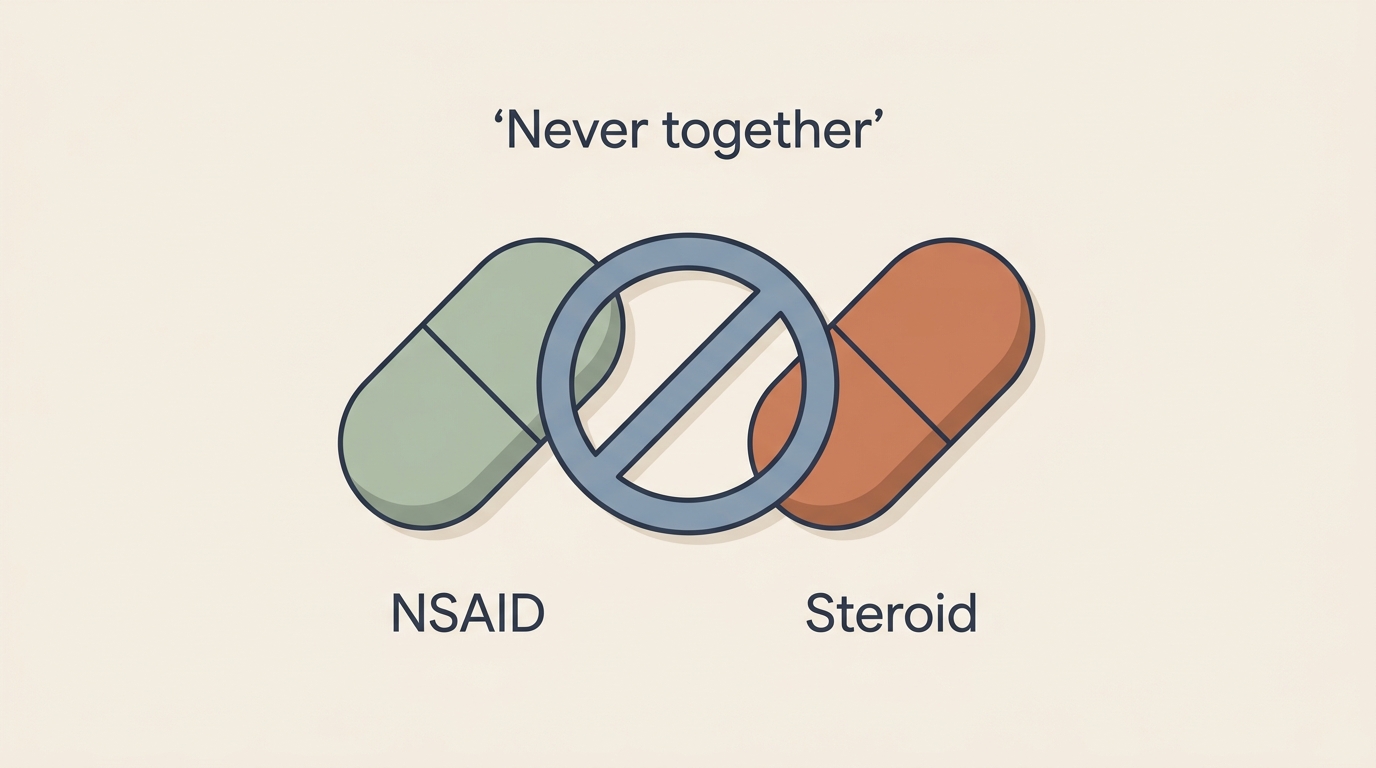
There is one rule in this area that matters more than any other, and it is an absolute one: steroids and NSAIDs must never be given together. Combining the two dramatically raises the risk of serious harm, particularly severe ulceration and bleeding in the gut. This is so important that it shapes practical decisions: if a dog is on an NSAID and a vet ever needs to switch to a steroid, or vice versa, there has to be a washout gap between them, with neither given in the meantime. For you as an owner, the safe rule is simple: never add anything to your dog's prescribed medication without your vet's say-so, and never, ever give a steroid alongside an NSAID. If you have ever wondered why your vet did not put your paralysed dog on steroids, this is the answer, and it reflects good, up-to-date medicine, not a gap in care.
Where tramadol fits in
One more medicine deserves a frank mention, because it is commonly prescribed and owners often ask about it: tramadol. Tramadol is an opioid-like painkiller that has been widely used in dogs for years, and you may well come across it. The up-to-date picture, though, is that its usefulness in dogs is more doubtful than once thought. When tramadol was tested properly in dogs, in one randomised trial in dogs with osteoarthritis pain it provided no detectable benefit over placebo. The likely reason is a quirk of canine biology: dogs do not reliably convert tramadol into the active, strongly pain-relieving form that it becomes in people, so its effect can be weak and very variable from dog to dog. As a result, it is no longer regarded as a reliable mainstay, and tends to feature, if at all, as an add-on in particular situations rather than a first choice. This is not to say it is never used, but if your vet does not reach for tramadol, or moves away from it, that reflects the current evidence rather than a gap in your dog's care. The NSAID-and-gabapentin foundation is the more dependable approach.
Living with the medication
Beyond knowing what the drugs are, a few practical points make the day-to-day of medicating an IVDD dog go more smoothly, especially through the weeks of crate rest that conservative recovery involves, as our crate-rest guide describes. Consistency matters most: give the medicines exactly as prescribed, at the right doses and times, and crucially do not stop them early just because your dog seems brighter. A dog that feels comfortable because the pain relief is working can seem recovered while the disc is still healing, and stopping the medication too soon can let pain and inflammation flare back. Complete the course as your vet directs, and let them guide any reduction.
Give the medicines with food where advised, particularly NSAIDs, which are gentler on the stomach taken that way, and keep an eye out for signs a drug is not suiting your dog. With NSAIDs in particular, vomiting, diarrhoea, a loss of appetite, or black, tarry stools are signals to stop the drug and contact your vet, as they can indicate stomach upset or ulceration. More generally, unusual drowsiness beyond the mild gabapentin effect, wobbliness, or any reaction that worries you is worth a call. And one rule bears repeating because it is the most important safety point for any owner: never give human painkillers to your dog. Medicines such as ibuprofen and paracetamol, and others from the bathroom cabinet, can be highly toxic, even fatal, to dogs, even in a single tablet for a small dog, so pain relief should only ever come from what your vet has prescribed.
Modern IVDD pain relief rests on an anti-inflammatory NSAID, usually with gabapentin for nerve pain and sometimes methocarbamol for muscle spasm, a combination that is both effective and, used properly, reasonably safe. Steroids, once the automatic choice, are no longer first-line, are not supported by the evidence for this purpose, must never be combined with an NSAID, and their absence from your dog's plan is a sign of up-to-date care, not a deficiency. If you ever find yourself wondering why your dog is on one medicine and not another, or whether something can be added, that question belongs with your vet, who can explain the plan and keep the combination safe, and our guides to conservative management and crate rest fill in how the medication fits the wider recovery.
References
- Olby NJ, Moore SA, Brisson B, Fenn J, Flegel T, Kortz G, Lewis M, Tipold A. ACVIM consensus statement on diagnosis and management of acute canine thoracolumbar intervertebral disc extrusion. Journal of Veterinary Internal Medicine, 2022;36(5):1570-1596.
- Olby NJ, Muguet-Chanoit AC, Lim J-H, et al. A placebo-controlled, prospective, randomized clinical trial of polyethylene glycol and methylprednisolone sodium succinate in dogs with intervertebral disk herniation. Journal of Veterinary Internal Medicine, 2016;30(1):206-214.
- Boag AK, Otto CM, Drobatz KJ. Complications of methylprednisolone sodium succinate therapy in Dachshunds with surgically treated intervertebral disc disease. Journal of Veterinary Emergency and Critical Care, 2001;11(2):105-110.
- Levine JM, Levine GJ, Boozer L, et al. Adverse effects and outcome associated with dexamethasone administration in dogs with acute thoracolumbar intervertebral disk herniation: 161 cases (2000-2006). Journal of the American Veterinary Medical Association, 2008;232(3):411-417.
- Toombs JP, Collins LG, Graves GM, Crowe DT, Caywood DD. Colonic perforation in corticosteroid-treated dogs. Journal of the American Veterinary Medical Association, 1986;188(2):145-150.
- Mann FA, Wagner-Mann CC, Dunphy ED, et al. Recurrence rate of presumed thoracolumbar intervertebral disc disease in ambulatory dogs with spinal hyperpathia treated with anti-inflammatory drugs: 78 cases (1997-2000). Journal of Veterinary Emergency and Critical Care, 2007;17(1):53-60.
- Budsberg SC, Torres BT, Kleine SA, Sandberg GS, Berjeski AK. Lack of effectiveness of tramadol hydrochloride for the treatment of pain and joint dysfunction in dogs with chronic osteoarthritis. Journal of the American Veterinary Medical Association, 2018;252(4):427-432.
- KuKanich B, Papich MG. Pharmacokinetics of tramadol and the metabolite O-desmethyltramadol in dogs. Journal of Veterinary Pharmacology and Therapeutics, 2004;27(4):239-246.
Sister tool · Sightline
Track whether treatment is working
Sightline, a separate ConciergeVet tool, runs a short weekly check-in built on validated pain and mobility instruments, turns it into a single Sightline Score you can watch trend over weeks rather than judge on one bad day, and produces a report you can bring to your vet.
A written log, or our printable trackers, does much the same job.
See how Sightline tracks treatmentTrack the recovery, day by day
Recovery from a disc injury is all about the trend. Log the daily milestones through crate rest and rehab so you can see real progress, not just good and bad days.
Open the Recovery TrackerYou're not doing this alone
Compare treatment journeys and talk to owners managing IVDD. Free to join.
Join PetsLikeMine