

Suspected Poisoning: What to Do and Who to Call
Alastair Greenway
BVM&S MRCVS
If you're reading this because you think your pet has just eaten or touched something it shouldn't have, don't spend long here. The single most important thing is to phone your vet or a poisons line now, before you do anything else and without waiting to see whether your pet seems unwell. With a lot of poisons, the early window, before any symptoms show, is exactly when treatment works best, and a quick phone call is what turns a frightening moment into a manageable one.
This piece is deliberately short and practical. It tells you who to call, what to have ready, and, just as importantly, what not to do, because some well-meaning home responses do real harm. It is not a treatment guide, because the right action depends entirely on what your pet has been exposed to, how much, and how long ago, and only a vet or a poisons specialist can weigh that for your pet.
Step one: call, straight away
You have two good options, and either is right:
- Your own vet, or their out-of-hours emergency service. This is usually the first call. They know your pet, and they can tell you whether to come in immediately and what to do in the meantime.
- Animal PoisonLine, the UK's 24-hour telephone service for owners, run by the Veterinary Poisons Information Service (VPIS). It's a paid service, but it exists precisely for this moment and can tell you whether what your pet has had is a genuine emergency or not, which can save an unnecessary panic-trip or catch a real emergency early. The number is 01202 509000.
Don't agonise over which to ring first. If you have an emergency vet, call them. If it's the middle of the night and you want fast, specialist triage, the poisons line is there. The mistake isn't calling the "wrong" one, the mistake is not calling at all, or waiting.
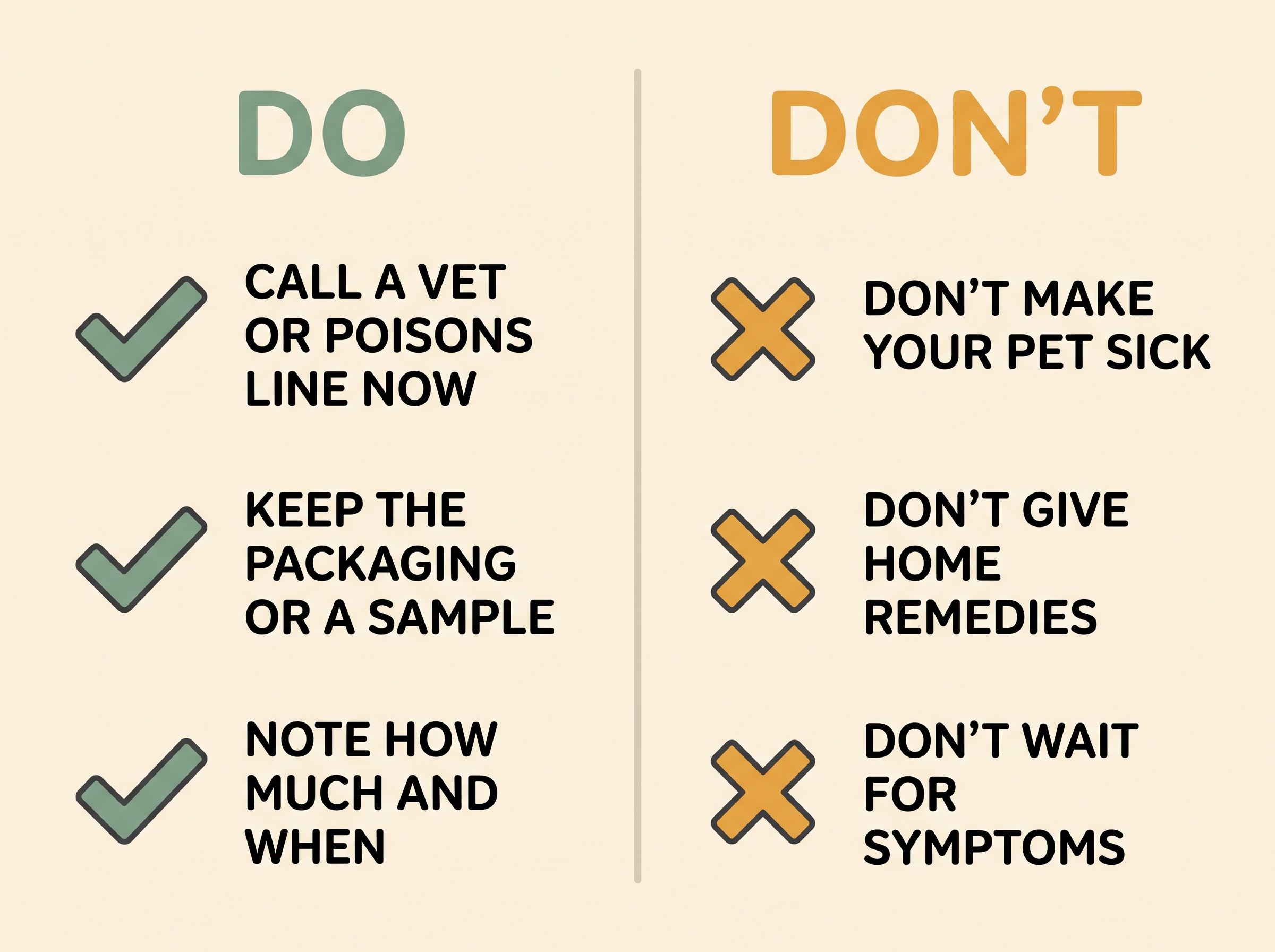
Don't wait for symptoms. This is worth repeating because the instinct to "see how they go" is so strong. With many poisons, by the time a pet looks ill the damage is already underway, and the treatment that could have helped is less effective. If you have a genuine reason to think your pet has been exposed, act on the suspicion, not on the symptoms.
Step two: have this information ready
Whoever you call, you'll help them help your pet if you can tell them:
- What your pet was exposed to, as precisely as possible. Keep the packaging, the plant, or a sample of whatever it was, because the exact product name, active ingredient or plant species changes everything.
- How much, as best you can estimate. "Possibly up to half a 200g bar" is far more useful than "some chocolate".
- When it happened, or when you last saw your pet definitely fine.
- Your pet's details: rough weight, age, breed or type, and any existing health conditions or medicines.
- Any signs you've noticed, and when they started.
If you can gather the packaging while someone else makes the call, do, but don't let hunting for information delay the phone call itself. Ring first, gather as you talk.
What not to do
This is the part where good intentions can go wrong, so please read it even in a hurry.
- Do not try to make your pet sick. Making a dog or cat vomit at home, whether with salt, mustard, washing soda or anything else, is dangerous and can do serious harm, and for some poisons vomiting makes things worse, not better. Only ever make a pet sick if a vet has specifically told you to, and by the method they specify.
- Do not give any home remedy. No milk, no bread, no oil, no salt water, no giving your pet anything at all unless a professional has told you to. Home remedies can delay real treatment and sometimes cause additional harm.
- Do not give activated charcoal or any medicine on your own. These have a place in professional treatment but are not safe to guess at, and the wrong use can cause problems of its own.
- Do not wait to see if it passes. Covered above, but it's the commonest and costliest mistake.
- Do not put yourself at risk. If the poison is a chemical spill or fumes, don't expose yourself while helping, and mention any risk to whoever you call.
If your pet has got something on its coat or paws rather than eaten it (a chemical, a spot-on product, tar), the same rule applies: call for advice before you do anything, because the wrong washing product or method can make it worse, and a pet grooming a contaminated coat can then swallow the substance.
Step three: follow the advice, and go in if told to
Once you've spoken to your vet or the poisons line, do exactly what they advise. If they say bring your pet in, go straight away, and take the packaging or sample with you. If they say monitor at home, ask precisely what to watch for and when to call back, and don't hesitate to ring again if anything changes or worsens. It is always better to make a second call than to sit at home worrying.
Prevention is the real answer
The best poisoning is the one that never happens. Once this moment has passed, and your pet is safe, it's worth going through your home with fresh eyes and moving the dangerous things out of reach, because a scare is a powerful prompt. Our companion guide, everyday poisons: a quick reference, lists the common household dangers, from chocolate and xylitol to the lilies that are lethal to cats, and the simple habits that keep them away from your pet.
Detailed, poison-by-poison emergency management, the specifics of decontamination and treatment for particular substances, belongs in dedicated emergency guidance, which we'll cross-link as our Emergencies content develops. For this moment, the whole message fits in one line: if you suspect poisoning, don't wait and don't self-treat, phone your vet or a poisons line now. Keep those numbers somewhere you can find them in a hurry, because the time to look them up is before you ever need them, not during.
References
- Veterinary Poisons Information Service (VPIS) / Animal PoisonLine. 24-hour advice for pet owners.
- NOAH Compendium. Veterinary Poisons Information Service.
- PDSA / Blue Cross / Dogs Trust / Cats Protection, owner guidance on suspected poisoning and "do not induce vomiting".
Keep track of how your pet is doing
The owners who cope best are the ones who notice changes early. A simple health log shows you what is working, and what is not, before the next vet visit.
Start tracking, freeYou're not doing this alone
Compare treatment journeys and talk to owners managing staying well. Free to join.
Join PetsLikeMine