

Everyday Poisons: A Quick Reference for Dog and Cat Owners
Alastair Greenway
BVM&S MRCVS
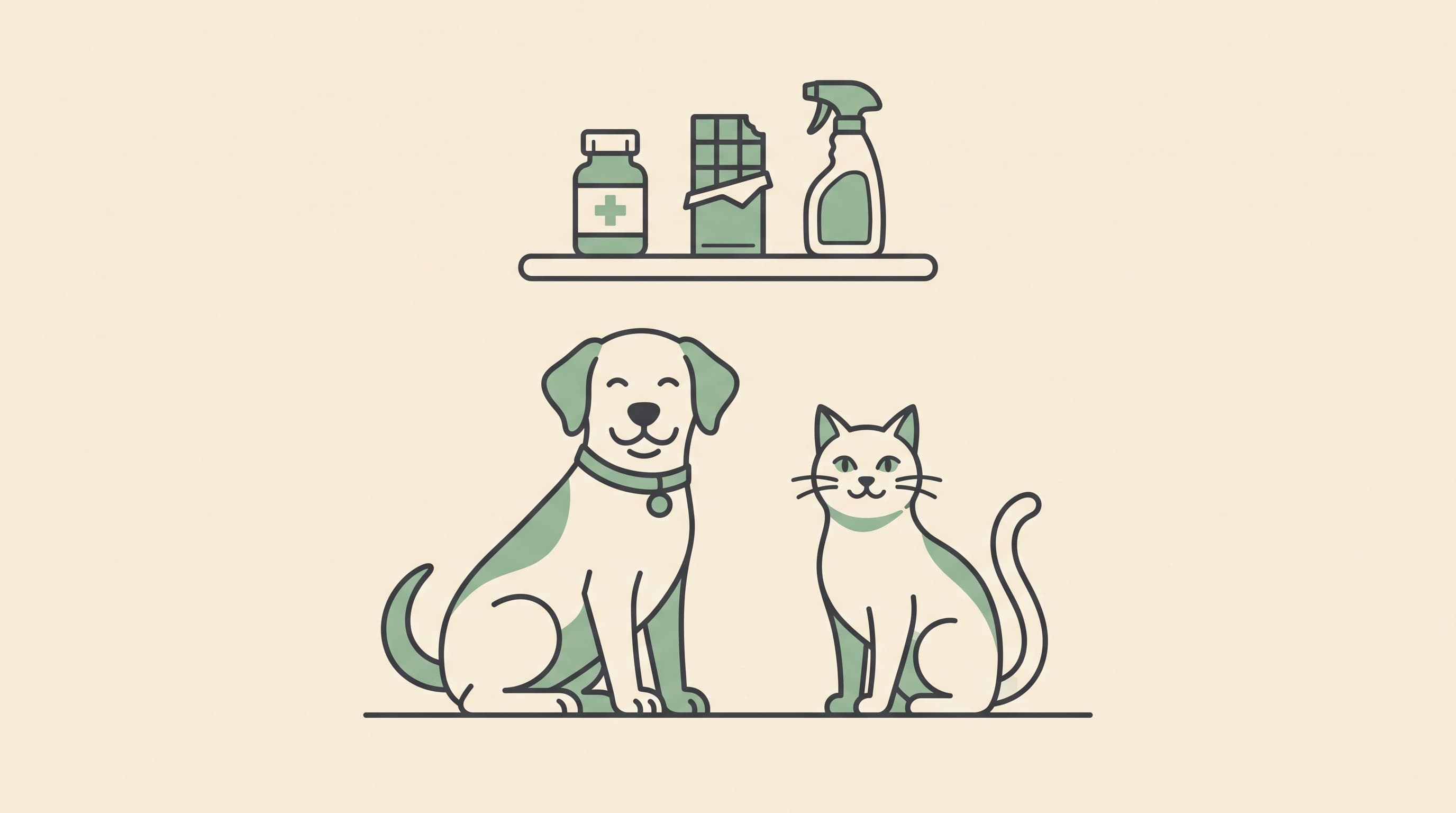
Most pet poisonings don't involve anything exotic. They involve ordinary things, in ordinary homes, that owners simply didn't know were dangerous: a dropped square of chocolate, a sugar-free chewing gum, a bunch of supermarket lilies on the kitchen table. The good news is that almost all of it is preventable once you know what to watch for, and that's exactly what this piece is: a plain "what's dangerous in my home" reference so you can keep the risky things out of reach before anything happens.
Two things to be clear about before the list. First, this is a prevention guide, not a treatment guide. It tells you what's dangerous and how to keep your pet away from it. It does not tell you what to do if your pet has already eaten something, because the right response depends entirely on what, how much, and how long ago, and that's a phone call to make, not a decision to guess at. If you think your pet has eaten something now, don't read on, go straight to our companion piece suspected poisoning: what to do and who to call and phone your vet or a poisons line. Second, this is not an exhaustive list. It covers the common, serious household poisons every owner should know; there are many more, so when in doubt, always check rather than assume something's safe.
The ones every owner should know
Chocolate (dogs especially)
Chocolate contains theobromine, a stimulant that dogs process far more slowly than we do, so it builds up to toxic levels (VPIS). The darker the chocolate, the more theobromine, so dark and cooking chocolate are the most dangerous, milk chocolate less so, and white chocolate contains very little. It's a classic Christmas and Easter problem: advent calendars, selection boxes, and foil eggs left within reach. Prevention: keep all chocolate well out of reach, and be extra vigilant at those times of year and with children who share treats. Cats are affected too but rarely eat it.
Xylitol (birch sugar) (dogs)
This is one many owners have never heard of, and it's genuinely dangerous. Xylitol, an artificial sweetener also labelled as birch sugar, is in a lot of sugar-free products: chewing gum, some peanut butters, sugar-free sweets, some baked goods, and even some medicines and toothpastes. In dogs it can cause a rapid, dangerous drop in blood sugar and, at higher doses, liver damage (VPIS). Because it's an ingredient rather than an obvious "food", it hides in plain sight. Prevention: check labels on anything "sugar-free", never give human sugar-free products or peanut-butter treats without checking, and keep handbags (a common gum stash) out of reach.
Grapes, raisins, sultanas and currants (dogs)
Grapes and their dried forms, including in mince pies, Christmas cake, hot cross buns and flapjacks, can cause kidney failure in dogs, and the tricky, frightening part is that the toxic dose is unpredictable: some dogs eat a lot and are fine, others are seriously harmed by a small amount, and we can't reliably tell in advance (VPIS). Because you can't predict it, every ingestion is treated as potentially serious. Prevention: treat all grapes, raisins and raisin-containing baked goods as off-limits, and remember the hidden sources in cakes and cereal bars.
Lilies (cats): a lethal, cat-specific danger
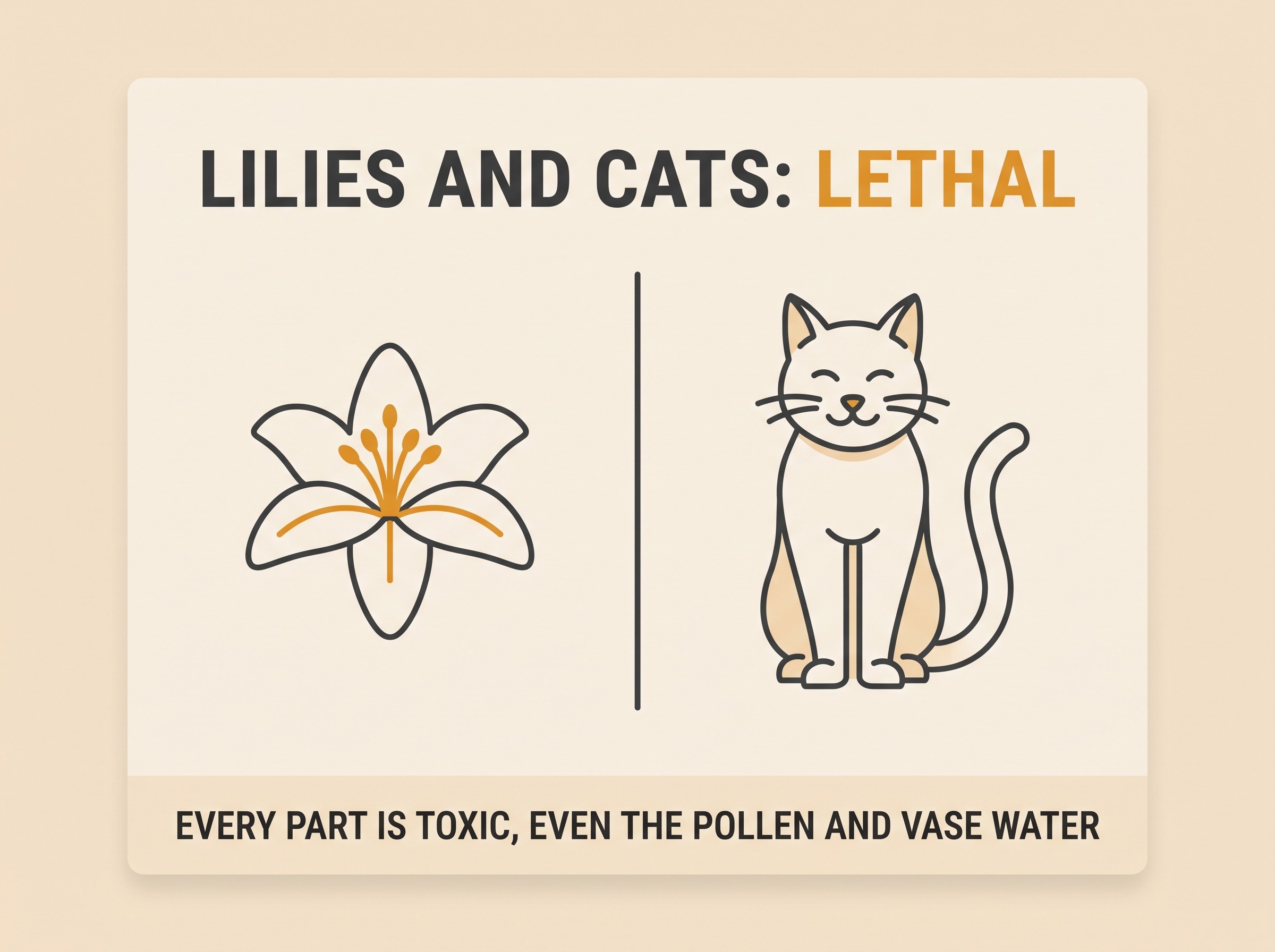
This one deserves its own alarm, because it's uniquely dangerous to cats and far too few owners know it. True lilies (Lilium species) and daylilies (Hemerocallis) can cause fatal kidney failure in cats, and the danger is extraordinary: every part of the plant is toxic, the petals, leaves, stems, the pollen, and even the water in the vase (FDA; International Cat Care). A cat can be poisoned simply by brushing past the flowers and later grooming pollen off its coat, or by drinking vase water. There is no known safe amount, and without prompt veterinary treatment it is frequently fatal. Reassuringly, dogs don't develop the same kidney failure from lilies, though they may get an upset stomach. Prevention for cat households: don't have lilies in the house or garden at all. It really is that simple, and that important. If someone sends you a bouquet, check it for lilies before you bring it in.
Antifreeze (ethylene glycol): dogs and cats
Antifreeze and screenwash containing ethylene glycol are among the most dangerous poisons for pets, and cats are especially at risk. It tastes sweet, which makes pets willing to lap up a spill, and even a small amount can cause fatal kidney failure, often before an owner realises anything is wrong (VPIS). Garages, driveways and cars in cold weather are the danger zones, and a puddle under a car can be enough. Prevention: store antifreeze and screenwash sealed and well out of reach, clean up spills and leaks immediately, and don't let pets near a car that may be leaking coolant. This is one where speed matters enormously if exposure is suspected, so treat it as an emergency.
Other common household hazards worth knowing
Beyond the big five, keep these on your radar too. This isn't complete, but they're the ones that come up often:
- Onions, garlic, leeks and chives (the allium family): raw, cooked or powdered, these can damage red blood cells in dogs and cats. Watch for hidden sources like gravy, stock, and some baby foods.
- Human painkillers: paracetamol is especially dangerous to cats (they can't process it and even one tablet can be fatal), and ibuprofen and other human anti-inflammatories are dangerous to both dogs and cats. Never give any human painkiller to a pet.
- Other human medicines: antidepressants, heart and blood-pressure tablets, and many others can be very toxic. Keep all medication where a curious pet can't reach a dropped or chewed packet.
- Rodenticides (rat and mouse poison): designed to be eaten and often lethal to pets; a poisoned rodent can also poison a cat or dog that catches it.
- Slug and snail pellets (metaldehyde): highly dangerous to dogs; choose pet-safe alternatives where possible.
- Vitamin D, and some plants and bulbs: daffodil and tulip bulbs, and a number of houseplants, can cause problems; check any new plant against a reliable list before bringing it in.
- Grate and drain cleaners, and other strong household chemicals: as you'd expect, keep these firmly out of reach.
If you're wondering about something not on this list, that's exactly the right instinct: check it rather than assume. A poisons line or your vet can tell you whether something is a genuine risk.
Preventing exposure: the simple habits that work
Poison-proofing a home isn't complicated, and it's mostly about where you keep things and a few household habits:
- Store medicines, chemicals, antifreeze and rodenticides sealed and out of reach, not on a low shelf or a countertop a determined dog or cat can reach.
- No lilies at all in a cat household, and check bouquets before they come in.
- Be extra careful at Christmas and Easter, when chocolate, raisin bakes, and flowers are everywhere.
- Keep handbags, coat pockets and visitors' bags (gum, medicines, sweets) off the floor and out of reach.
- Clear up spills and dropped food promptly, and keep bins closed.
- Know your houseplants and garden plants, and remove or fence off the risky ones.
If it's already happened
Prevention is most of the battle, but if you think your pet has already eaten or come into contact with something, act now and don't wait for symptoms to appear, because with many poisons the early window is when treatment works best. Do not try to treat it yourself, and never try to make your pet sick unless a vet has specifically told you to. Go straight to suspected poisoning: what to do and who to call, and phone your vet or a poisons line right away.
Detailed first-aid and emergency management for specific poisons belongs in dedicated emergency guidance, which we'll cross-link as our Emergencies content develops. For now, the two things that matter most are keeping the dangerous things out of reach, and knowing exactly who to call the moment something goes wrong.
References
- Veterinary Poisons Information Service (VPIS) / Animal PoisonLine.
- U.S. Food and Drug Administration (FDA). Lovely Lilies and Curious Cats: A Dangerous Combination.
- International Cat Care / iCatCare. Poisonous plants and lilies.
- Dogs Trust / Cats Protection / Blue Cross / PDSA, household poisons owner guidance.
Keep track of how your pet is doing
The owners who cope best are the ones who notice changes early. A simple health log shows you what is working, and what is not, before the next vet visit.
Start tracking, freeYou're not doing this alone
Compare treatment journeys and talk to owners managing staying well. Free to join.
Join PetsLikeMine