

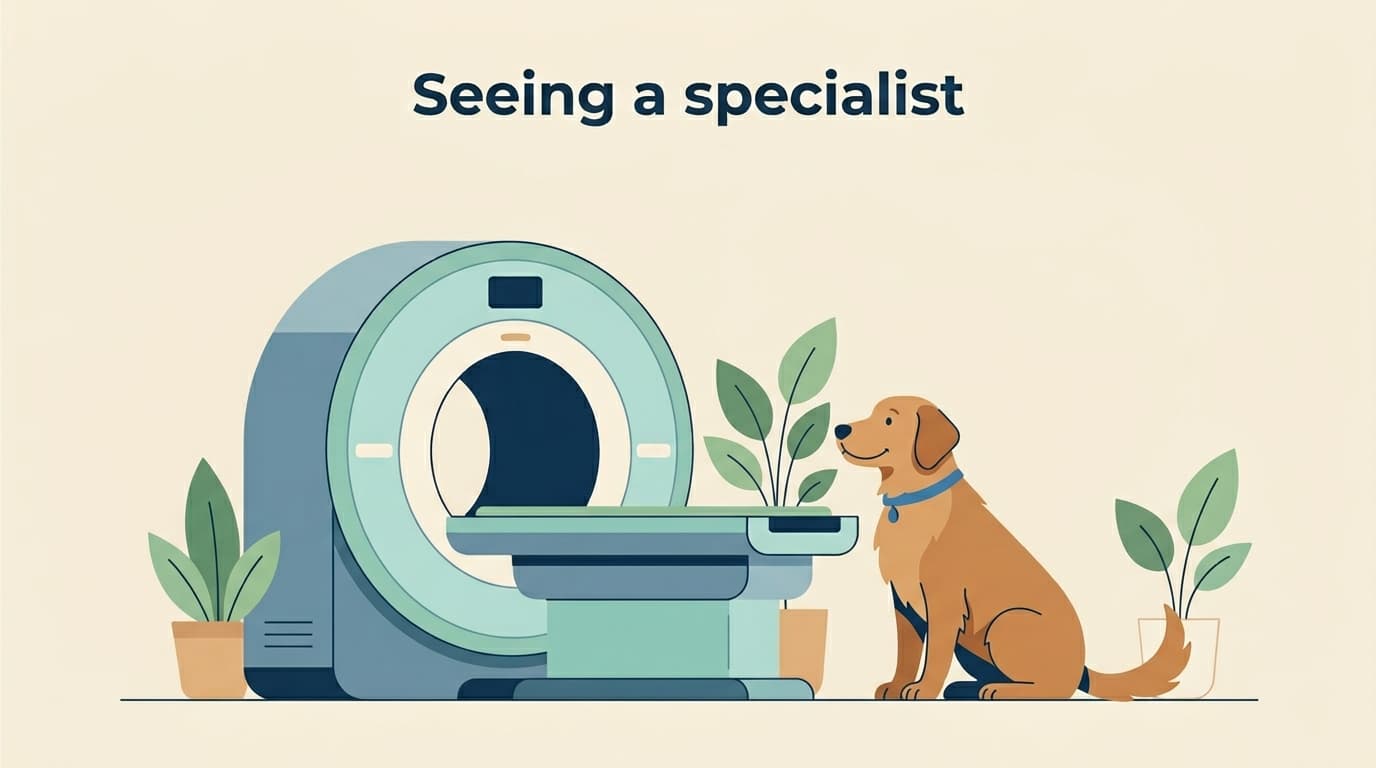
Seeing a Neurologist: Referral, MRI and What to Expect
Alastair Greenway
BVM&S MRCVS
A referral to a specialist neurologist can land like a sudden escalation, and it usually arrives with a flurry of questions. What does referral actually mean? What happens on the day? What will it cost? And does agreeing to see a specialist commit you to surgery? This guide answers all of that, walking through the UK referral pathway from your first-opinion vet through to a specialist and an MRI, so the step feels less like a leap into the unknown and more like the sensible, normal part of care that it is.
Why a neurologist gets involved
Start with why a referral happens at all, because it is not a sign that anything has gone wrong with your own vet's care. A veterinary neurologist is a specialist in conditions of the nervous system, including spinal problems like IVDD, with particular expertise and, crucially, access to equipment that a general first-opinion practice usually does not have on site, principally an MRI scanner and the facilities for spinal surgery.
So a referral is your own vet doing exactly the right thing: recognising that your dog's problem would benefit from specialist expertise and equipment, and sending you to where those are available. It is entirely normal, it is how veterinary care is meant to work for complex problems, and it reflects your vet taking the problem seriously, not failing to handle it. Think of it as being passed to the right expert, much as your own GP would refer you to a hospital specialist, rather than as a worrying escalation. Your first-opinion vet remains your dog's regular vet and will usually stay involved and informed throughout.
How the referral pathway works
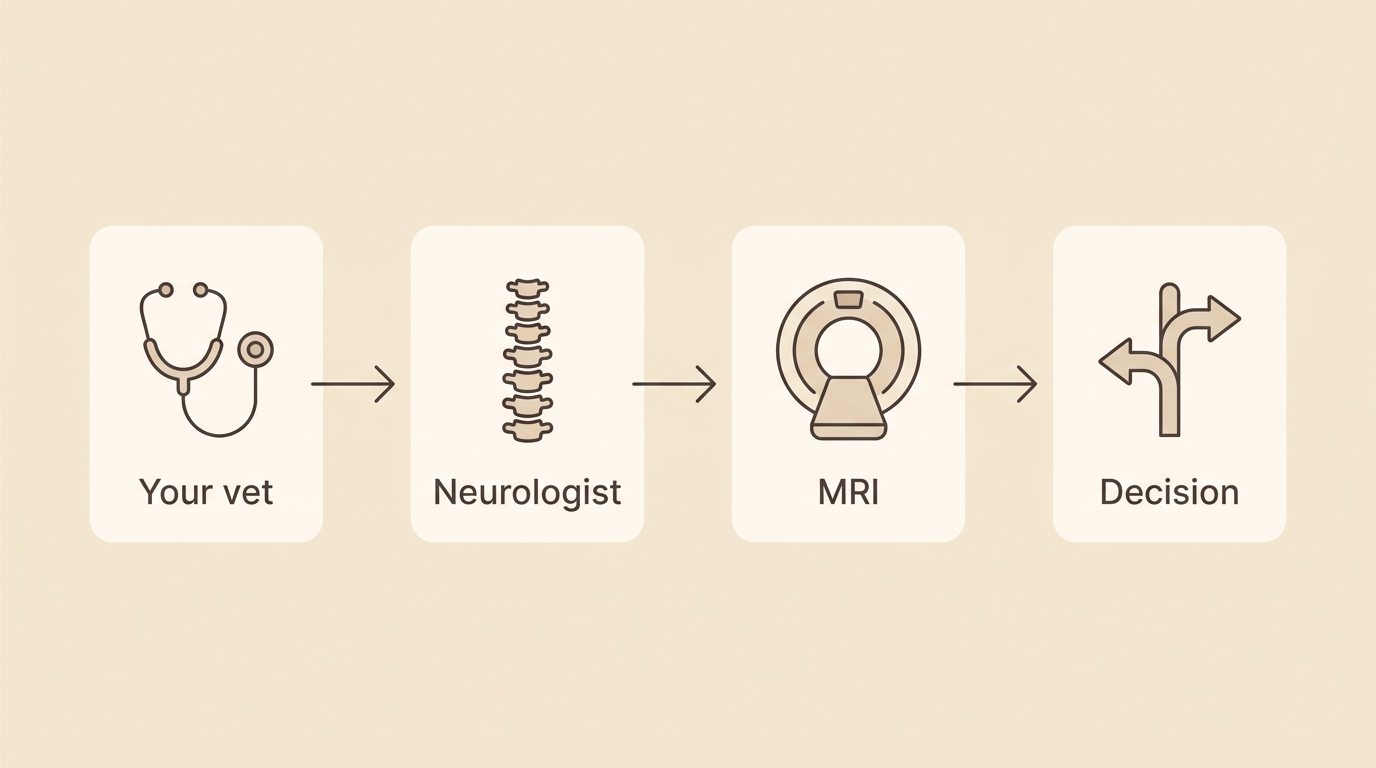
The pathway in the UK is straightforward once you know its shape. Your first-opinion vet, having assessed your dog, contacts a referral centre or a specialist neurologist and sends over your dog's history and findings, and you are given an appointment, which for an urgent spinal case can be very soon, including out-of-hours or emergency referral where the situation demands it. You then take your dog to the referral centre, bringing any information or medications your vet advises, and from there the specialist team takes over the workup, keeping your own vet in the loop. For an emergency, this can all move quickly, sometimes within the same day, because, as we have seen elsewhere, time can matter with severe spinal cases. The key point is that the pathway is a well-worn one that vets and referral centres navigate routinely; you are not arranging something unusual, just following a standard route to specialist care.
The MRI day
Knowing what the day itself involves takes a lot of the worry out of it. On arrival your dog is admitted, and the specialist will examine it and talk with you. To get the detailed picture needed, your dog will usually have an MRI scan, which gives a precise image of the spine and pinpoints the problem, and because the dog must be completely still for this, it is done under general anaesthetic.
One point is worth understanding in advance, because it catches some owners off guard: in many cases, particularly urgent ones, surgery follows the scan in the same anaesthetic session. The logic is sound, the dog is already anaesthetised, the problem has just been precisely located, and for a severe case where time matters, proceeding straight to surgery avoids a second anaesthetic and a costly delay. This means you may be asked beforehand to consent to surgery going ahead if the scan confirms it is needed, so that the team can act without waking your dog only to anaesthetise it again. The specialist will discuss this scenario with you in advance, so you understand what may happen and have made the decision with them. After the scan, and any surgery, the specialist will talk you through what they found and what it means.
Does referral commit me to surgery?
Plenty of owners worry about this, and the answer is reassuring: no, seeing a neurologist does not automatically commit you to surgery. The purpose of the referral and the MRI is to get an accurate picture of exactly what is wrong, and that information then informs the decision about treatment, rather than dictating it.
Conservative management remains an option to be discussed, depending on what the scan shows and your dog's situation, as our guide to surgery versus conservative treatment explains, and the decision about how to proceed is a shared one, made between you and the specialist in light of the findings, your dog's grade and deep-pain status, and your own circumstances including cost. Yes, as above, you may be asked to consent in advance to surgery proceeding in the same anaesthetic if it is clearly needed and you have agreed that is the right plan, but that is a decision you make with the specialist beforehand, not something imposed on you. So a referral gets your dog the most accurate diagnosis and the fastest route to whatever the right treatment turns out to be, surgical or not; it opens up the options rather than closing them down.
What it costs
Cost belongs in this conversation, because specialist referral, with its MRI and possible surgery, is a significant expense, and you deserve to know that going in. The figures are substantial, an MRI alone commonly runs to a couple of thousand pounds and surgery a good deal more, and our guide to what IVDD costs in the UK sets out the realistic ranges and, importantly, the insurance picture, which for this condition is often the difference between a decision made on clinical grounds and one constrained by money.
The practical advice is to be upfront about cost from the start: referral centres are used to discussing fees, and it is entirely reasonable to ask, at or before the appointment, for an estimate of the likely costs, what is included, and whether payment options exist. If your dog is insured, check what your policy covers and inform your insurer early. There is no awkwardness in raising money with a referral centre; it is a normal and sensible part of the conversation, and our cost guide and the questions in our referral checklist help you have it well. Knowing the financial picture in advance lets you focus, on the day, on your dog rather than on a nasty surprise.
References
Sister tool · Sightline
Track whether treatment is working
Sightline, a separate ConciergeVet tool, runs a short weekly check-in built on validated pain and mobility instruments, turns it into a single Sightline Score you can watch trend over weeks rather than judge on one bad day, and produces a report you can bring to your vet.
A written log, or our printable trackers, does much the same job.
See how Sightline tracks treatmentTrack the recovery, day by day
Recovery from a disc injury is all about the trend. Log the daily milestones through crate rest and rehab so you can see real progress, not just good and bad days.
Open the Recovery TrackerYou're not doing this alone
Compare treatment journeys and talk to owners managing IVDD. Free to join.
Join PetsLikeMine