

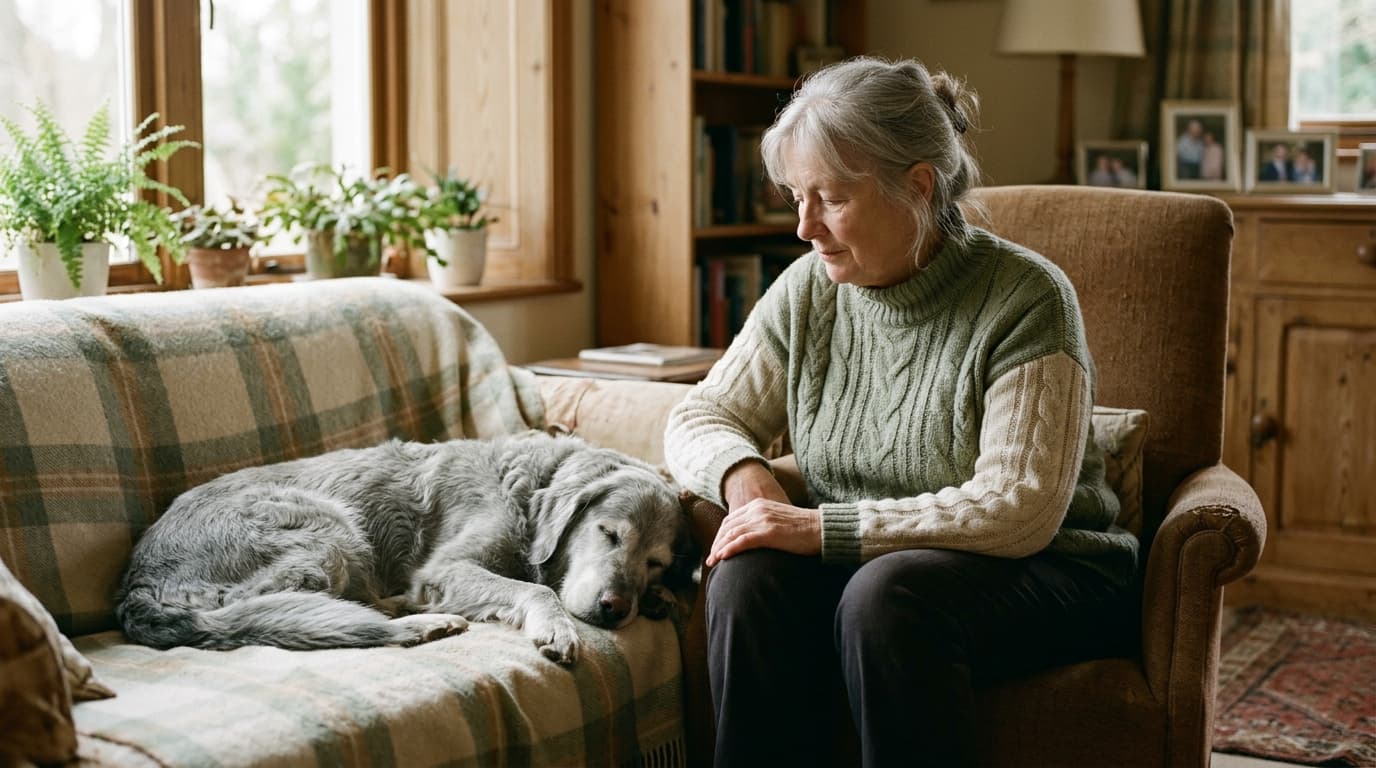
Quality of Life and Saying Goodbye: The Honest Conversation
Alastair Greenway
BVM&S MRCVS
There is no way to make this subject easy, so I will simply be gentle with it, and with you. Owners come to this question by two roads: some are facing it suddenly, some are quietly preparing for a day they can feel coming. Either way, I want you to know that thinking about it now, clearly and with love, is not morbid and it is not disloyal. It is one of the last and greatest kindnesses you will ever do for your pet, and doing the thinking before the moment is upon you means you can do it well, with a clear head and an open heart, rather than in fear and haste.
I cannot tell you what to do, and I will not pretend there is a formula that makes the decision simple, because there is not. What I can offer is a clear way to think it through, the same way I have talked it through with families in my consulting room for twenty-five years, so that whatever you decide, you can trust that you decided it with care.
Assessing quality of life clearly
When we can no longer add good time to a life, the only question that truly matters is the quality of the time that remains. That sounds simple, but quality of life is a slippery thing to judge from inside a loving relationship, because we see our pets through the warm blur of everything they have been to us, and because one good afternoon can make us forget a fortnight of hard ones. This is exactly why it helps to step back and look at quality of life deliberately, across several parts of life at once, rather than pinning everything on a single moment.
The most widely used tool for this is the HHHHHMM Quality of Life Scale, developed by the veterinary oncologist Dr Alice Villalobos. The letters stand for Hurt, Hunger, Hydration, Hygiene, Happiness, Mobility, and More good days than bad. You score each one out of ten and look at both the total and the pattern. It is not a magic number, and it is not meant to make the decision for you; it is a way of holding the whole picture still long enough to see it clearly. For kidney patients in particular, our quality-of-life assessment for kidney patients walks through the same idea with the things we watch most closely in this disease, nausea, appetite, hydration and energy, kept front of mind.
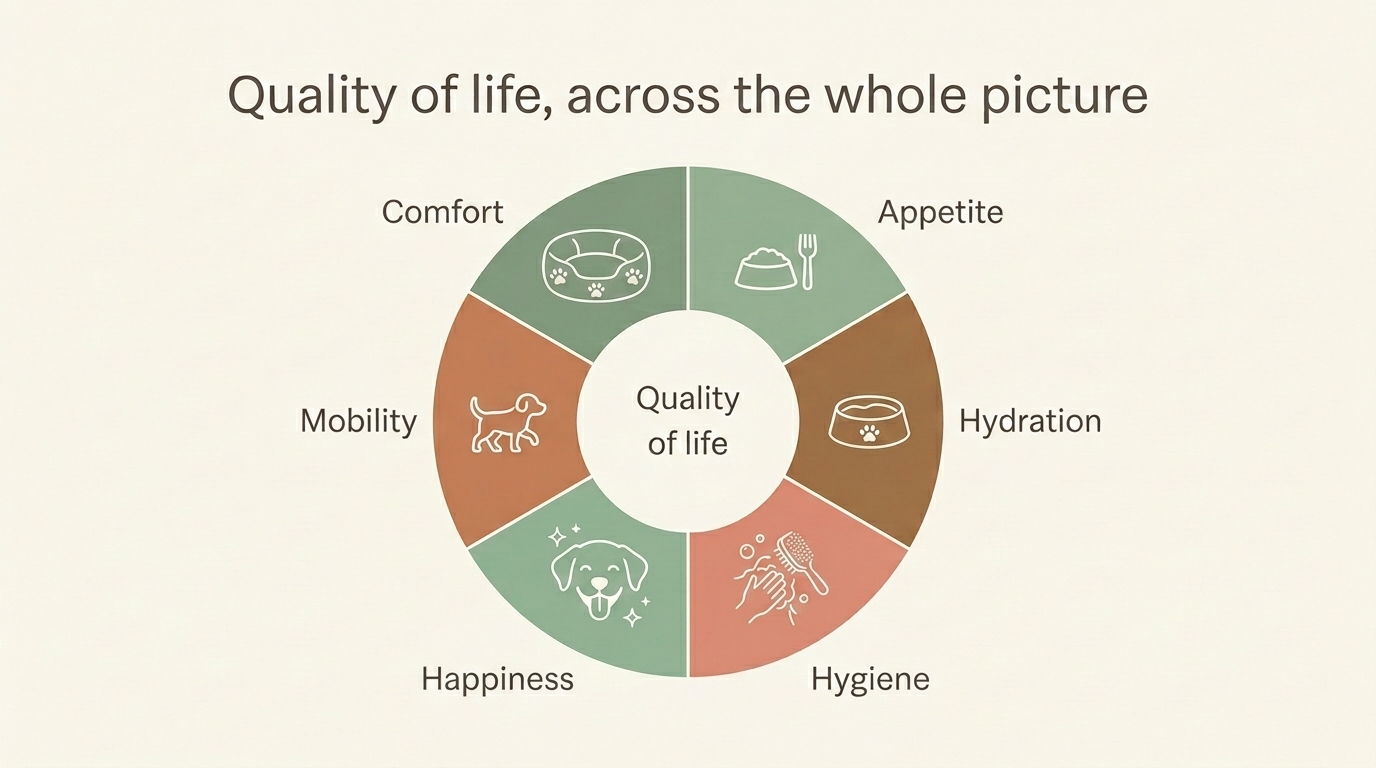
Used gently and without flinching, a tool like this does two things. On a frightened day it can reassure you that your pet is in fact still enjoying life. And when the time genuinely comes, it can show you a truth you might otherwise talk yourself out of seeing.
More good days than bad
If all of that feels like too much to hold in your head at once, there is one simple test that sits at the heart of it, and it is the one most owners find they come back to. Are there still more good days than bad ones, and which way is the balance moving?
A good day does not need to be a young animal's day. For a pet with advanced kidney disease, a good day is one where they are comfortable, eat something willingly, settle peacefully, and still show a flicker of who they are, a greeting at the door, a stretch in a warm patch of sun, a moment of real interest in you. A bad day is one largely taken up by nausea, refusal, discomfort, or a kind of absent withdrawal, where the pet you know seems somewhere far away. No pet has all good days, and a single bad day is never a verdict. What matters is the balance over a week or two, and the direction it is drifting.
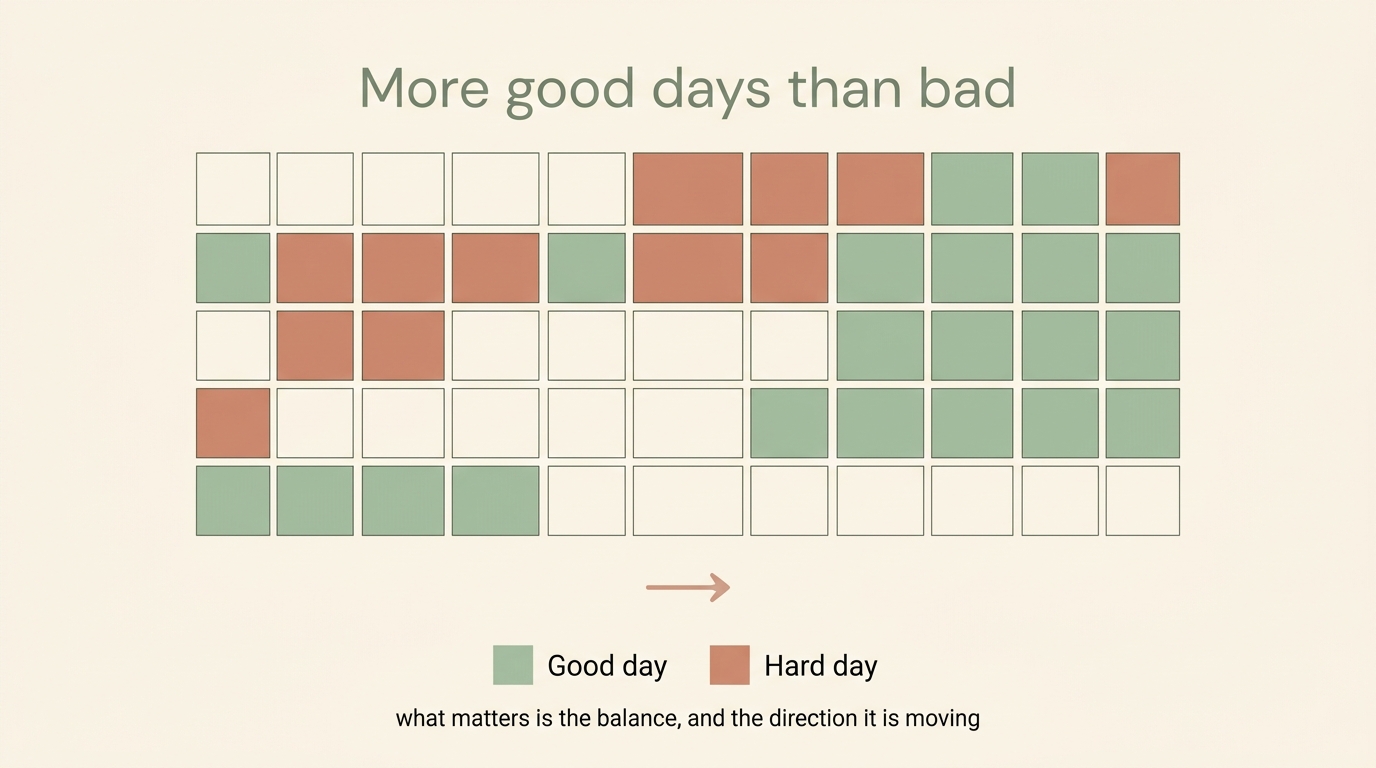
Because memory is kind and tends to round upward, I gently suggest keeping a simple record rather than trusting recollection. A mark on the calendar each evening, good day or hard day, nothing elaborate, will show you the trend far more truly than your hopeful heart will. When the hard days begin clearly and steadily to outnumber the good ones, and the good ones grow thinner and further apart, that is the disease telling you something, and it is worth listening even when it is the very last thing you want to hear.
When treatment stops being kind
There is a point on this road, not always sharp but usually recognisable, where the things we do to help begin to cost more than they give. The treatments that once bought comfort slowly become burdens in their own right. Force-feeding a pet who turns away in distress, wrestling a frightened cat for fluids twice a day, repeated car journeys and hospital stays that bewilder and exhaust an animal who would far rather be home; each of these can be right for a time, and then, quietly, stop being right.
It takes courage to notice that moment, because we are wired to keep trying, and easing off can feel like giving up. But there is a real difference between treating the disease and treating your pet, and late in the journey those two things can pull apart. The kind question is no longer only what is medically possible, but whether the thing we are doing genuinely makes this animal's day better, or whether it has come to serve mostly our own struggle to let go. Asking that out loud, with your vet, is not weakness. It is the same love that drove all the treatment in the first place, simply pointed now at comfort instead of at time.
What euthanasia actually is
I want to talk plainly about euthanasia, because so much of the fear around it comes from not knowing what it is, and that fear can make a hard time harder than it needs to be. The word itself comes from the Greek for a good death, and at its best that is exactly what it is: a gentle, painless release for an animal whose body is failing them.
In practice it is quiet and quick. Your vet will usually place a small cannula, often after a sedative that lets your pet drift into a calm, sleepy state in your arms first. The final injection is an overdose of an anaesthetic agent, the same family of drug used to send pets gently to sleep for an operation, simply more of it. Your pet loses consciousness within seconds, peacefully and without pain or fear, and the heart stops soon afterward. There can be small movements, a breath, a twitch, a sigh, after they have gone; these can look distressing but they are reflexes, and your pet feels none of them. It is, genuinely, one of the most peaceful things I witness in my work, and it is the one true mercy this disease cannot take from you.
You can choose whether to be present, and there is no wrong answer; some people need to be there to the last breath, others simply cannot bear it, and your pet will not love you any less either way. Many practices can now come to your home, so that the final moments happen in a familiar bed rather than a clinic, and if that matters to you it is well worth asking about in advance. You will also be asked, gently and usually beforehand, what you would like afterward, burial or cremation, ashes returned to you or not; settling this ahead of time spares you having to weigh it in the rawest moment.
Grief is real, and it is valid
When it is over, you may be unprepared for the sheer size of what you feel. The grief of losing a pet is real grief, and it deserves to be treated as such, yet our society is still oddly awkward about it, and you may meet people who do not understand, who say it was only a cat, only a dog, as though love could be measured by species. Do not let anyone tell you how much you are allowed to feel. You are not mourning an animal; you are mourning a daily companion, a witness to your life, a warm presence woven through years of ordinary days, and that is an enormous thing to lose.
If you are struggling, please reach out, because support exists and it is kind, and it is free. In the UK, the Blue Cross Pet Loss Support service offers a confidential phone line and email support staffed by people who understand exactly this kind of grief. The Ralph Site is another gentle resource, with a supportive online community and clear, compassionate information for the difficult days. There is no threshold of suffering you must reach before you are allowed to use them; if it hurts, that is reason enough.
Spare a thought, too, for the others in the household. Another pet may grieve in their own way, becoming quiet, searching the house, or unsettled for a while, and extra patience and a steady routine will help carry them through. Children often feel these losses keenly and deserve the truth pitched to their age, gentle and true words rather than confusing ones about sleep or going away, which tend to frighten more than they comfort. Letting everyone, small and furred alike, mourn in their own way is part of how a home heals.
There is no perfect moment
Almost every owner I have ever sat with has wanted the same impossible thing: to know, for certain, that this is the right day. I wish I could give you that certainty, but I cannot, and neither can anyone, because there is no perfect moment, only a window of kind ones. What I can tell you, after many years and a great many of these conversations, is that the regret I see is almost never for going a little too soon. It is, far more often, for waiting a little too long, for asking a beloved animal to endure a few more hard days for our sake. A gentle goodbye a little early is a kindness; a day too late is a weight that can be very hard to set down.
So if you are weighing this, weigh it on the side of mercy. Trust the plain record of good days and bad. Trust your vet's clear read of things. And trust yourself, because no one on this earth knows your pet as you do, and the very same love that has carried you through this whole long illness is exactly what you can lean on now.
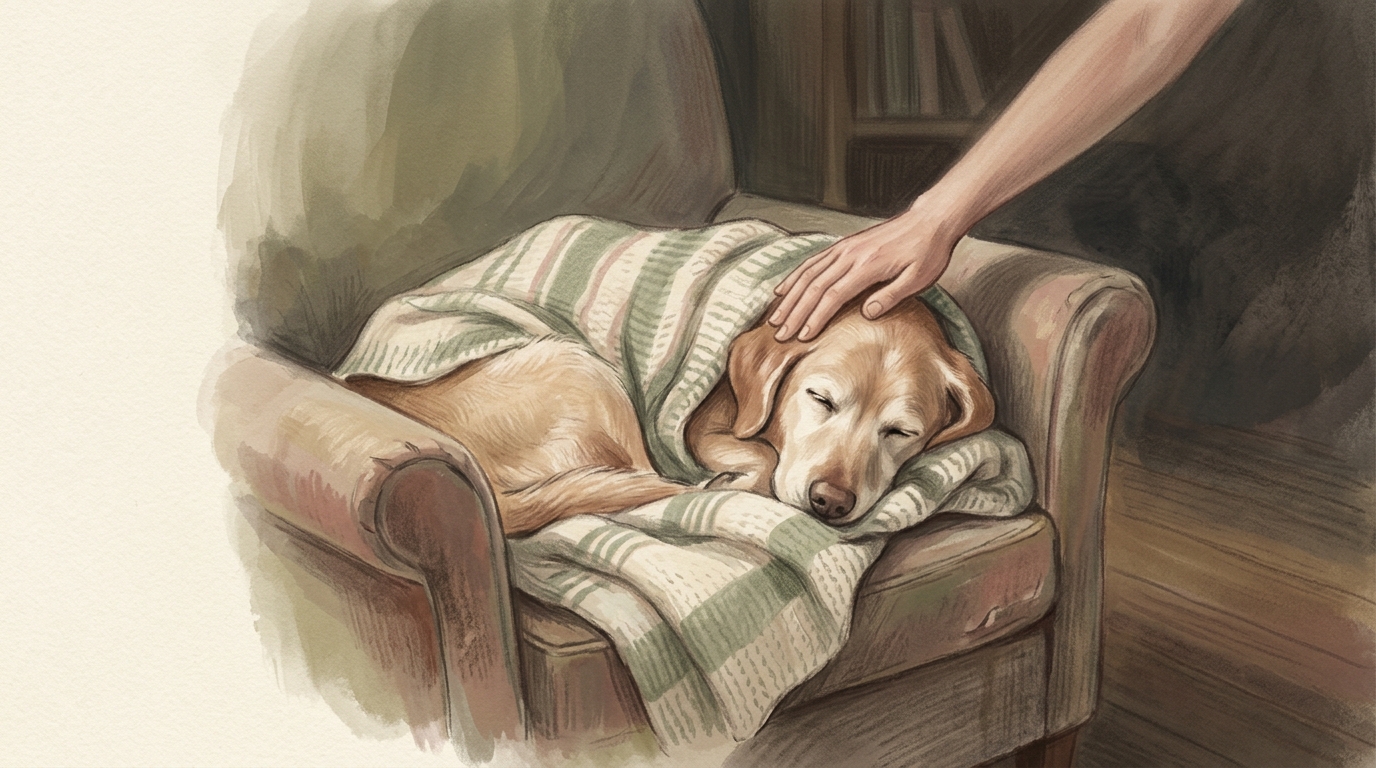
When the day comes, let it be quiet. A favourite blanket, a familiar voice, your hand resting where it always has; these small things are everything to a pet, and they will carry your animal gently over. You did not fail by reaching this point. Kidney disease is a one-way road, and you walked every step of it at your pet's side, easing what could be eased and loving them through what could not. That is not a small thing. It is the whole of what it means to care for another life. In giving your pet a good life and a peaceful end, you gave them everything that truly mattered.
References
- The HHHHHMM Quality of Life Scale, developed by veterinary oncologist Dr Alice Villalobos as part of her Pawspice end-of-life care programme. (Independent validation: Animals (Basel), 2023, PMC10044252.)
- Bishop G, Cooney K, Cox S, Downing R, Mitchener K, Shanan A, Soares N, Stevens B, Wynn T. 2016 AAHA/IAAHPC End-of-Life Care Guidelines. Journal of the American Animal Hospital Association, 2016.
- Blue Cross. Pet Loss Support service, free and confidential bereavement support by phone and email.
- The Ralph Site. A not-for-profit pet bereavement support resource and online community.