

Preventing Pressure Sores & Urine Scald
Alastair Greenway
BVM&S MRCVS
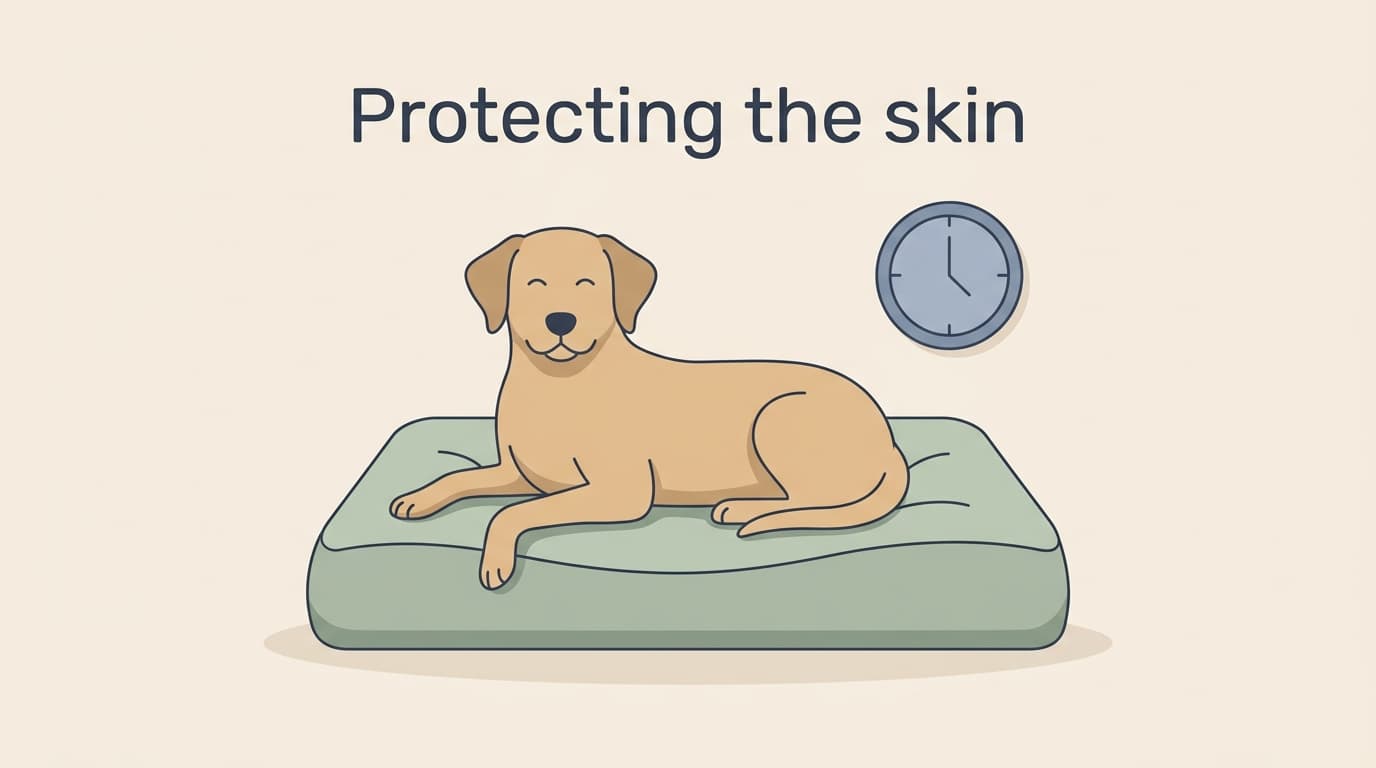
A dog that cannot move freely, whether through strict crate rest, recovery from spinal surgery, or longer-term hind-limb disability, faces a quiet problem on the skin that is entirely preventable. Lie in one position for too long, or lie in dampness, and the skin can develop pressure sores and urine scald. Both are painful, both can become serious, and both are far easier to prevent than to treat. This is not a minor point. Infected, intractable pressure sores are, sadly, one of the factors that can push owners toward considering euthanasia in an otherwise manageable dog, so preventing them genuinely protects your dog's future. The encouraging side is that a sensible routine prevents the great majority of these problems outright, and catches the rest early, while they are still trivial. What follows is the practical how-to: the turning, the bedding, the exact spots to watch, and the skin care that keeps a less-mobile dog comfortable and sore-free. It sits alongside our guides to nursing a down dog and expressing the bladder, which cover the wider daily care.
Why an immobile dog is at risk
Understanding why these problems happen is worth a moment, because the reason points straight to the prevention. Pressure sores, sometimes called bed sores, decubital ulcers, or decubitus ulcers, develop where the dog's body weight presses the skin against the hard surface beneath, especially over the bony points where there is little padding between bone and skin. That sustained pressure squeezes the small blood vessels and cuts off the blood supply to the skin, and skin starved of blood and oxygen begins to die. It takes surprisingly little pressure to do the damage: external pressure of only about thirty millimetres of mercury, easily exceeded where a bony point presses against a hard floor, is enough to collapse the tiny capillaries that feed the skin, the so-called capillary closing pressure, cutting off its blood supply. Once that supply is choked off, waste products build up in the starved tissue and the skin breaks down. A dog that can shift its own position constantly relieves this pressure without thinking about it; a dog that cannot move, because it is confined, weak, or paralysed, keeps the same points pressed for hours, which is exactly how a sore begins. Thin, older, or muscle-wasted dogs are at higher risk still, because they have even less natural padding over the bone, and larger dogs are more prone because of their greater weight.
Urine scald is the second problem, and it has a related cause: a dog that cannot toilet normally, or that dribbles urine, ends up with urine sitting on the skin and coat, and prolonged contact with urine irritates and burns the skin, causing a sore, inflamed, painful area. Both problems, then, come from the same root, an immobile dog plus time, and both are headed off by the same kind of attentive routine.
Turning: the single most important habit
If one habit prevents pressure sores, it is regular turning, and it is worth building into the day as a fixed routine. For a dog that cannot reposition itself, you become the one who relieves the pressure, by physically changing which part of its body bears the weight before any one spot has been pressed for too long.
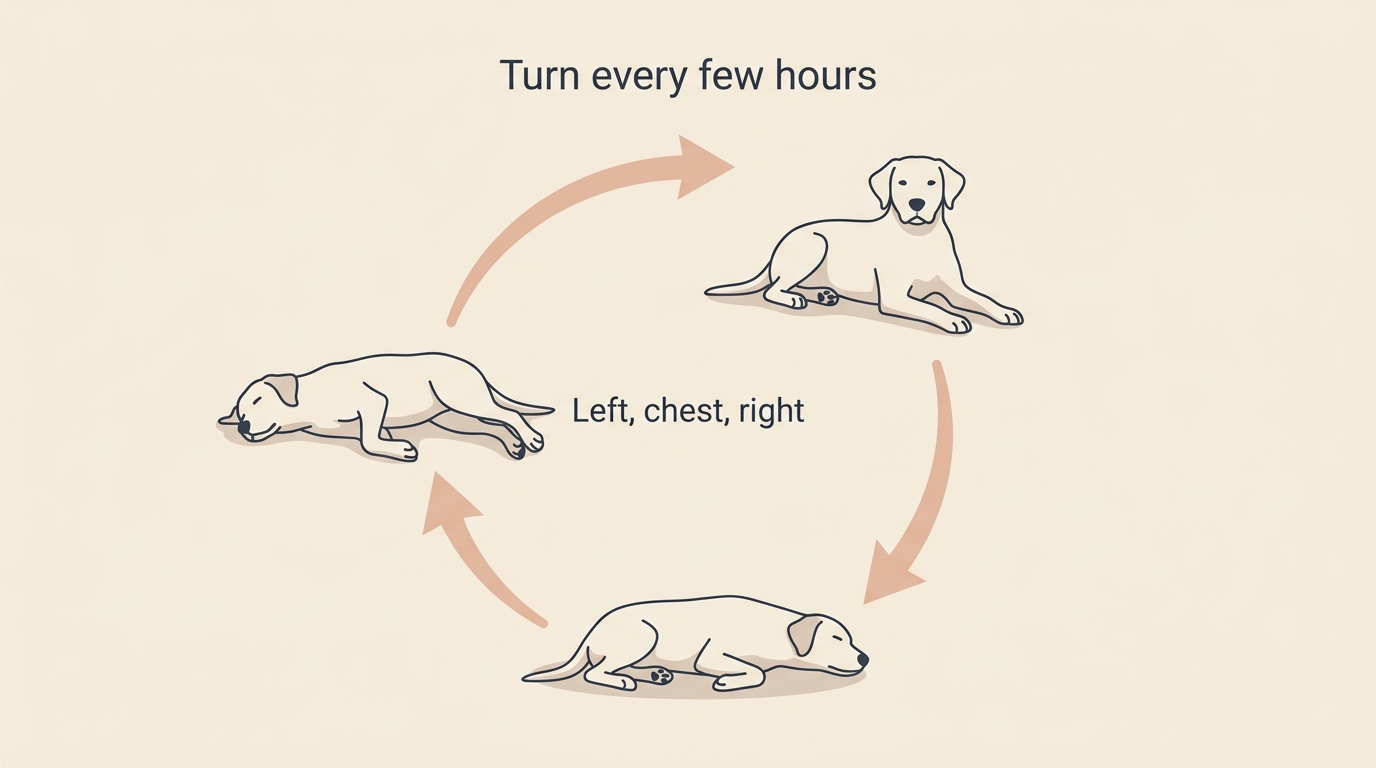
In practice this means turning your dog regularly through the day, commonly every two to four hours or so, rotating between lying on the left side, resting upright on the chest and belly (what vets call sternal), and lying on the right side, so that no single set of bony points stays under pressure for long. Your vet can advise on the right frequency for your individual dog, since some need turning more often than others. It also helps enormously, where your dog is able, to get them up and supported on their feet for short spells, even just standing in a sling for a few minutes at a time, indeed using a sling for a couple of hours spread across the day genuinely takes the load off the hindquarter pressure points, especially in large dogs. Consistency is what matters: a reliable turning schedule, kept up day and night as far as you can manage, is the foundation on which everything else rests, and it prevents far more sores than any cream or dressing.
Getting the bedding right
The surface your dog lies on matters as much as how often you turn them, and good bedding does a great deal of the preventive work for you. The aim is thick, supportive padding that spreads the dog's weight rather than letting bony points press through onto a hard floor. A thick egg-crate-style foam pad, or a proper orthopaedic or memory-foam mattress, is ideal, and in fact a study comparing surfaces found that veterinary and human memory-foam mattresses relieved pressure markedly better than blankets laid on a hard floor, which provide very little protection. Resist, then, the temptation to make do with a folded blanket on a solid surface.
Just as important is keeping that bedding dry and moisture-wicking, which is where pressure-sore prevention and urine-scald prevention meet. A top layer of artificial sheepskin or veterinary bedding over the foam is excellent, because it draws moisture, including urine, away from the skin while letting a little air circulate underneath. For a dog that leaks urine, absorbent incontinence pads under the dog help keep the surface dry, and for overnight a raised mesh bed that lets urine drain straight through, away from the dog, can keep them dry and comfortable through the night. Whatever the setup, change any wet or soiled bedding promptly, because a dog left lying on damp, dirty bedding is at risk of both sores and scald at once. Get the bedding right, and you have made the whole job far easier.
Spotting a sore early: exactly where to look
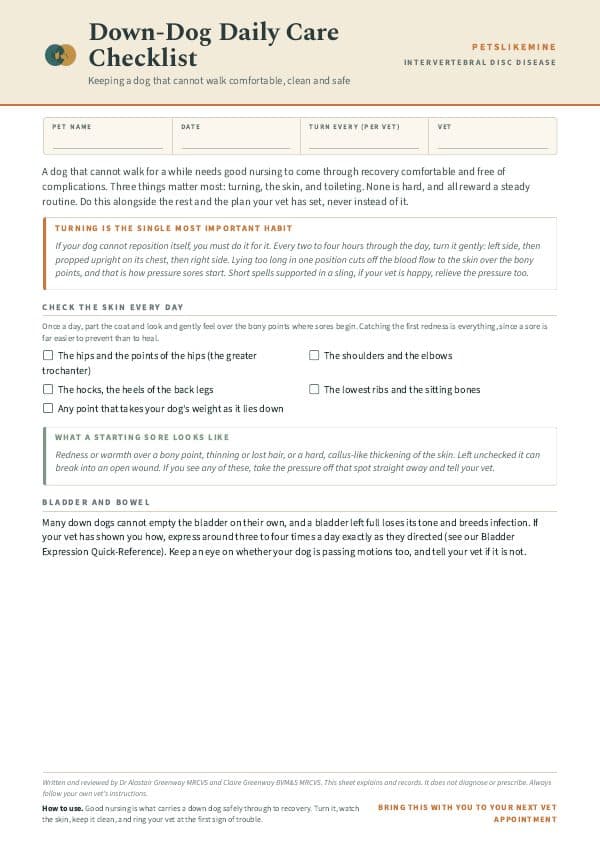
Even with good prevention, check your dog's skin every day, because catching a sore in its earliest stage, before the skin has broken, is the difference between a quick fix and a long, difficult wound. Early intervention genuinely saves weeks, and the encouraging news is that very early pressure damage, the first pink or reddened patch, can often settle quickly once the pressure is taken off it. So knowing exactly where to look pays off.
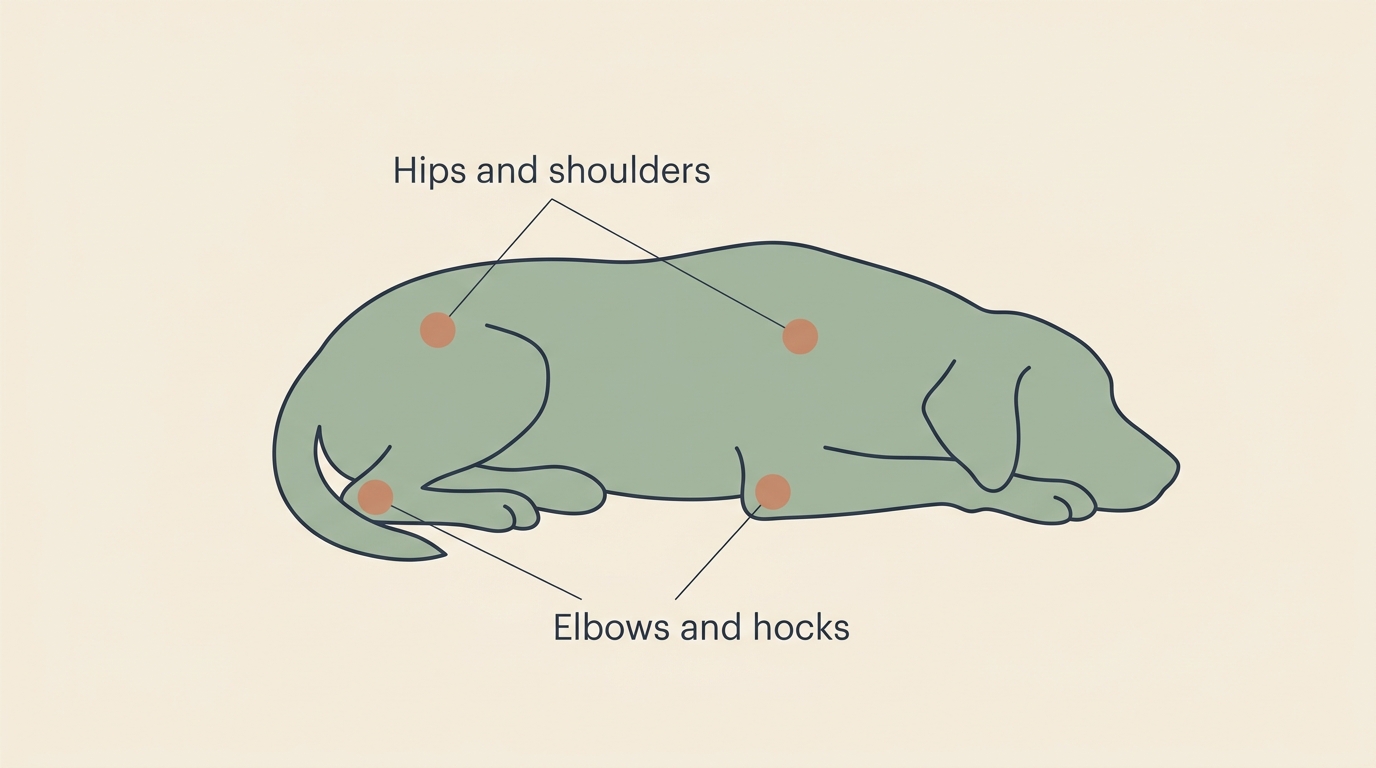
The places to check are the bony prominences that bear the weight, and research using pressure mapping has pinpointed the highest-risk spots in a dog lying on its side: the point of the shoulder, the hip (the greater trochanter), and the area over the lowest ribs were the consistent danger zones regardless of the dog's build. To those, add the elbows, which take the load when a dog lies on its chest, the hocks (the ankle joints of the back legs), and, importantly for paralysed dogs, the sitting bones under the rear: small paraplegic dogs that prop themselves up on their back end for long periods are prone to sores over those ischial points. Part the hair over each of these and look at the skin underneath, because a developing sore is easy to miss under a coat.
What you are looking for is subtle at first. The earliest warning sign is often a patch of redness or discolouration, or skin that looks irritated or feels warm. A slightly more established early sore can look deceptively like a simple callus, a thickened, hairless, mildly irritated patch over the bone, which is easy to dismiss but is in fact the warning to act on. If you spot any of these, act at once: relieve the pressure on that spot, increase the padding and the frequency of turning, keep it clean and dry, and have your vet check it. And if you ever find skin that has actually broken down, an open or ulcerated sore, especially one that is red or purple, oozing, or smells, that needs veterinary attention promptly, because pressure sores can deepen with startling speed into serious wounds reaching the muscle and even the bone beneath, and a vet should guide the treatment. The whole point of the daily check is to catch trouble while it is still just a red or thickened patch, which is when it is easiest to reverse.
Keeping urine scald at bay
Clean, dry skin is the heart of preventing urine scald, and a few simple measures make it very manageable. The first is prompt cleaning: whenever your dog has urinated on itself or leaked, gently clean the area with warm water and pat it properly dry, since it is the lingering wet that does the damage. For a dog prone to leaking, this may mean checking and cleaning several times a day, and our guides to expressing the bladder and to long-term incontinence cover the wider routine of keeping a dog's bladder managed and its skin protected.
Two further measures help a great deal. Clipping the hair away from the vulnerable areas, around the back end and the lower belly, makes it far easier to keep those areas clean and dry and stops urine soaking into the coat against the skin, and this is specifically recommended for incontinent dogs. A barrier cream applied to the skin, the kind of protective zinc-based or petroleum-based cream used for nappy rash in babies, forms a protective layer that shields the skin from the urine; apply a thin layer to clean, dry skin, and ask your vet to recommend a suitable product. If you use incontinence pads or belly wraps, change them frequently and never leave a wet one against the skin, because a soggy wrap left on causes exactly the burn you are trying to prevent. Together, prompt cleaning, clipping, a barrier cream, and dry bedding keep the skin healthy even in a dog that cannot help leaking.
So, to pull the routine together into something you can actually run day to day: turn your dog every few hours so no spot bears weight too long, give them thick, dry, moisture-wicking bedding to lie on rather than a blanket on a hard floor, check the specific bony points, the shoulder, hip, lowest ribs, elbows, hocks, and the sitting bones, every single day to catch any redness or thickening before it breaks, and keep a leaking dog clean, clipped, and protected with a barrier cream. Do those four things consistently and you will prevent the great majority of pressure sores and urine scald entirely, and catch the rest while they are still nothing. It is attentive work, especially alongside everything else involved in nursing a less-mobile dog as our crate-rest and down-dog guides describe, but it is genuinely within your power, and it keeps your dog comfortable through their recovery or their daily life. And whenever a sore has broken the skin or a scalded area looks raw or infected, let your vet take a look, because early help keeps a small problem small.
References
- Freeman PM, Holmes MA, Jeffery ND, Granger N. Time requirement and effect on owners of home-based management of dogs with severe chronic spinal cord injury. Journal of Veterinary Behavior, 2013;8(6):439-443.
- Caraty J, De Vreught L, Cachon T, et al. Comparison of the different supports used in veterinary medicine for the prevention of pressure sores. Journal of Small Animal Practice, 2019;60(10):623-630.
- Hardie EM. Pressure-related wounds: prevention and treatment. Clinician's Brief, 2014.
- Swaim SF, Hanson RR, Coates JR. Decubitus ulcers in animals. In: Decubitus Ulcers and Their Treatment. Berlin, Heidelberg: Springer; 1997: chap 20.
Free downloads
Companion worksheets to put what you've read into practice. Free PDFs, print at home.
Sister tool · Sightline
Track whether treatment is working
Sightline, a separate ConciergeVet tool, runs a short weekly check-in built on validated pain and mobility instruments, turns it into a single Sightline Score you can watch trend over weeks rather than judge on one bad day, and produces a report you can bring to your vet.
A written log, or our printable trackers, does much the same job.
See how Sightline tracks treatmentTrack the recovery, day by day
Recovery from a disc injury is all about the trend. Log the daily milestones through crate rest and rehab so you can see real progress, not just good and bad days.
Open the Recovery TrackerYou're not doing this alone
Compare treatment journeys and talk to owners managing IVDD. Free to join.
Join PetsLikeMine