

Lungworm in the UK: Risk by Region
Alastair Greenway
BVM&S MRCVS
If you've seen the advert, the one with the emotive music and the red-splattered map of Britain, or a "lungworm killed my dog" post shared through your local dog-walking group, you're probably somewhere between worried and frightened. That's a completely understandable reaction, and lungworm is a genuinely serious disease that deserves to be taken seriously.
But fear isn't the same as information, and a scary map isn't the same as your dog's actual risk. So let's turn the alarm into something more useful: what lungworm actually is, how a dog picks it up, whether your area and your particular dog are genuinely at risk, and one thing about that map that the advert won't mention.
What lungworm actually is
Lungworm in dogs is caused by a parasite called Angiostrongylus vasorum. Despite the name, it lives in the heart and the blood vessels of the lungs, and it can cause serious illness: breathing problems, bleeding disorders, and occasionally death (ESCCAP UK & Ireland, GL1 Worm Control, 7th edition, 2025).
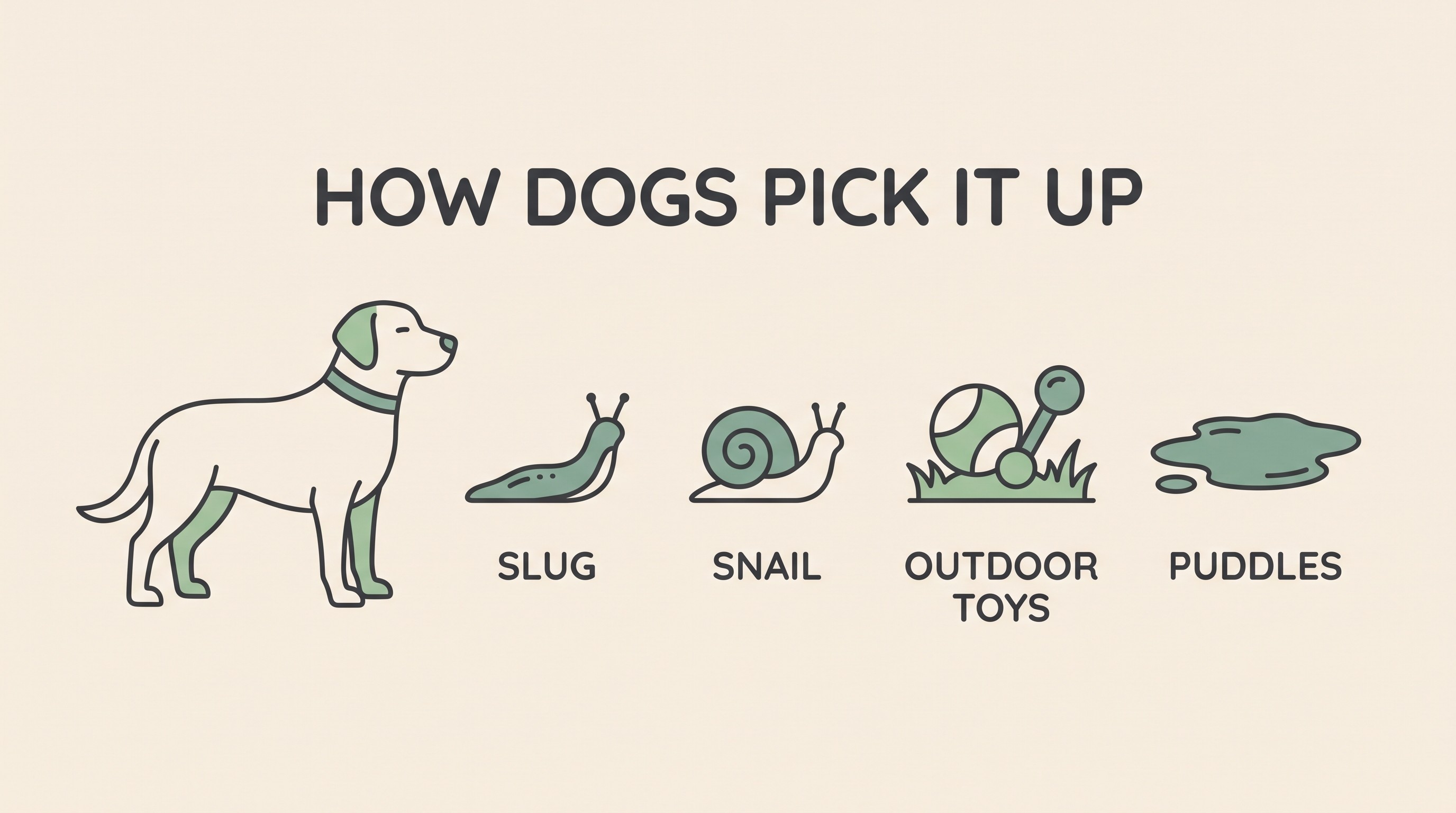
Here's the part that matters most for how you protect against it. Dogs don't catch lungworm from each other. They catch it from slugs and snails, which carry the larvae. A dog gets infected by eating a slug or snail, deliberately or accidentally, or by mouthing things that carry slug and snail slime trails: grass, outdoor toys left on the lawn, water bowls, chews dropped in the garden (ESCCAP UK & Ireland, GL1, 2025). That single fact reshapes the whole question, because it means risk is really about your dog's behaviour and environment, not about how many other dogs it meets.
The thing the advert won't tell you about that map
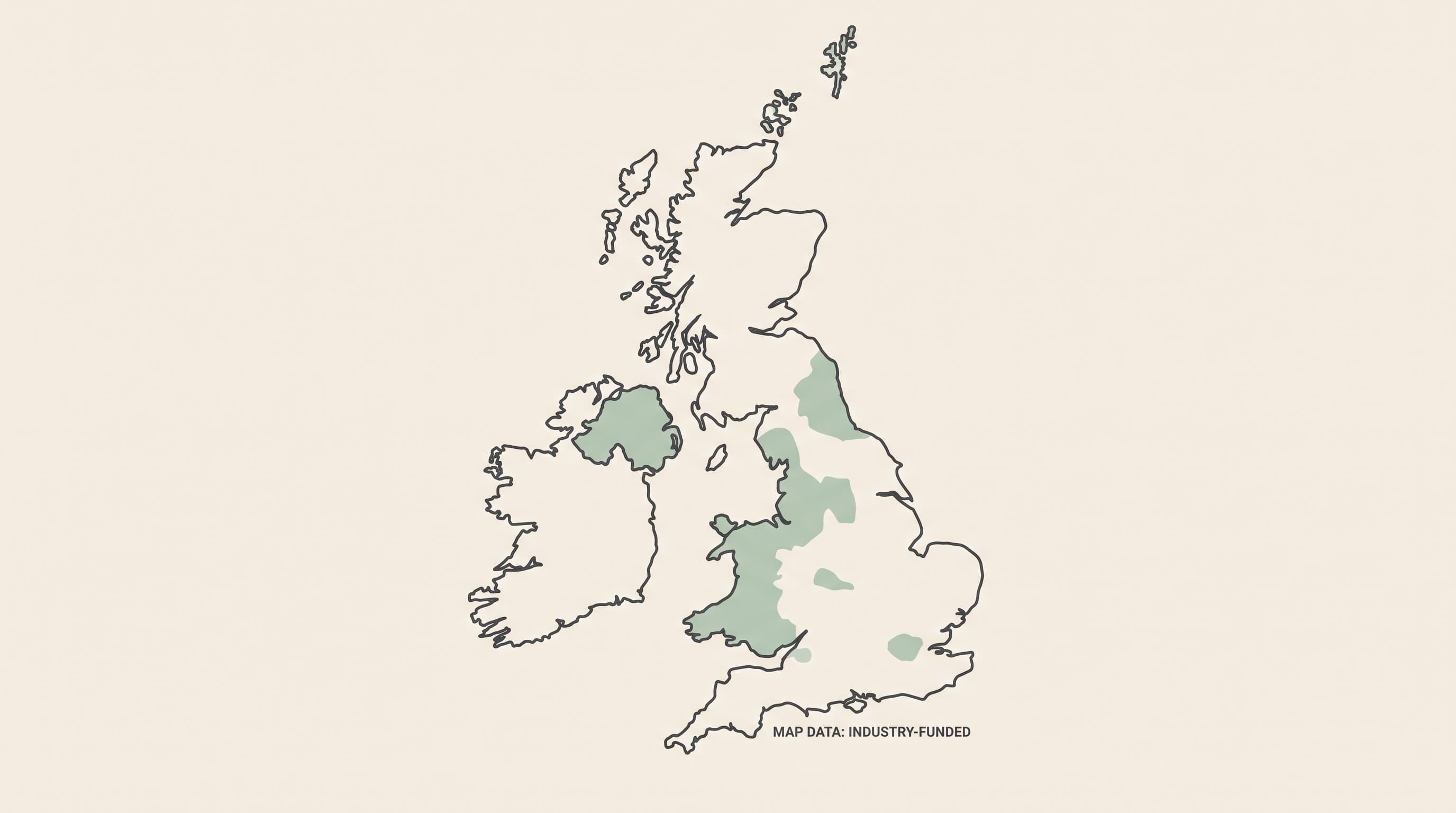
The map you've probably seen, with regions shaded to show where lungworm has been reported, is genuinely useful as a rough guide. But it's worth knowing where it comes from: the most widely shared UK lungworm map is produced and funded by a pharmaceutical company that sells lungworm treatment (Elanco's "Lungworm Map").
That doesn't make the map wrong, and it doesn't mean lungworm isn't real. But it does mean you're looking at a marketing-adjacent tool, not a neutral, independent public-health dataset. It's built partly from cases reported by vets who use that company's products, which shapes what shows up on it. Read it the way you'd read any map drawn by someone with something to sell: informative, worth glancing at, but not the last word on whether your dog needs a monthly product. We'd rather you knew that than found out later and felt misled.
Why the fear feels so out of proportion
It's worth naming why lungworm frightens owners more than, say, roundworm, which is far more common. Lungworm has been the subject of years of emotive advertising: the sudden-death stories, the grieving owners, the sense that it could strike any dog at any moment. That messaging is effective precisely because it's frightening, and because it's paid for by companies that sell the products that prevent it. None of that means the disease isn't real or serious. It just means your sense of how likely it is has probably been inflated by marketing rather than calibrated to your actual risk. Recognising that is the first step to making a clear-headed decision rather than a frightened one.
Who is actually at risk
So instead of reading your risk off a map, read it off your dog. The dogs most likely to encounter lungworm are the ones most likely to meet slugs and snails:
- Dogs that eat slugs and snails, on purpose or by hoovering up whatever's on the ground.
- Dogs that scavenge, mouth grass, or chew sticks and outdoor toys.
- Dogs that drink from puddles or outdoor water bowls left in the garden.
- Younger, curious, mouthy dogs, who tend to investigate the world with their mouths and are statistically over-represented in cases.
If that sounds like your dog, and especially if you're in an area where cases have been reported, lungworm is a real consideration and regular lungworm-active cover is a sensible thing to have in place. If your dog is older, fastidious, doesn't scavenge and lives somewhere with few reported cases, the picture is genuinely different. The parasite risk quiz walks through exactly these habits and where you live, and gives you a personalised read to take to your vet rather than a one-size-fits-all scare.
Is it really spreading, or just better reported?
You'll often hear that lungworm is "spreading north" or "on the rise". There's truth in it: the parasite was historically concentrated in the south of England and Wales and has been found further afield over the years, and milder, wetter conditions that suit slugs and snails may be helping it along. But it's worth holding a bit of healthy scepticism here too. Reported cases also rise simply because awareness rises, testing rises, and a company promoting a lungworm map encourages more reporting. More dots on a map can mean more disease, more looking, or both. The honest takeaway isn't "it's everywhere now, panic", it's "it's no longer only a southern problem, so wherever you are, judge it on your dog's habits rather than assuming your postcode makes you safe or doomed".
The signs worth knowing
Because early treatment matters, it helps to know what lungworm can look like, though these signs overlap with many other conditions and are not proof of lungworm on their own. Owners and vets watch for:
- Breathing changes: coughing, tiring quickly, laboured breathing.
- Unexplained bleeding or bruising: nosebleeds, bleeding that won't stop from a small wound, or bruise-like marks, because lungworm can interfere with normal blood clotting.
- General signs: lethargy, poor appetite, weight loss, sometimes vomiting or diarrhoea.
None of these is a reason to panic, but any of them is a reason to see your vet, and worth mentioning if your dog is a scavenger or you're in a reported area. Lungworm is diagnosable and, caught in time, usually treatable.
How worried should you actually be?
This is the question the adverts are careful never to answer directly, so let's answer it. Lungworm is serious, and where it takes hold in a dog it can be fatal, which is why it's worth respecting. But it is also, in the scale of things a UK dog is likely to encounter, an uncommon disease rather than an everyday one, and it's very treatable when caught in time. Both of those things are true at once.
What that means in practice is that the right emotional setting is "sensible awareness", not "constant dread". You don't need to scan your garden for snails every morning or panic every time your dog sniffs the grass. You need to know whether your dog's habits and area put him in the group worth protecting, and if so, to protect him properly. That's a much calmer place to operate from than the one the red map wants you in.
If a dog is diagnosed
Briefly, because knowing this takes some of the fear out of it: lungworm can usually be diagnosed by your vet (through faecal tests, blood tests or other investigations depending on the case) and treated with specific anti-parasitic medication, often the same kinds of active ingredients used in prevention, given as treatment. Dogs caught early frequently recover well. Dogs that present very late, or with severe bleeding complications, are harder to treat, which is the real argument for not ignoring the warning signs. The takeaway isn't "lungworm is a death sentence", it's "don't sit on the signs".
Not every wormer covers lungworm
This is the practical trap that catches a lot of well-meaning owners out, so it's worth stating clearly: a routine worming tablet does not automatically protect against lungworm. Many standard wormers target roundworm and tapeworm but do nothing for Angiostrongylus vasorum. Lungworm prevention needs a product with a specific licence for it, and those are a defined subset of the available treatments (NOAH Compendium datasheets).
So if lungworm is a genuine concern for your dog, the question isn't just "am I worming him?" but "does the specific product I'm using actually cover lungworm?" That's not something to guess at, and it's a good reason to check with your vet rather than assume the tablet from the shop does everything. Understanding why some products need a prescription and others don't is covered in POM-V, NFA-VPS, AVM-GSL: Pet Medicine Categories Decoded.
What about cats?
Cats can get lungworm too, but it's a different parasite (usually Aelurostrongylus abstrusus) with a different lifestyle and, generally, a milder picture than the dog disease. So don't read the dog information above across to your cat as if it's the same thing. Outdoor, hunting cats have the most exposure, since they can pick it up through eating prey that carries the larvae. If you have a hunting cat and you're wondering about lungworm, it's worth a specific conversation with your vet rather than assuming either that cats are immune or that the dog rules apply.
Where this leaves you
Here's the balanced position, holding both halves honestly. Lungworm is genuinely dangerous where it's present, and a dog that eats slugs and snails, scavenges, or lives in a known hotspot should have lungworm-active cover in place, full stop. That part is not up for debate, and this is emphatically not an article telling an at-risk dog's owner to skip protection.
The honest other half is that not every dog needs a monthly product for lungworm specifically, the scary map is drawn by a drug company, and your dog's habits and location matter far more than an advert's emotional pull. Match the protection to the actual risk.
The question to take to your vet: "Given where we live and what my dog gets up to outdoors, is he at real risk of lungworm, and does the product I'm already using actually cover it?" Your vet knows the local picture and your dog, so this is a conversation to have with them. The parasite risk quiz gives you a personalised starting point to bring along, and the Preventive Care Scheduler will keep whatever plan you agree on (monthly or seasonal) on track.
References
- ESCCAP UK & Ireland. *Guideline 1: Worm Control in Dogs and Cats*, 7th edition (June 2025). *Angiostrongylus vasorum* biology, transmission via slugs and snails, clinical signs, and control.
- NOAH Compendium. UK licensed-product datasheets; the source of truth for which products carry a lungworm licence.
- Elanco. UK Lungworm Map (industry-produced case-reporting map).
- Feline lungworm (*Aelurostrongylus abstrusus*) reference.
Free downloads
Companion worksheets to put what you've read into practice. Free PDFs, print at home.
Keep track of how your pet is doing
The owners who cope best are the ones who notice changes early. A simple health log shows you what is working, and what is not, before the next vet visit.
Start tracking, freeYou're not doing this alone
Compare treatment journeys and talk to owners managing staying well. Free to join.
Join PetsLikeMine