


Keeping Your Pet Hydrated: A Water Strategy for Kidney Disease
Alastair Greenway
BVM&S MRCVS
A pet with kidney disease can be drinking more than ever and still be running closer to dehydration than a healthy animal. That is because failing kidneys lose the ability to hold onto water, so they pour it out in dilute urine faster than drinking can quite keep up. Helping your pet stay well hydrated is one of the genuinely useful things you can do at home, and reassuringly it comes down to a handful of small, low-tech daily habits that add up. This guide covers the everyday, voluntary side of hydration. For the medical version, fluids given under the skin when drinking alone is not enough, we have a separate complete guide to subcutaneous fluids, and this article will point you there when the time is right rather than covering it here.
What the kidneys do with water
To see why hydration deserves attention, it helps to understand what the kidneys normally do with water. Healthy kidneys concentrate the urine, reclaiming water for the body and passing out a small volume of concentrated urine. As kidney disease progresses, that concentrating ability is lost, so the kidneys produce larger volumes of dilute urine, and the body loses more water than it should. The pet drinks more to compensate, which is why increased thirst and urination are such common early signs, but this compensatory drinking does not always fully keep pace with the loss, leaving the pet teetering closer to dehydration.
That mild, ongoing dehydration matters because it makes everything else worse. It thickens the blood and reduces the flow through already-struggling kidneys, and it worsens the nausea, the poor appetite, and the constipation that make a pet with kidney disease feel unwell. Keeping your pet well hydrated, then, is not fussing; it directly supports kidney function and how your pet feels day to day. It is one of the simplest levers you control, and it is worth pulling.
Wet beats dry
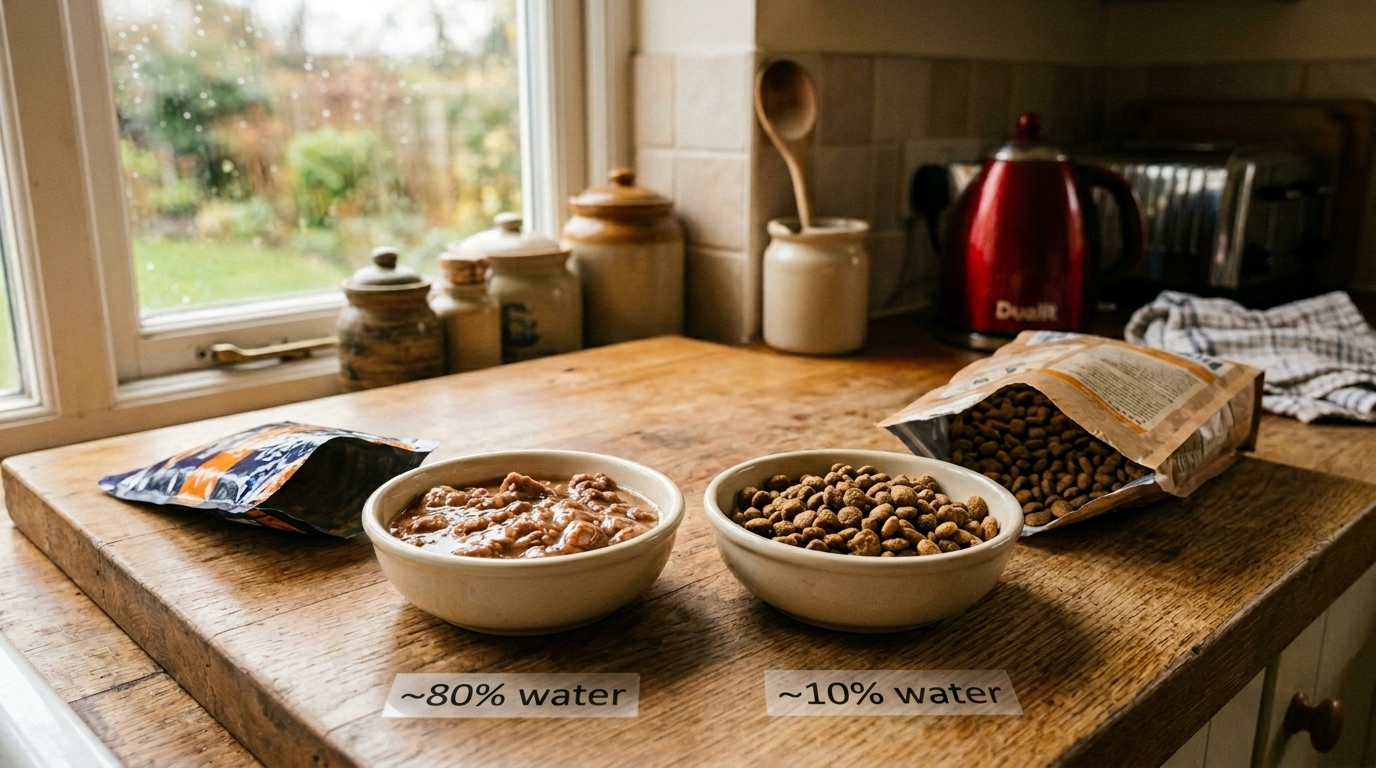
If there is one single change that does the most for hydration, it is this: feed wet food rather than dry. The difference in water content is dramatic, wet and pouch foods are mostly water, while dry kibble contains very little, so a pet eating wet food takes in a large amount of water with every meal without having to drink a drop extra. For a pet whose body is struggling to hold onto water, that built-in moisture is genuinely valuable, and it is the easiest hydration win available.
Happily, this fits neatly with the renal diet that is so central to managing kidney disease, because most prescription renal diets come in both wet and dry forms, as our renal-diet guide explains. So choosing the wet version of your pet's renal diet, where your pet will accept it, gives you the diet's benefits and a hydration boost in one. If your pet currently eats dry food, shifting toward wet, gradually and in line with the diet advice, is one of the most effective hydration steps you can take. For cats especially, who often have a naturally low thirst drive inherited from desert-dwelling ancestors, getting more water in through food rather than the bowl can make a real difference.
Make water irresistible
Beyond food, the aim is to make drinking as easy and as tempting as possible, and small environmental touches can noticeably increase how much a pet drinks.
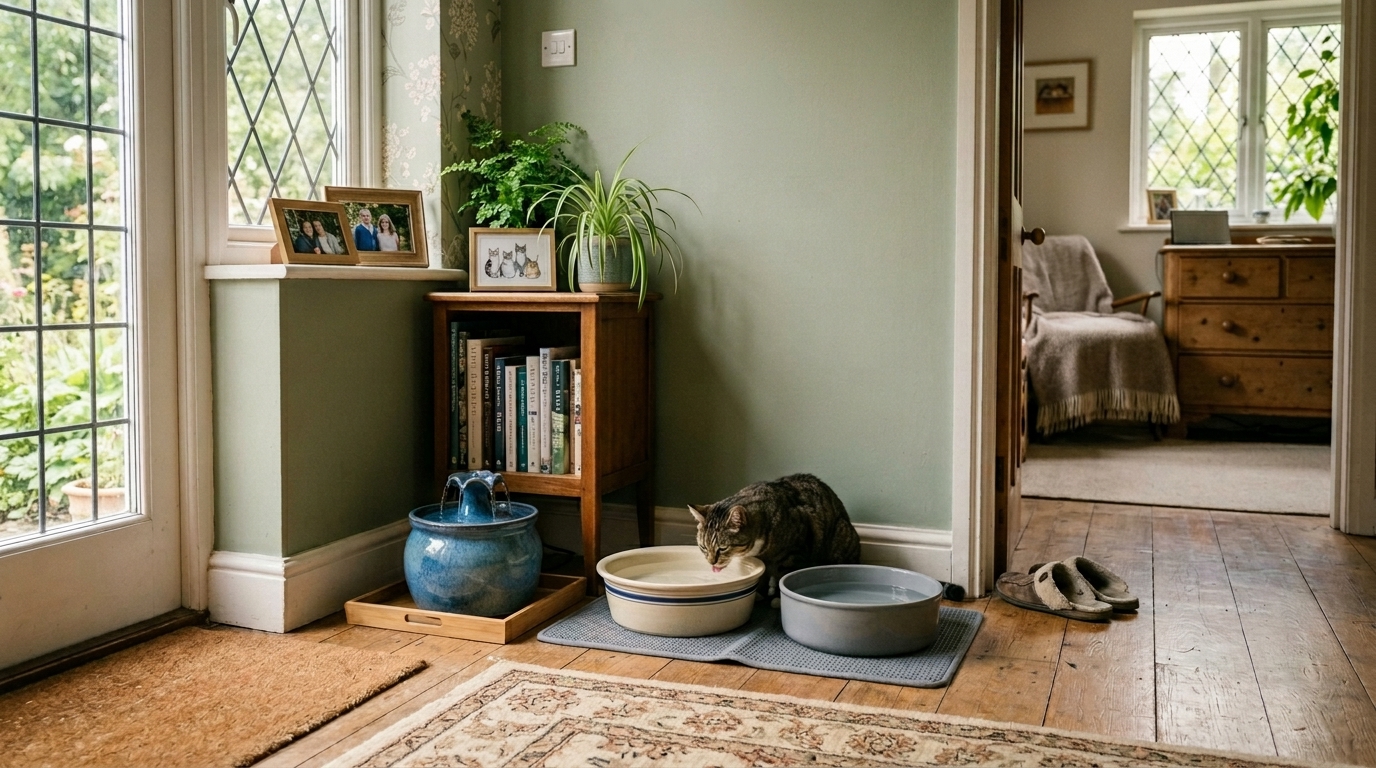
Offer water in several places around the home, not just one bowl, and importantly keep these water stations away from the food and the litter tray, since many cats instinctively dislike drinking right next to where they eat or toilet. Pay attention to the bowl itself: a wide, shallow bowl that does not press on a cat's sensitive whiskers is often preferred, and many cats drink more from it. Water fountains are worth trying for cats in particular, because the movement and the sound of running water draw many cats to drink far more than they would from still water. Keep the water fresh, changing it daily, as some pets are fussy about stale water. You can also boost intake through what your pet eats and drinks: adding extra water to wet food, offering a little plain unsalted broth or the water from a tin of fish, or floating a few ice cubes in warm weather can all tempt a reluctant drinker. A quick caution on flavourings, the same one our feeding guides give: check with your vet that any broth or additive is suitable, since some are high in salt, which is best limited in kidney disease.
Dogs and cats differ a little here. Dogs are generally more willing drinkers and often respond well simply to fresh, accessible water and wet food, while cats, the more reluctant drinkers, tend to benefit most from the fountains, the bowl placement, and getting moisture in through food. Try a few of these and see what your individual pet responds to.
Watch the trend: measuring water intake at home
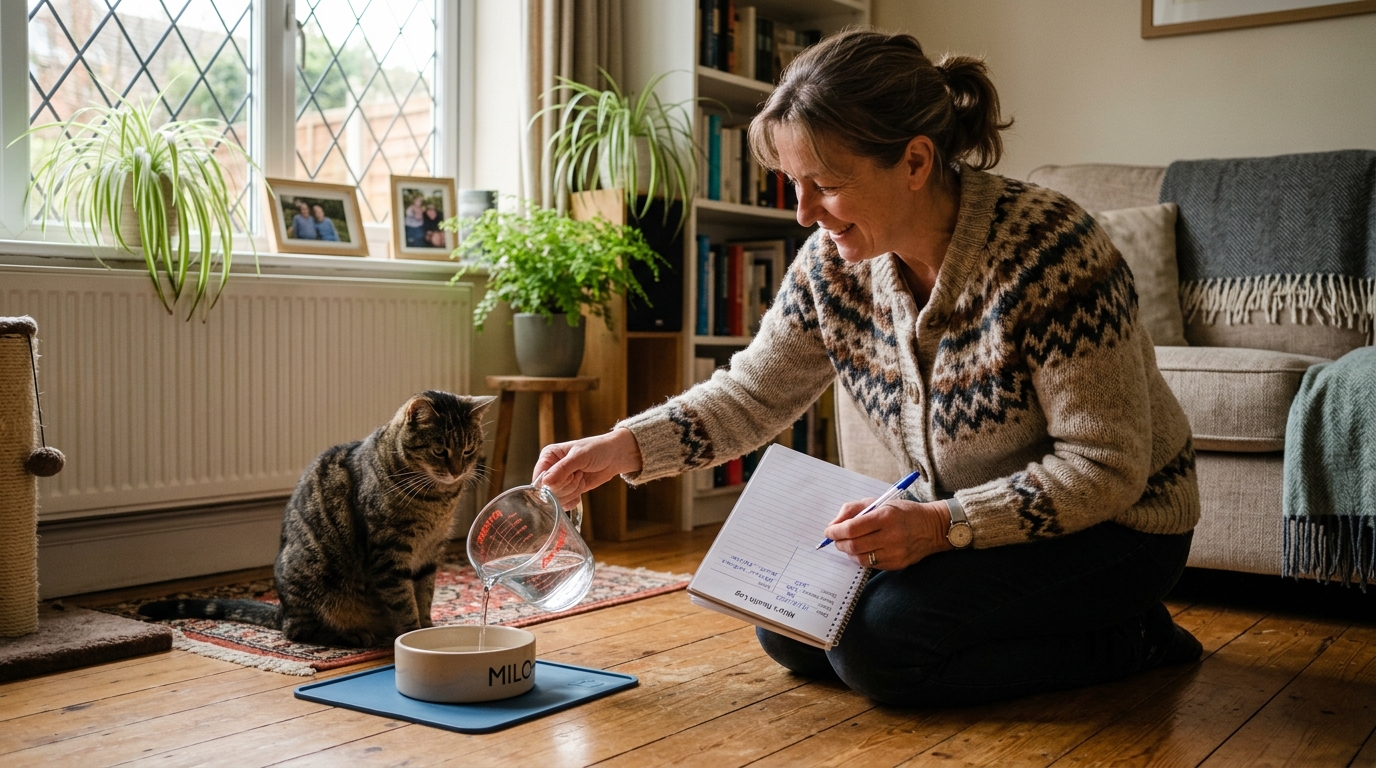
Because changes in drinking are such an important window onto kidney disease, it is genuinely useful to have a rough sense of how much your pet drinks, so that a real change registers with you. You do not need laboratory precision; a simple approach is to measure out a known amount of water into your pet's bowls each day and measure what is left the next day, accounting as best you can for evaporation and for multi-pet households. Doing this occasionally gives you a baseline and lets you spot a genuine shift.
As a rough guide, vets consider a dog to be drinking excessively when intake climbs above around 100 ml per kilogram of body weight per day, and a cat when it rises above roughly 50 ml per kilogram per day, though these are general thresholds and your own vet will interpret your pet's figures in context. The more important principle, though, is change from your pet's own normal: a notable rise in drinking can be significant even before it crosses a textbook threshold, because it is your individual pet's trend that matters most. And the key safety point is this: both a sudden jump in drinking and a fall in drinking warrant a call to your vet. A rise can signal the disease is progressing or another problem is brewing; a drop can mean your pet is feeling too unwell or nauseous to drink, which is its own concern. Logging your pet's drinking alongside their other signs, using our home tracker, turns this into a clear trend you can watch and share at appointments, rather than a vague impression.
When drinking isn't enough
Sometimes, despite wet food, fountains, and every tempting trick, voluntary drinking is simply not enough to keep a pet hydrated, particularly as kidney disease advances or during a rough patch. This is not a failure of your efforts; it is the nature of the disease, and there is a medical answer for it.
That answer is subcutaneous fluids, fluids given under the skin, which your vet may recommend and teach you to give at home. It sounds daunting and it is a step up from a water bowl, but it is a well-established, manageable part of caring for many kidney patients, and our complete beginner's guide to subcutaneous fluids walks through the whole thing gently. I will not cover the how-to here, because it deserves its own full guide, but the point to take away is that if drinking is not keeping up, fluids are the next tool, and they work alongside everything in this article rather than replacing it. The other thing worth checking, if your pet's drinking has dropped, is whether nausea is the culprit, because a queasy pet drinks less, and as our guide to comfort medications explains, that nausea is very treatable. A pet that feels better often drinks better.
So, to make today wetter, here is a short checklist you can act on now: move your pet toward wet food rather than dry, the single biggest lever; set out several bowls of fresh water around the home, away from food and litter, and try a fountain if you have a cat; add a little water to meals and offer vet-approved broth to tempt drinking; and keep a rough eye on how much your pet drinks, calling your vet if it noticeably rises or falls. None of these is difficult, and together they make a real difference to how well your pet copes with kidney disease, and to how they feel each day.
References
- Sparkes AH, Caney S, Chalhoub S, Elliott J, Finch N, Gajanayake I, Langston C, Lefebvre HP, White J, Quimby J. ISFM Consensus Guidelines on the Diagnosis and Management of Feline Chronic Kidney Disease. Journal of Feline Medicine and Surgery, 2016.
- International Renal Interest Society (IRIS). IRIS Treatment Recommendations for CKD in Cats and Dogs (2023).
- Quimby JM. Update on Medical Management of Clinical Manifestations of Chronic Kidney Disease. Veterinary Clinics of North America: Small Animal Practice, 2016.
See where your pet stands today
Tracking is the other half of managing kidney disease. Drop in the latest bloods to see the IRIS stage, then follow the trend as treatment settles in.
Check the IRIS stageYou're not doing this alone
Compare treatment journeys and talk to owners managing kidney disease. Free to join.
Join PetsLikeMine