

Is Your Pet at Risk of Kidney Disease? Breeds and Early Signs
Alastair Greenway
BVM&S MRCVS
Kidney disease is at its most manageable when it's caught early, and yet the early signs are precisely the ones owners are most likely to wave away as "just getting older." A cat drinking a bit more from the tap. A dog that has lost a little weight without anyone quite noticing when. A coat that looks slightly less glossy than it used to. None of it shouts "kidney disease," and all of it is easy to file under ordinary ageing. This guide is about noticing: who is most at risk, the quiet changes worth taking seriously, and the simple blood test that can catch trouble years earlier than the old markers could.
One word of reassurance before we go further, because this article is written partly for owners whose pets haven't been diagnosed with anything, and worry is easy to stir up. Most of what follows is not a reason to panic about a healthy older pet. It's a reason to be a little more observant, and to know when something is worth a vet's check rather than a wait-and-see. Read it in that spirit: not "my pet is doomed," but "here is how to catch this early if it ever does appear."
Age is the biggest risk factor
If there's one dominant risk factor for kidney disease, it's age, and the effect is strong, particularly in cats. Chronic kidney disease affects only a small percentage of cats overall, in the region of one to three percent, but that figure climbs steeply in older animals: studies suggest as many as 30 to 50 percent of cats over the age of 15 have some degree of kidney disease, and it's common enough that roughly a third of genuinely senior cats are affected. In dogs, kidney disease also becomes commoner with age, though it's less tightly tied to age than in cats and the overall numbers are lower.
The practical conclusion is simple and worth acting on: senior pets benefit from regular health screening, including kidney checks, before there's any obvious problem. There's real value in having baseline blood and urine results taken while your pet is well, because it gives your vet something to compare against later, and because, as we'll see, the earliest kidney changes are detectable long before your pet looks unwell. A kidney check in an older pet isn't pessimism; it's exactly the kind of early vigilance that buys good years.
Breeds that carry a higher risk
Alongside age, some breeds carry a higher inherited risk, and knowing whether your pet is one of them helps you and your vet decide how closely to watch. I want to frame this carefully, though: a predisposed breed isn't a doomed one. It simply means earlier and more regular kidney checks are worthwhile, so that if anything does develop, it's caught at the most treatable stage. The precise breed associations are the kind of detail worth confirming with your own vet, but the commonly reported ones are as follows.
Among cats, the Persian and related breeds such as the Exotic Shorthair carry a risk of polycystic kidney disease, an inherited condition with a gene test available. Several other breeds have been reported as overrepresented for kidney disease more generally, including the Maine Coon, Abyssinian, Siamese, Burmese, and Russian Blue, with the Abyssinian and Siamese also noted for a familial form involving amyloid protein.
Among dogs, the reported predispositions include the Cavalier King Charles Spaniel, the Bull Terrier, which carries a hereditary nephritis, the Boxer, the English Cocker Spaniel, which carries a familial nephropathy, the Shar Pei, prone to a kidney problem linked to amyloid, the Basenji, associated with a tubular disorder called Fanconi syndrome, the Samoyed, with an X-linked hereditary nephropathy, the Shih Tzu and Lhasa Apso, associated with renal dysplasia, and the Soft-Coated Wheaten Terrier, associated with protein-losing kidney disease. Our article on the causes of kidney disease goes into the mechanisms behind several of these. If your pet is on either list, the message isn't alarm but attentiveness: a little earlier, a little more often, with the kidney checks.

Early signs owners miss
Here's the heart of the matter: the quiet early signs that are so easy to dismiss. None of these alone proves kidney disease, and most have other, more innocent explanations too, which is exactly why they slip past. But noticed together, or noticed as a change from your pet's normal, they're worth a vet's attention.
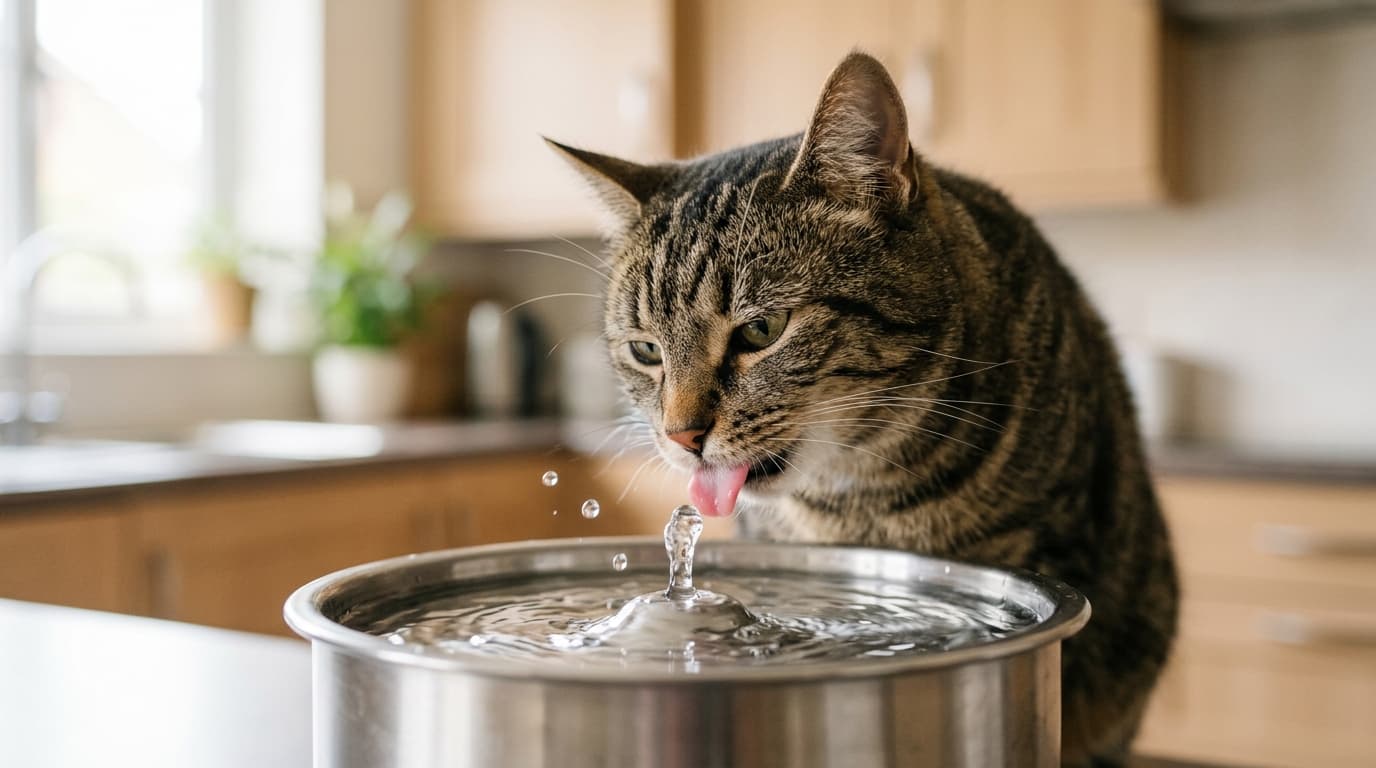
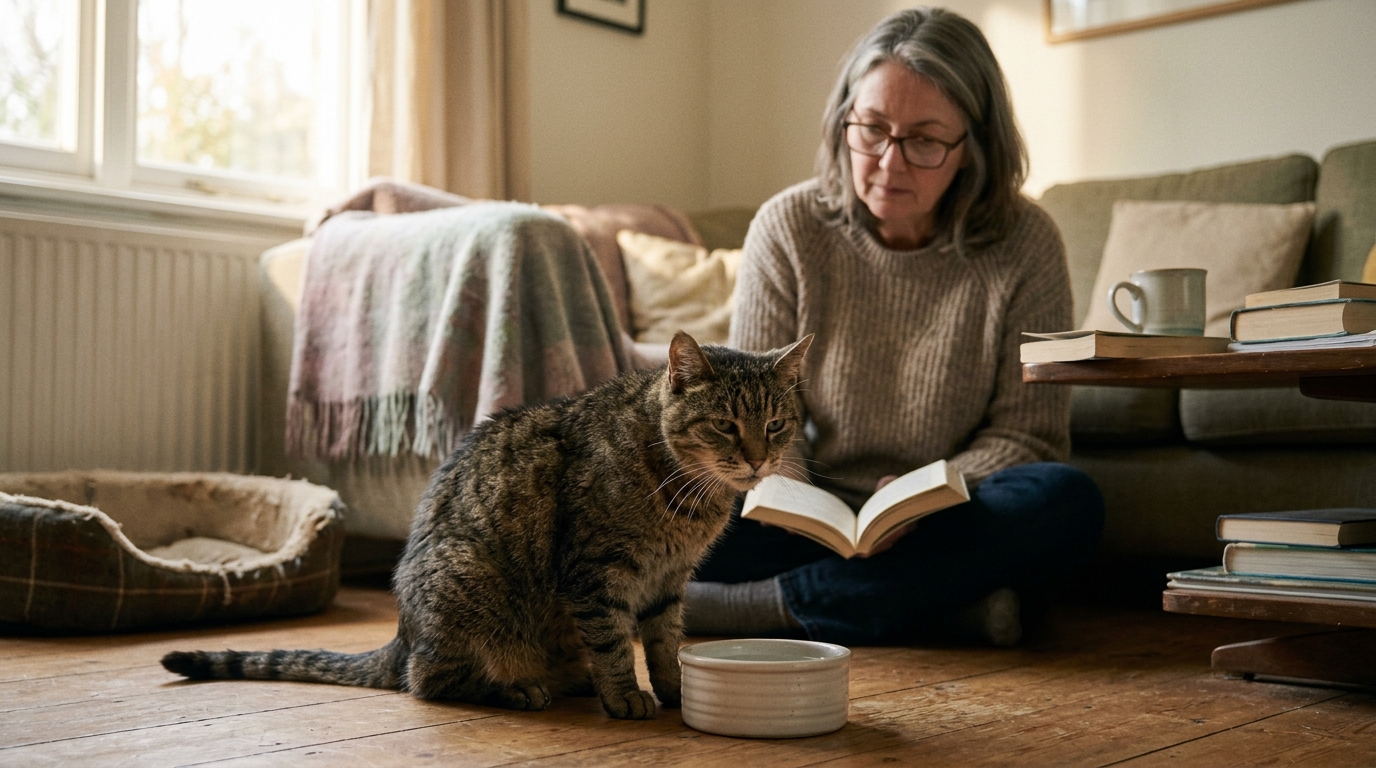
The first and most useful sign is a subtle increase in drinking and urinating. Because failing kidneys lose the ability to concentrate urine, a pet starts to lose more water and drinks more to compensate, so you might find yourself refilling the water bowl more often, seeing larger clumps in the cat litter, or noticing a dog asking to go out more. It's gradual, and it's the single change most worth taking seriously. Alongside it, watch for gradual weight loss, often slow enough that it creeps past unnoticed until you feel the bones more than you used to; a duller, more unkempt or scurfy coat, especially in cats, who may groom less when they feel below par; and a slightly reduced or pickier appetite. In cats specifically, reduced grooming and a quiet withdrawal are easy to read as "just slowing down with age."
Why do these matter so much? Because each is so dismissible. "She's always liked the tap." "He's just getting older." "It's been a hot few weeks." Any single sign may indeed be nothing. But a genuine, persistent change in these, particularly the drinking, is the body's early signal, and catching it is the whole point.
SDMA: the test that changes the timeline
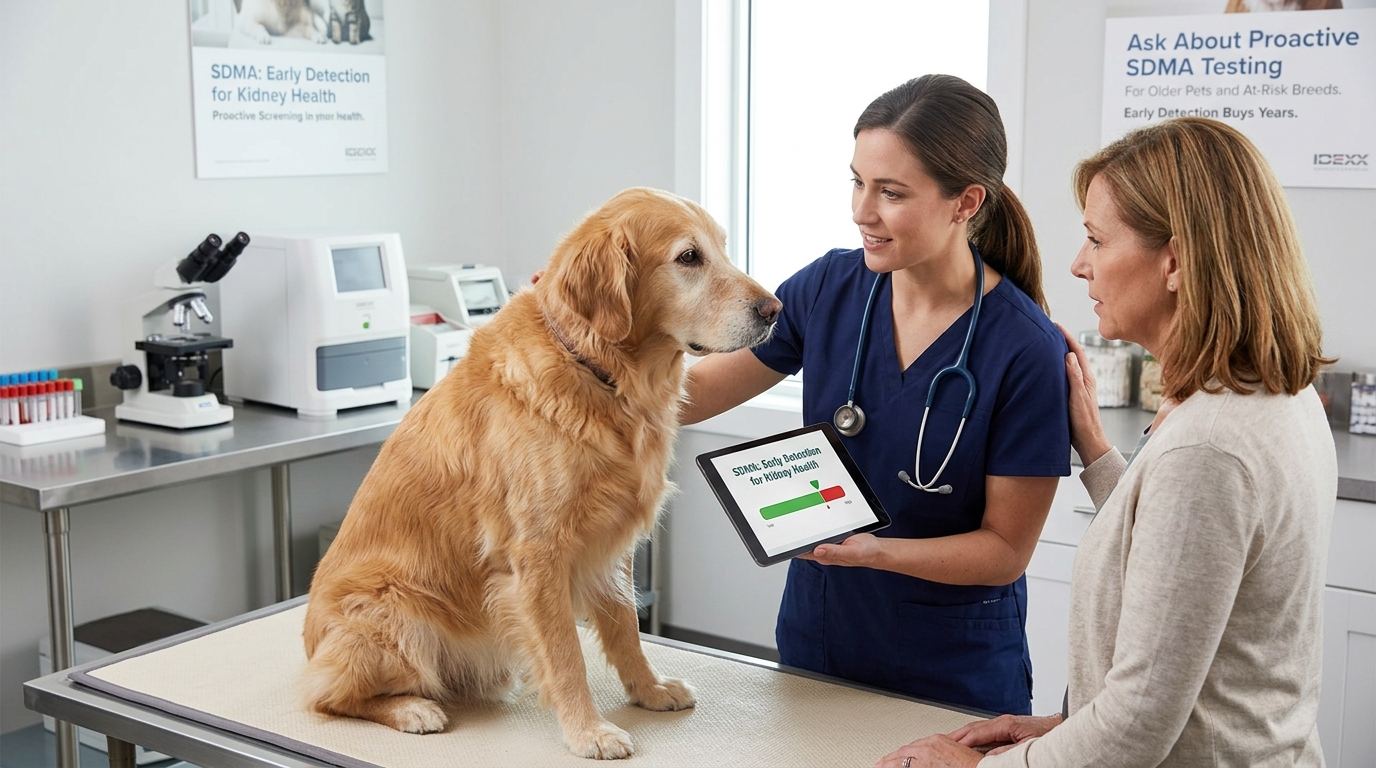
If age or breed puts your pet in a higher-risk group, or if you've noticed any of those quiet signs, there's one simple thing worth asking your vet about, and it can genuinely change the timeline of the disease: a blood test called SDMA.
SDMA is a marker of kidney function that rises earlier than the traditional marker, creatinine. Creatinine, the long-standing test, doesn't climb above normal until a great deal of kidney function is already lost, roughly three-quarters of it, whereas SDMA can flag a problem when far less function is gone, on average around 40 percent. In practical terms, that head start can amount to many months, sometimes well over a year, of earlier warning, during which the disease can be managed from a much stronger position. SDMA also has the advantage of not being thrown off by a thin pet's low muscle mass, which can make the old creatinine test read falsely reassuring in exactly the elderly cats most at risk. Our guide to reading the kidney bloods explains how it fits with the other numbers. The point here is that SDMA is a simple, widely available blood test, and it's reasonable to ask for it as part of a senior wellness screen, for an at-risk breed, or if your pet is showing any of the quiet signs above.
Turning this into a plan
Let me turn all of this into a short, practical plan, because the aim is useful vigilance, not anxiety.
First, it's worth having a rough sense of how much your pet drinks, so that a real increase would register with you rather than creeping past. You don't need to measure to the millilitre, just know roughly what's normal for them, so a change stands out. Second, for an older or at-risk pet, talk to your vet about senior health screening on a sensible schedule, blood tests including SDMA and a urine sample to check concentration, so that a baseline exists and changes can be caught early. Third, when you do raise a concern, be specific, because specifics get a better assessment: "he's drinking noticeably more and has lost half a kilo over a couple of months" is far more useful than "he seems a bit off." And fourth, hold onto the genuinely hopeful fact at the centre of all this: catching kidney disease at an early stage, stage 1 or 2, is exactly when the diet, the monitoring, and the rest of the management have the most to offer, and when they can do the most to give your pet a long stretch of good life.
So, could your pet be at risk? If they're older, or one of the breeds above, then yes, a little more than average, and that's worth knowing, not worrying about. The right response isn't to scrutinise every sip of water with dread, but to keep a relaxed eye on the quiet signs, to know that a real, persistent change in drinking, weight, coat, or appetite earns a vet visit rather than a shrug, and to ask about a simple SDMA test when it makes sense. Do that, and if kidney disease ever does appear, you'll very likely catch it early, which is the single best thing you can do for the years ahead. The next time your pet is due a check-up, that's the moment to mention any of this, and to ask whether a kidney screen is worthwhile for them.
References
- International Renal Interest Society (IRIS). IRIS Staging of CKD (modified 2023).
- Hall JA, Yerramilli M, Obare E, Yerramilli M, Jewell DE. Comparison of serum concentrations of symmetric dimethylarginine and creatinine as kidney function biomarkers in cats with chronic kidney disease. Journal of Veterinary Internal Medicine, 2014.
- Nabity MB, Lees GE, Boggess MM, et al. Symmetric dimethylarginine assay validation, stability, and evaluation as a marker for the early detection of chronic kidney disease in dogs. Journal of Veterinary Internal Medicine, 2015.
- Marino CL, Lascelles BDX, Vaden SL, Gruen ME, Marks SL. Prevalence and classification of chronic kidney disease in cats randomly selected from four age groups and in cats recruited for degenerative joint disease studies. Journal of Feline Medicine and Surgery, 2014.
See where your pet stands today
Tracking is the other half of managing kidney disease. Drop in the latest bloods to see the IRIS stage, then follow the trend as treatment settles in.
Check the IRIS stageYou're not doing this alone
Compare treatment journeys and talk to owners managing kidney disease. Free to join.
Join PetsLikeMine