


Everyday Life with a Kidney Patient: Litter, Comfort and Routine
Alastair Greenway
BVM&S MRCVS
A kidney diagnosis can feel as though it is about to take over your whole house, turning your home into a clinic and your days into a timetable of treatments. It does not have to be that way. A handful of small, sensible changes to your pet's environment and your daily routine make caring for a kidney patient sustainable, for both of you, so the medical plan, the diet, the fluids and the medicines covered in our other guides slot into ordinary life rather than dominating it. This article is about everything around the treatments: the litter tray, the warm bed, a calm routine, and fitting medication into your day without it becoming a battle. Set the home up well, and the daily care gets easier.
Litter and toileting: polyuria changes the maths
One of the first practical realities of kidney disease is that your pet produces more urine, often a lot more, because failing kidneys cannot concentrate it as they should. That simple fact changes the everyday maths of toileting, and adjusting for it heads off a lot of mess and stress.
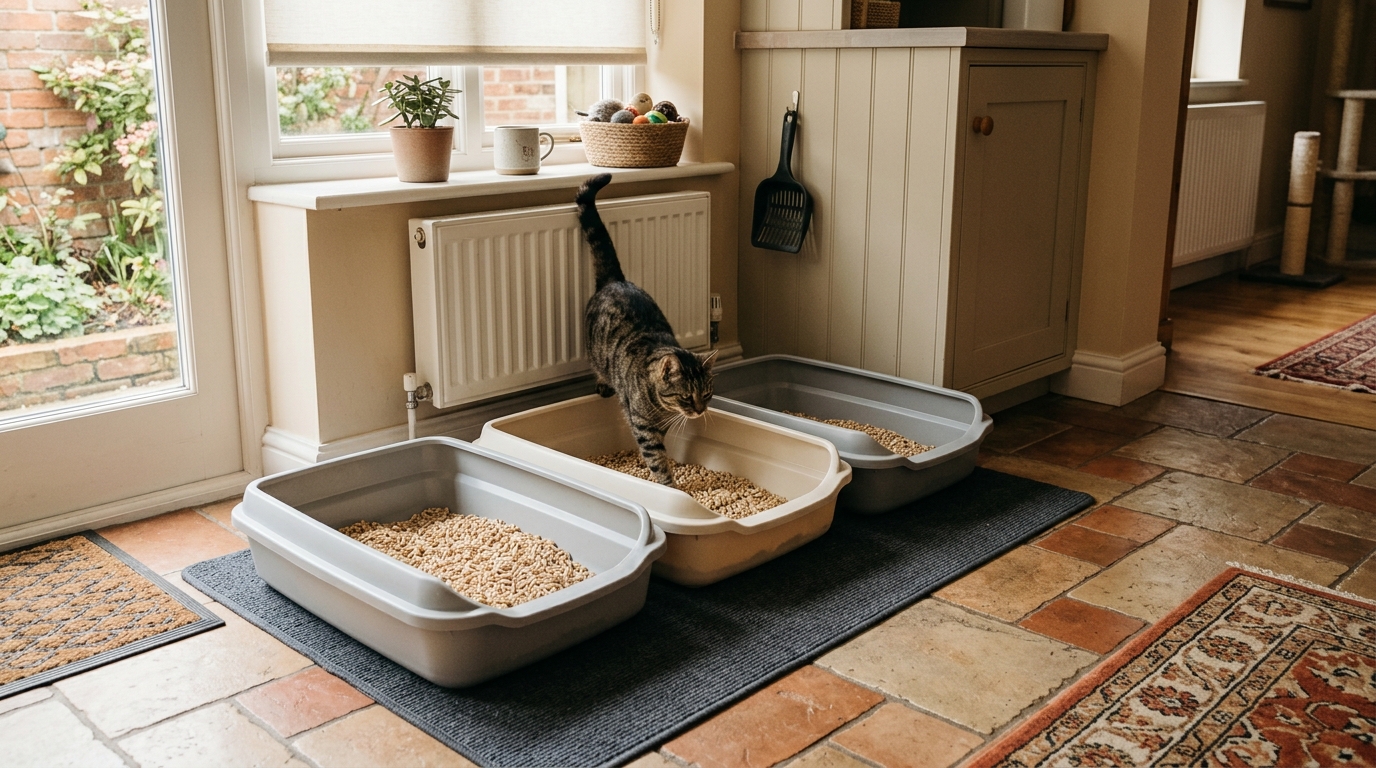
For cats, more and wetter urine means the litter tray fills faster and needs more frequent cleaning, and a cat that finds its tray unpleasantly full or soiled may start going elsewhere. So provide more trays than you might otherwise, keep them scrupulously clean, and make them easy to use: large, low-sided trays are kinder to an older or stiff pet that struggles to climb in, and placing them within easy reach, not up a flight of stairs, matters for a pet whose mobility is not what it was. This is also where kidney disease and arthritis often overlap, since both are common in older pets, and a stiff, achy cat may struggle with a high-sided tray or a hard-to-reach spot; our arthritis guides cover mobility in depth, and the simple fix here is easy, low, accessible toileting. For dogs, the equivalent is more frequent opportunities to go outside, including later at night or first thing in the morning, because a dog producing more urine simply cannot hold on as long as before.
The single most important shift in thinking: when a house-trained pet starts having accidents, it is almost always a medical consequence of the disease, not naughtiness or spite. Your pet is producing more urine than it can comfortably hold, and may not make it to the tray or the door in time. Meeting that with extra trays, more frequent access, and patience, rather than frustration, keeps both of you far happier and protects the bond between you.
Keeping a kidney patient warm and rested
Pets with kidney disease often feel the cold more than they used to, partly because they may have lost weight and condition, and a warm, comfortable resting place is a genuine kindness that helps them feel better. It is a small change that makes a real difference to comfort.
Provide a warm, soft, draught-free bed in a quiet spot, and make sure your pet's favourite resting places are easy to get to without having to jump or climb, which matters all the more if arthritis is in the picture too. Gentle, pet-safe warmth can be soothing for an older kidney patient: a warm bed away from cold floors, a cosy blanket, a spot in the sun, with the usual caution that any heat source must be safe and never able to overheat or burn. The aim is simply a pet that is warm, comfortable, and able to rest easily, because comfort and rest support wellbeing through a long-term illness, and a pet that is cold or struggling to settle is a pet under unnecessary strain.

Why a calm household protects the kidneys
This one surprises many owners, but it matters. Keeping your pet's life calm and low-stress is not just about happiness, it has a physical benefit, because stress can raise blood pressure and suppress appetite, both of which you are actively trying to manage in kidney disease. A calm pet is, in a real sense, a healthier kidney patient.
High blood pressure rides along with kidney disease and does quiet harm, as our guide to blood pressure explains, and stress pushes it in the wrong direction, so a settled environment supports the very thing the medication is working on. Stress also puts a pet off its food, and appetite is already precious in kidney disease. The practical ways to lower stress are mostly about predictability and easy access: keep to a steady daily routine, since pets find comfort in the familiar; make sure resources, food, water, beds, trays, are easy to reach without competition or effort; and keep the household as calm as you can, minimising the things that frighten or unsettle your particular pet. These are the same low-stress, resource-rich principles that underpin good feline care generally, and they pay off doubly in a kidney patient, by supporting both blood pressure and appetite while making your pet's days more contented.
Fitting medication into daily life
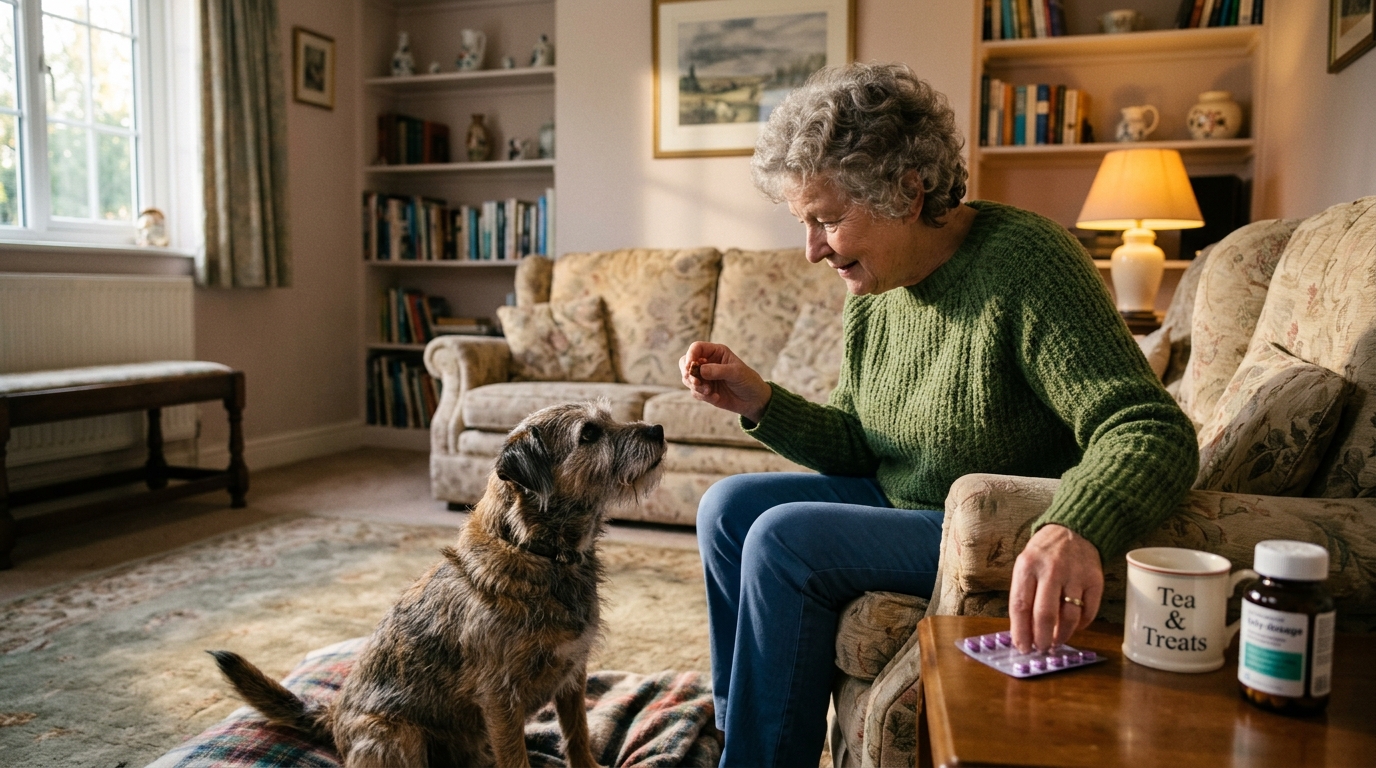
Kidney disease often comes with daily medication, and the goal here is to weave it into your routine so smoothly that it does not become a daily ordeal, because a twice-daily wrestling match is exhausting for you, distressing for your pet, and corrosive to the bond between you. The medicines matter, but how you give them matters too.
A few things help enormously. Build the medication into a consistent daily rhythm, the same times, the same calm manner, so it becomes a predictable part of the day rather than an ambush. Look for the easiest formulation for each medicine, since many can be given in pet-friendly ways: tablets hidden in a treat or a little food, where that is allowed within the diet, palatable liquid forms, or, for some medicines, a transdermal version absorbed through the skin of the ear that sidesteps pilling altogether, as is the case for the appetite medicine our comfort-medications guide describes. Pill-giving devices can make tablets easier and less stressful to give. And keeping track of what is due, especially when there are several medicines, is far easier with a simple schedule, which is exactly what our medication and supplement schedule template is for. The overarching principle is to make giving medication as low-stress and routine as possible, so that it protects rather than strains your relationship with your pet, because you are in this for the long haul and the daily experience needs to be sustainable.
Living with more than one pet
If you share your home with more than one pet, kidney disease adds a few practical wrinkles worth planning for. The most common is feeding: a pet on a renal diet often needs to eat separately from the others, both so it actually eats its own food and so the others do not hoover up a diet that is not meant for them, which can mean feeding in separate rooms, at separate times, or using a microchip-activated feeder that opens only for the right pet. Monitoring is the other challenge, because in a multi-pet household it can be genuinely hard to know which animal is drinking how much, urinating how much, or losing weight, so you may need to watch your kidney patient specifically, or separate them at key moments, to keep an accurate eye on the very things, intake, output, weight, that our hydration and weight guides explain are worth tracking. A little planning around feeding and monitoring keeps the medical side workable even in a busy multi-pet home.
The reassuring truth underneath all of this is that you set the home up once, and then the daily care gets easier. The extra litter trays, the warm accessible bed, the calm routine, the smooth medication habit, and the multi-pet arrangements are mostly one-time adjustments that then quietly do their work day after day. Put them in place, and caring for your pet through kidney disease becomes a sustainable part of normal life rather than something that takes the house over, which is exactly what makes it possible to keep doing it well, with patience and affection, for the long run ahead.
References
- Sparkes AH, Caney S, Chalhoub S, Elliott J, Finch N, Gajanayake I, Langston C, Lefebvre HP, White J, Quimby J. ISFM Consensus Guidelines on the Diagnosis and Management of Feline Chronic Kidney Disease. Journal of Feline Medicine and Surgery, 2016.
- Ellis SLH, Rodan I, Carney HC, Heath S, Rochlitz I, Shearburn LD, Sundahl E, Westropp JL. AAFP and ISFM Feline Environmental Needs Guidelines. Journal of Feline Medicine and Surgery, 2013.
- International Renal Interest Society (IRIS). IRIS Treatment Recommendations for CKD in Cats and Dogs (2023).
- Acierno MJ, Brown S, Coleman AE, Jepson RE, Papich M, Stepien RL, Syme HM. ACVIM consensus statement: Guidelines for the identification, evaluation, and management of systemic hypertension in dogs and cats. Journal of Veterinary Internal Medicine, 2018.
See where your pet stands today
Tracking is the other half of managing kidney disease. Drop in the latest bloods to see the IRIS stage, then follow the trend as treatment settles in.
Check the IRIS stageYou're not doing this alone
Compare treatment journeys and talk to owners managing kidney disease. Free to join.
Join PetsLikeMine