


Complementary and Unproven Kidney Treatments: What the Evidence Says
Alastair Greenway
BVM&S MRCVS
Within minutes of a diagnosis, the internet fills with products promising to help: kidney "support" supplements, "natural" remedies, "detox" cures, each pitched at exactly the worried, loving owner you have just become. Some of these products have genuine, if modest, evidence behind them. Many have none. A few are simply exploitative, selling false hope to desperate households. This guide takes an even-handed, evidence-first look at the lot, so that your money and your hope go where they actually help your pet, and not where they do not.
One word on spirit before we start. Wanting to do everything possible for a sick pet is one of the kindest impulses there is, and reaching for a supplement comes from love, not foolishness. So this is not about mocking the hope; it is about steering it toward the things that genuinely earn it. Let us go through the main categories.
Omega-3 fatty acids: the genuinely useful one
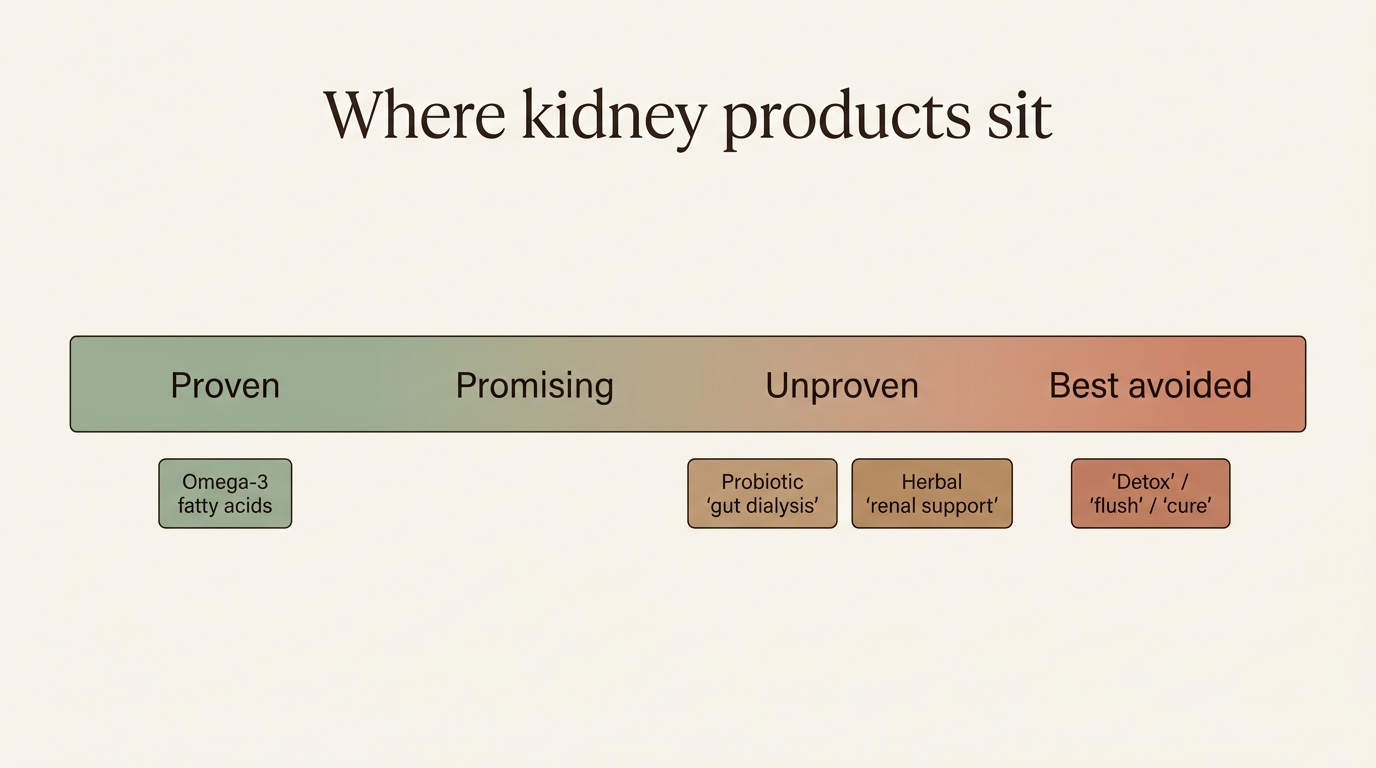
Let us start with the good news, because there is some. Omega-3 fatty acids, the EPA and DHA found in fish oils, have a modest but real evidence base in kidney disease, and they are the one "supplement" category that genuinely earns a place. Studies in dogs have found that these omega-3 fatty acids have a protective effect on the kidneys, helping to reduce protein loss and slow the decline of kidney function, while, interestingly, the omega-6 fatty acids found in many other oils may do the opposite. So omega-3s are not snake oil; they are a legitimate, if not miraculous, part of kidney care.
Here is the practical point that saves you money, though: your pet is very probably already getting them. Because the evidence supports omega-3s, the manufacturers of prescription renal diets build them into those diets, so a pet eating its renal diet is generally already receiving an appropriate amount, formulated in the right balance, without needing a separate supplement at all. If your pet is on a renal diet, then, you usually do not need to buy fish oil capsules on top, and if your pet is not on a renal diet, or you are considering a supplement for some reason, that is a conversation to have with your vet, who can advise on whether it adds anything and at what dose, rather than guessing. The headline is reassuring and practical: the one supplement with real evidence is usually already in the bowl.
Probiotics and "gut dialysis" (Azodyl and similar)
Next, a category with an appealing theory and disappointing evidence, which is worth understanding properly because it is heavily marketed. Certain probiotic products, of which Azodyl is the best known, are sold on the idea of "enteric dialysis" or "gut dialysis": the notion that specific gut bacteria can mop up the nitrogenous waste products that build up in kidney disease, shifting the body's clean-up job into the intestine. It is a genuinely clever idea on paper, and it is easy to see why it appeals.
Unfortunately, the actual evidence does not bear it out. A well-conducted, double-blinded, controlled trial in cats with kidney disease found that the product failed to reduce the waste markers in the blood, with no meaningful difference from placebo, and the broader body of evidence for this "gut dialysis" approach in pets remains weak to negative. So the verdict, the kind you can actually act on, is that these products are not supported by the evidence as a way to treat kidney disease, and the money spent on them is generally money that would do more good elsewhere. Probiotics have their genuine uses for some digestive problems, but propping up failing kidneys does not, on current evidence, appear to be one of them. If you are already giving one and your pet likes it and tolerates it, it is unlikely to do harm, but it should not displace the treatments that do work, and it is not a substitute for them.
Don't confuse these with phosphate binders, which ARE proven
A crucial clarification belongs right here, because it is easy to lump everything that comes as a powder or a paste into one mental box marked "supplements," and that would be a serious mistake. Phosphate binders are not in the same category as the unproven supplements above. They are an evidence-based, proven part of kidney treatment, with a clear job, controlling the phosphate that both drives the disease and makes pets feel unwell, as our guide to phosphate binders explains in full.
So when your vet recommends a phosphate binder, please do not file it alongside the "kidney support" products and dismiss it as just another supplement of doubtful value. It is a genuine treatment doing genuine work, and it sits firmly on the "proven" end of the spectrum. The skill is telling the proven from the unproven, and the binders are a clear example of something that looks superficially like a supplement but is, in fact, real medicine.
Herbal and "renal support" products
Then there are the herbal and traditional "renal support" products, including rehmannia-based remedies such as Rubenal and various traditional preparations, and these call for real caution on two fronts. First, the evidence: for most of these, the evidence in kidney disease is thin, far short of what would let anyone recommend them as effective, so they sit in the "unproven" zone whatever the marketing claims.
Second, and importantly, "natural" does not mean "safe" or "without consequence." Herbal products can interact with the medicines your pet genuinely needs, can vary considerably in their actual content and quality because they are far less tightly regulated than licensed medicines, and can occasionally cause harm in their own right. That combination, unproven benefit plus real potential for interaction or contamination, is why these deserve genuine caution rather than a casual try. There is one rule that matters above all here, and it applies to every supplement and remedy: always tell your vet everything you are giving your pet, including anything "natural" or bought without a prescription, so they can check for interactions and keep the whole picture safe. A remedy you have not mentioned is the one most likely to cause an unpleasant surprise.
"Kidney detox", "flush" and miracle cures
Now we reach the part of the market that crosses from merely unproven into genuinely exploitative, and where I will be most direct, because protecting you here matters most. Be very wary of any product promising to "detox" the kidneys, "flush them clean," "repair" or "regenerate" failing kidneys, or "cure" kidney disease. These claims should set off loud alarm bells.
The reason is simple biology: kidneys cannot be "detoxed" or "flushed clean" in the way these products imply. Chronic kidney disease involves the permanent loss of functioning kidney tissue, which no supplement, herb, or cleanse can regrow or restore, and there is, at present, no cure. So a product promising to do any of those things is, however sincerely it may sometimes be sold, making a promise it cannot keep, and the danger is real on three counts: it wastes money a household may not have, it can offer false hope that delays or displaces the proven care that genuinely helps, and some such products can themselves harm a vulnerable, compromised pet. The kindest thing I can do is name this plainly: miracle kidney cures do not exist, and the more confidently a product promises to fix or flush the kidneys, the more sceptical you should be.
CBD and the CKD pet
A brief, candid word on CBD, since owners increasingly ask. In the interests of full transparency, you should know that the founder of this platform has a separate commercial interest in a CBD brand, so I want to be especially careful and even-handed here rather than enthusiastic. The evidence position is that there is, at present, only limited evidence specifically for CBD in kidney disease, so it cannot be recommended as a treatment for the kidney condition itself, and there are real reasons for caution, including how it might interact with other medicines and how it is processed by a compromised body. If you are considering it for any reason, the essential step is to tell your vet and be guided by them. For the fuller picture of what the evidence does and does not show for CBD in pets, our dedicated article on CBD and cannabis for pets goes into it in depth, and the same disclosure and the same caution apply.
Five questions to judge any product by
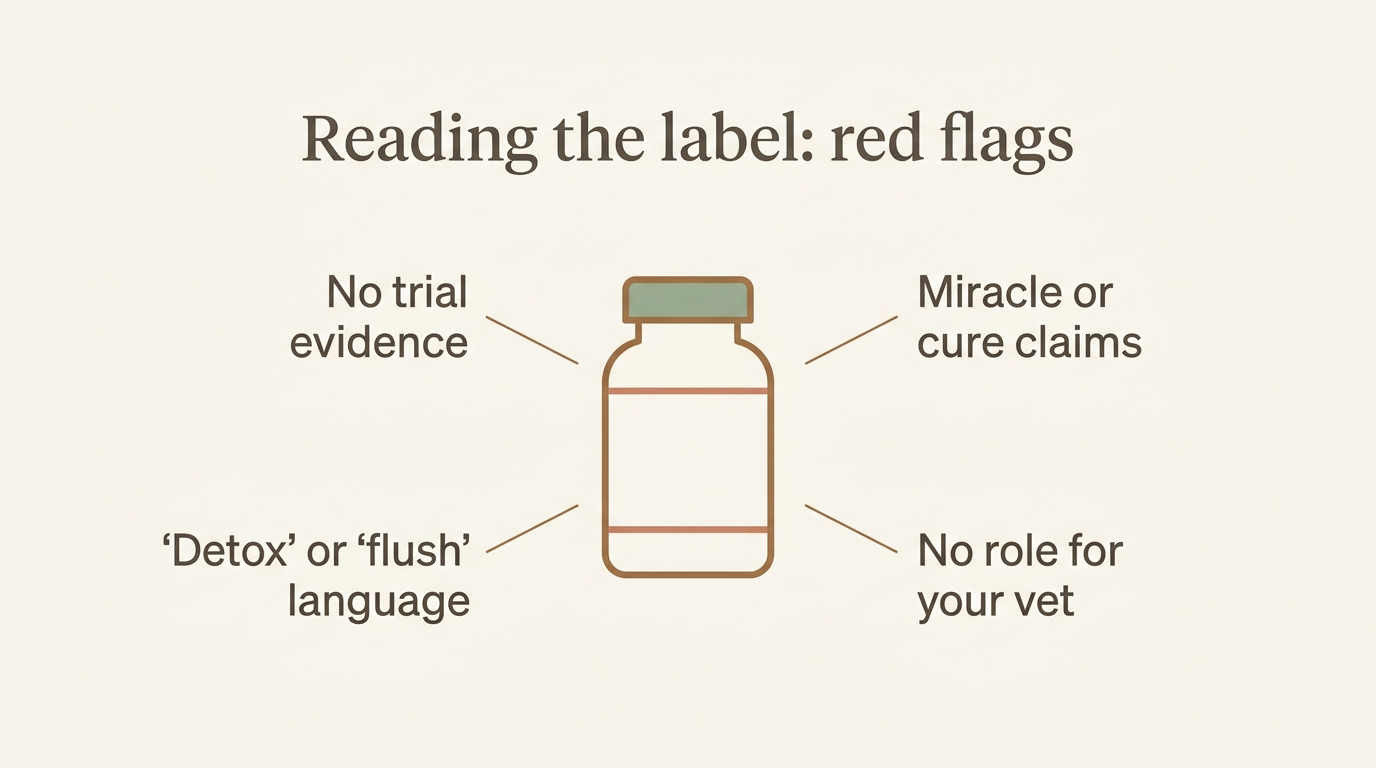
Rather than try to cover every product that exists or will exist, here is a simple framework you can apply to any "kidney support" product you come across, now or in the future. Ask yourself five questions. First, is there a real clinical trial behind it, actual evidence in cats or dogs, not just testimonials or a persuasive story? Second, does my own vet recommend it, the person who knows my pet and has nothing to sell me? Third, what does it actually cost, over the weeks and months? Fourth, could it harm my pet or interact with their real medicines? And fifth, the one people forget, what am I not spending that money on instead, what proven care could the same money buy? Run any product past those five questions and the genuinely worthwhile ones tend to stand out clearly from the rest.
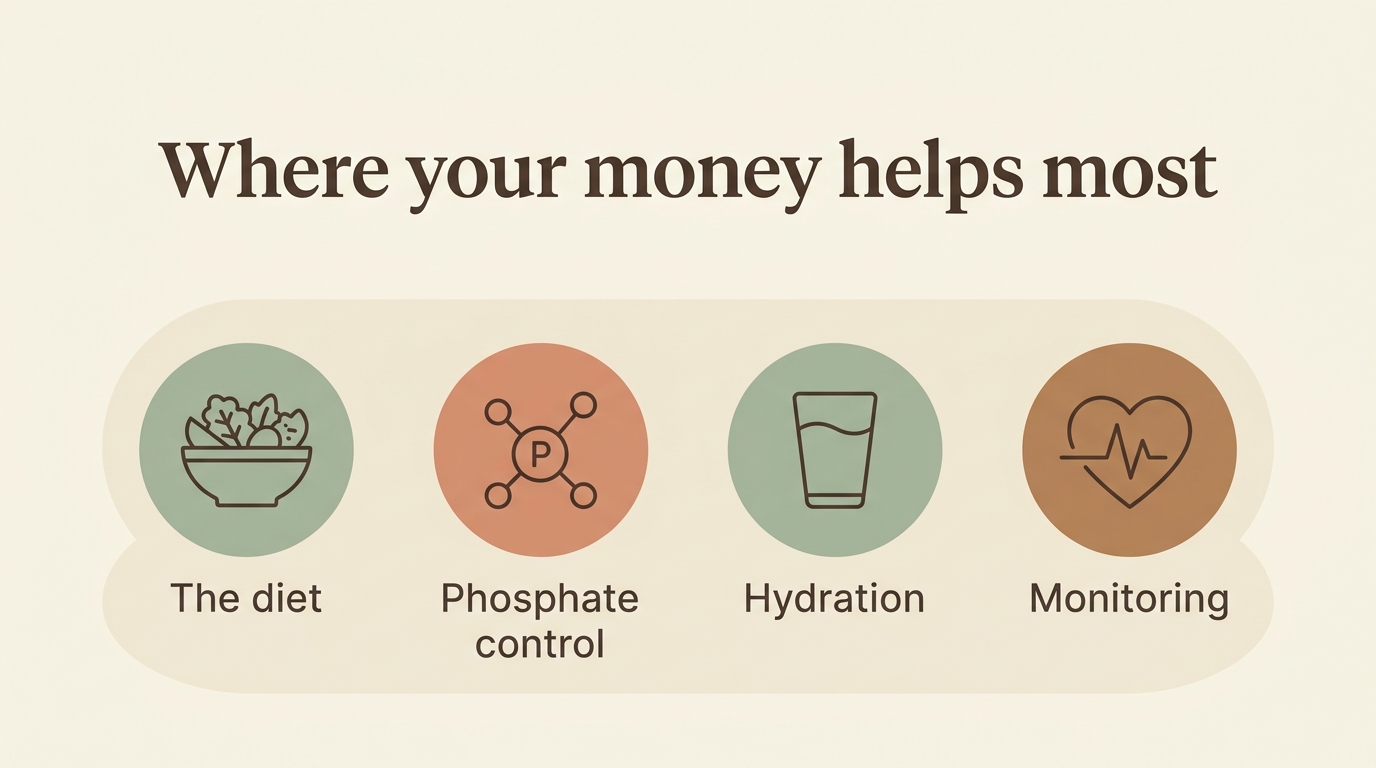
The bottom line, then, is the same one our whole approach to kidney care comes back to. The proven levers, the renal diet, phosphate control, good hydration, blood-pressure control, the comfort medicines that help your pet feel well, and regular monitoring, genuinely work, and together they outperform any supplement on the market. So spend there first, every time. If, after that, you want to consider something complementary, take it to your vet, judge it by those five questions, and keep your scepticism sharpest for anything promising a cure. Your money and your hope are precious, especially now, and the kindest, most effective place to invest both is in the care that has actually been shown to give your pet more good days.
References
- Brown SA, Brown CA, Crowell WA, Barsanti JA, Allen T, Cowell C, Finco DR. Beneficial effects of chronic administration of dietary omega-3 polyunsaturated fatty acids in dogs with renal insufficiency. Journal of Laboratory and Clinical Medicine, 1998.
- Rishniw M, Wynn SG. Azodyl, a synbiotic, fails to alter azotemia in cats with chronic kidney disease when sprinkled onto food. Journal of Feline Medicine and Surgery, 2011.
- International Renal Interest Society (IRIS). IRIS Staging of CKD (2023).
- Gamble LJ, Boesch JM, Frye CW, et al. Pharmacokinetics, safety, and clinical efficacy of cannabidiol treatment in osteoarthritic dogs. Frontiers in Veterinary Science, 2018.
- Aponia journal (authored by the same veterinary surgeon; relationship disclosed): CBD and Your Pet: What the Law Actually Says.
See where your pet stands today
Tracking is the other half of managing kidney disease. Drop in the latest bloods to see the IRIS stage, then follow the trend as treatment settles in.
Check the IRIS stageYou're not doing this alone
Compare treatment journeys and talk to owners managing kidney disease. Free to join.
Join PetsLikeMine