

Weight and diabetes: how slimming can drive remission
Alastair Greenway
BVM&S MRCVS
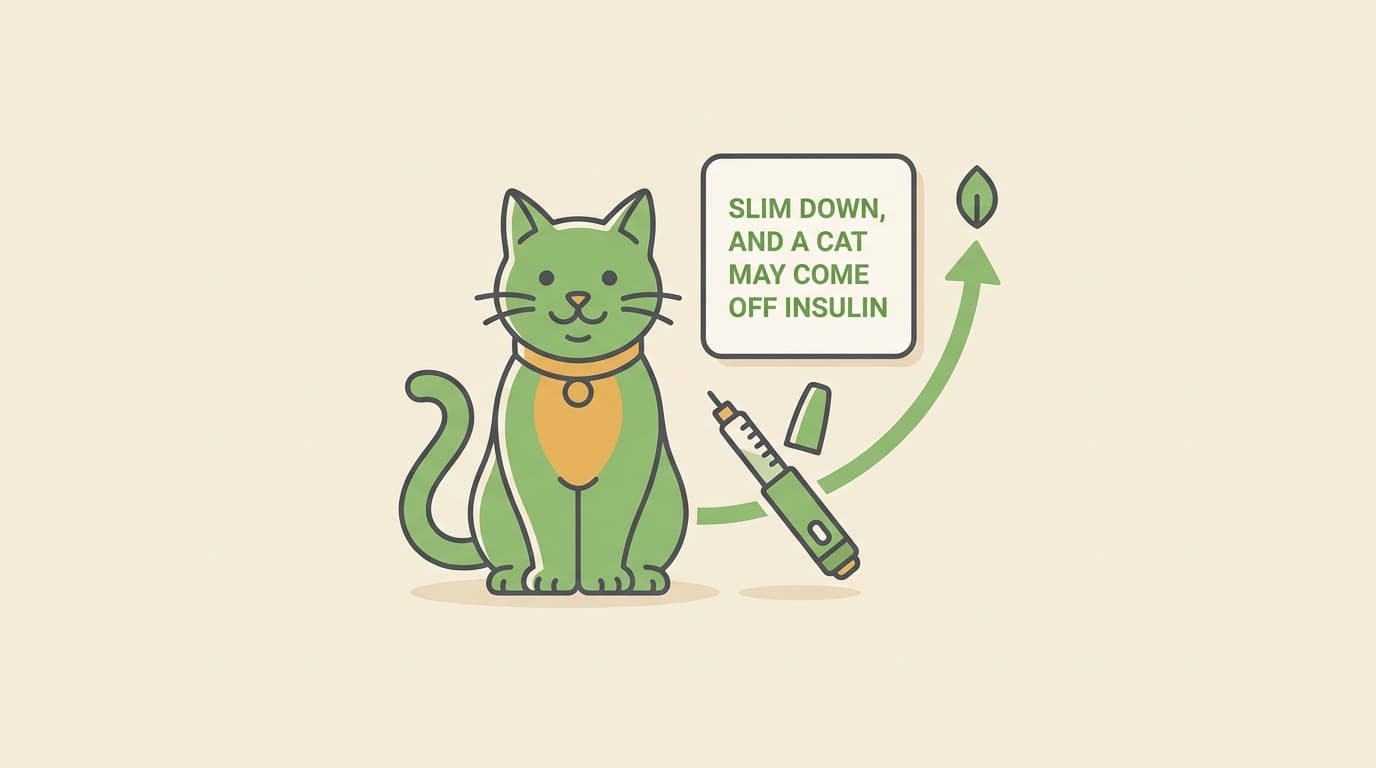
For a cat, slimming down can mean coming off insulin
An overweight cat with diabetes can, by getting down to a healthy weight, push the diabetes into remission. That means no more daily injections. The needle goes back in the drawer, the twice-a-day routine stops, and the cat carries on living a normal life. It's a genuinely good piece of news, so it's worth leading with.
Remission has a precise meaning, so it's worth saying plainly what it is. A diabetic cat is in remission when she needs zero insulin for at least four weeks, with no signs of diabetes (Taylor et al., 2025). It isn't a cure in the sense that the diabetes can never come back, and it isn't guaranteed for every cat. But it's real, it happens, and the single biggest thing that makes it more likely is taking the excess weight off.
Let's be straight about the expectation, because the prize is genuine but it isn't a promise. Remission is mostly a cat story, not a dog one (we'll come to dogs further down). It doesn't happen for every cat. And the odds are far, far better the earlier you act, before the diabetes has been running unchecked for months. So if your cat has just been diagnosed, this is the moment that matters most.
Why weight and feline diabetes are so tightly linked
To see why slimming can switch the diabetes off, it helps to know why the weight switched it on in the first place. The mechanism is simpler than it sounds.
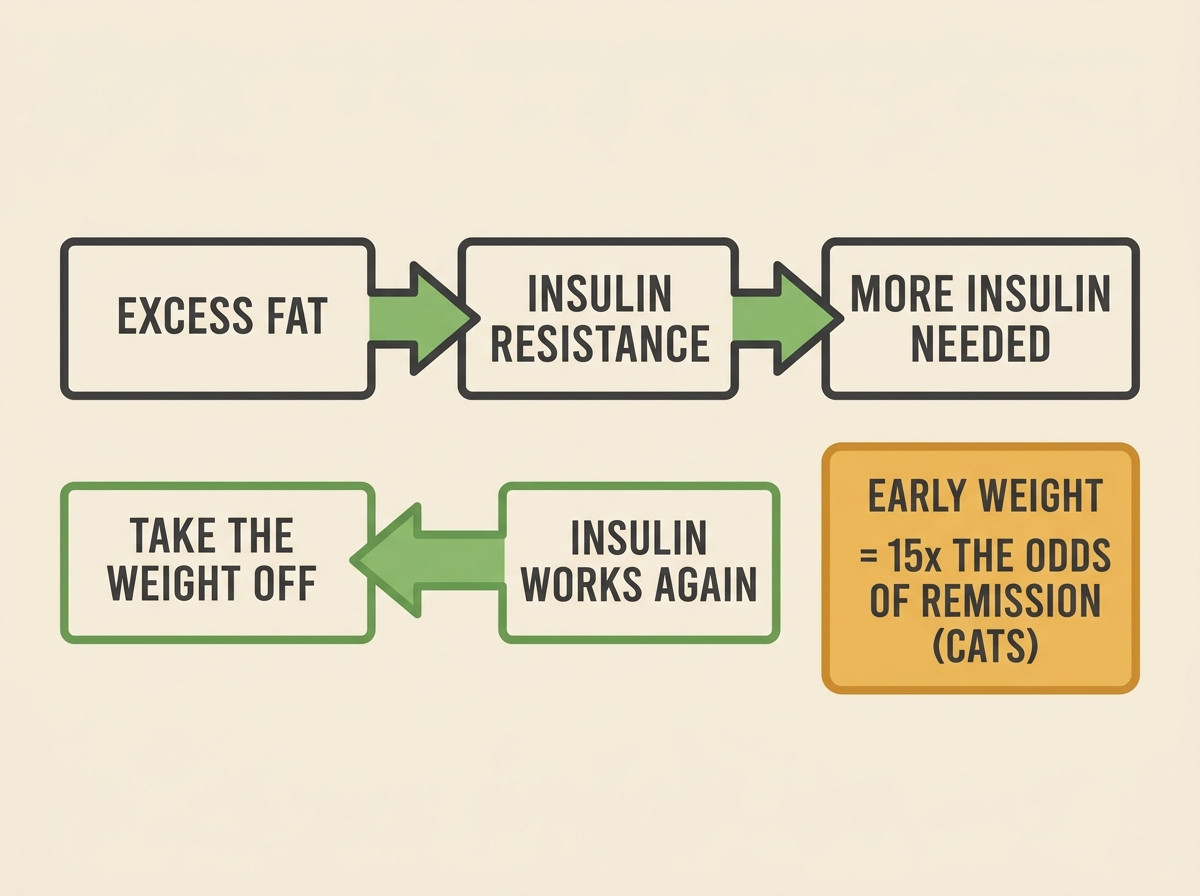
Excess body fat makes the body resistant to insulin (Wang et al., 2026). Insulin is the hormone that lets cells take sugar out of the blood and use it for fuel. When there's too much fat, the cells stop responding properly, so the pancreas has to pump out more and more insulin to get the same job done. For a while it keeps up. Then the cells that make insulin start to wear out under the constant demand, the supply falls behind, blood sugar climbs, and that's diabetes (Bjornvad, 2015).
Obesity is the major risk factor for diabetes in cats, and the picture closely mirrors type 2 diabetes in people (Wang et al., 2026). That's the key, because the hopeful part follows directly from it. The insulin resistance that excess fat causes is reversible (Taylor et al., 2025). Take the weight off, and the cells start listening to insulin again. The cat's own pancreas, if it hasn't been pushed too far for too long, can get back on top of things. That's why a healthy weight isn't just generally good for a diabetic cat. It's the lever that can let the body run its own blood sugar again, without the daily jab.
Early weight loss and the odds of remission
Here is the figure to hold on to. In overweight diabetic cats, losing weight early matters enormously. Cats that achieve effective early weight loss, at least 2% of body weight in the first month of insulin treatment, have around a 15-fold increase in their odds of going into remission (Taylor et al., 2025). Fifteen times the chance. That's not a small nudge, it's one of the strongest things known to tip a cat towards coming off insulin.
A 15-fold jump from a modest, early loss is why vets get so insistent about acting fast and getting the weight moving in those first weeks. The cat that loses a little, early, is playing the odds in her favour. The cat that stays heavy, or whose weight is only tackled months down the line, is playing them against.
It's also fair to say the overall remission rates reported in studies vary a lot, from around 11% to over 60%, depending on the cat and how early treatment starts (Taylor et al., 2025). That spread is the plain truth of it. Some cats remit, many don't, and where your cat lands depends heavily on factors you can influence, with early weight loss near the top of the list. So treat the number as what it is. The prize is real, the clock is ticking, and getting the weight off early is the most reliable way to load the dice. It is never a guarantee, and any source that promises one is overselling it.
Never crash-diet a diabetic cat
Now the part that is not optional, and please read it before you change a single meal. A diabetic cat must lose weight slowly and safely, and the way you do it can be dangerous if you get it wrong.
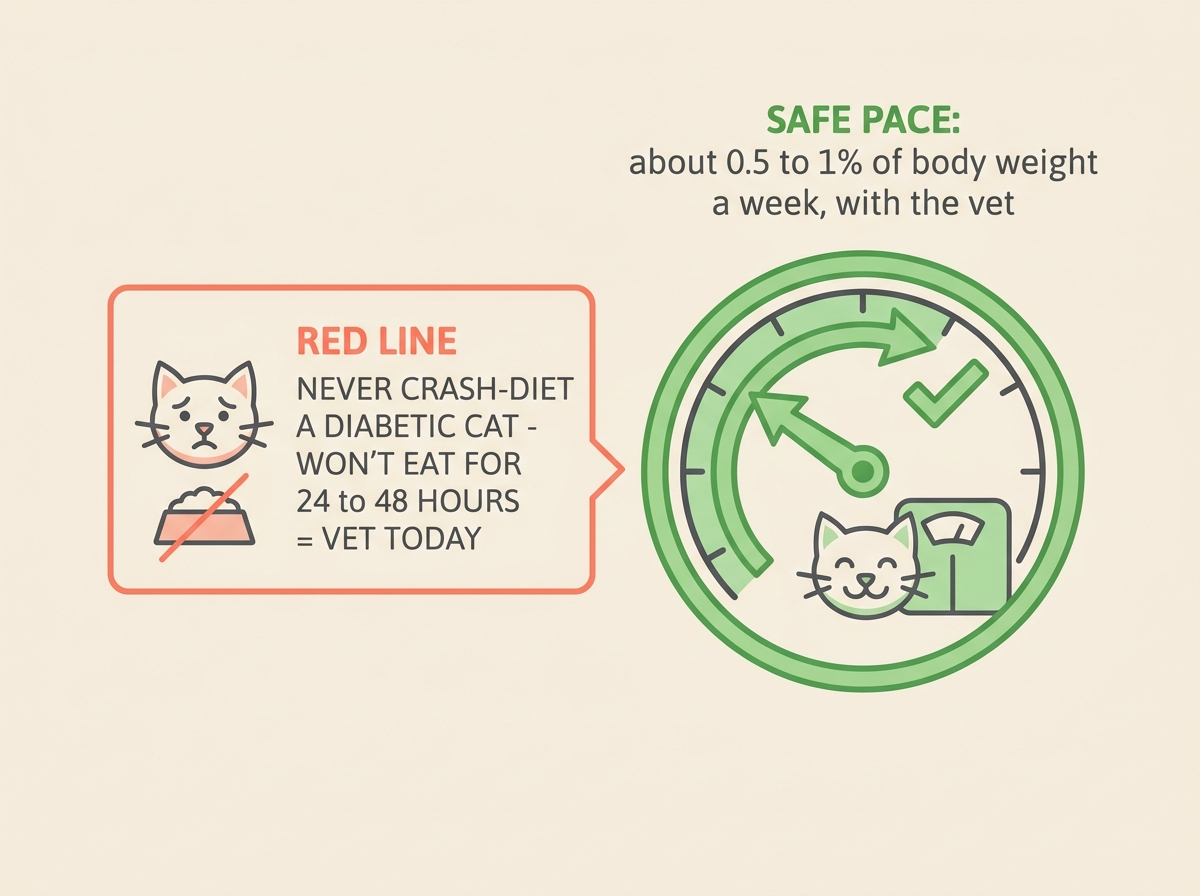
Cats are built differently from us and from dogs when it comes to going without food. If an overweight cat is dropped onto far too little food, or stops eating for any reason, her body floods the liver with fat and she can develop hepatic lipidosis, or fatty liver, within days (Wang et al., 2026). It's life-threatening, and it can come on fast. So the rule is absolute. An overweight cat that won't eat for 24 to 48 hours is an emergency, not a successful diet. If your cat goes off her food, you call the vet that day. Our full guide to this, Never crash-diet a cat: the hepatic lipidosis rule, walks through the warning signs.
So what does safe look like? Slow. The target is a loss of about 0.5 to 1% of body weight a week, aiming for a body condition score of 5 out of 9, with food never withdrawn (Taylor et al., 2025). On a 5kg cat that's up to a rough half-pound a month, which feels gentle, and gentle is exactly right. Slow weight loss also protects her muscle and helps avoid the fatty liver, where a crash diet would risk both (Wang et al., 2026).
And here is the line that separates this from an ordinary diet. Slimming a diabetic cat is a job you do with your vet, not on your own. As the weight comes off and the insulin starts working better, the insulin dose will usually need lowering, sometimes quite quickly, or the cat can tip into a dangerous low. The diet itself often shifts to a higher-protein, lower-carbohydrate ration. Blood sugar is monitored, frequently at home. None of that is something to manage solo. The weight loss, the insulin and the diet move together, under guidance, which is what makes it both safe and effective.
Dogs are different: weight control helps, but it's not about remission
If you've got a diabetic dog, remember that dogs are not cats here.
Most dogs have insulin-dependent diabetes. The type-2-like, obesity-driven form that can remit in cats seldom develops in dogs, because the canine pancreas tends to cope better with the extra demand right up until something else damages it (Bjornvad, 2015). So a diabetic dog won't usually come off insulin by slimming down, and it would be unkind to dangle that hope when it rarely happens. Remission is, in the main, a cat story.
That said, please don't read this as weight not mattering for your dog, because it matters a great deal, just for different reasons. Obesity causes insulin resistance in dogs just as it does in cats (Bjornvad, 2015), so an overweight diabetic dog is harder to control and tends to need more insulin to hold the same blood sugar. Excess weight also drives pancreatitis, inflammation of the pancreas, which is both a common cause and a common complication of canine diabetes and which damages the very cells diabetes already threatens. Getting an overweight diabetic dog to a healthy weight makes the insulin work more effectively, steadies the day-to-day control, and cuts the risk of those complications (AAHA, 2018).
So correcting obesity is a core part of managing a diabetic dog (AAHA, 2018). The framing is just different from the cat. For a cat, weight loss can take the diabetes away. For a dog, weight loss makes the diabetes far easier and safer to live with. Both are worth every gram. Dogs also tolerate a slightly faster pace than cats, around 1 to 2% of body weight a week, though as always it's done with your vet alongside the insulin.
Doing it safely, and where to go next
If there's one thread running through all of this, it's that diabetes weight loss is a vet-partnered job, for cats and dogs alike. You're changing the food while the body's response to insulin is shifting underneath you, so the insulin dose changes as the pet loses, the diet often moves to a higher-protein, lower-carbohydrate ration, and blood sugar gets monitored along the way. Therapeutic diabetic diets are one good option here, with real pros and cons your vet can talk through, but they're not the only route and they're not compulsory. Much of the work is simply measuring and feeding the right amount of suitable food, accurately, every day.
That's where the tools come in. Use the Feeding Calculator to turn your pet's target weight into the actual grams to put in the bowl, so you're feeding to the weight you want, not the weight they are now. Use the Healthy Weight Tracker for the weigh-ins and the body condition score, and lean on its cat fast-loss guardrail, which is built around exactly the 0.5 to 1% a week safety line above. Worth knowing too: diabetes can also show up first as weight that falls off on its own, often with raised thirst, so if that's how things started, read Losing weight without trying: when slimming is a warning sign.
For the diabetes itself, the disease rather than the weight, go deeper into our Diabetes space. It covers the diagnosis, the monitoring, the insulin and the day-to-day living, and it's the part of the journey we'd point you to next.
For a cat, the weight you take off is the single biggest lever you have on the diabetes, with a real shot at no more injections. For a dog, it's the thing that makes everything else work better. Either way, the bowl is where a lot of the power sits, and that's squarely in your hands.
References
- Taylor S, et al. (2025). 2025 ISFM and AAFP consensus guidelines on the diagnosis and management of feline diabetes mellitus. Journal of Feline Medicine and Surgery 27(11).
- Wang Y, et al. (2026). From pathogenesis to prevention: obesity and its associated comorbidities in cats. Frontiers in Veterinary Science 13:1797197.
- Bjornvad CR (2015). Lifestyle and diabetes mellitus in cats and dogs. Acta Veterinaria Scandinavica 57(Suppl 1):K4.
- American Animal Hospital Association (AAHA) (2018). AAHA Diabetes Management Guidelines for Dogs and Cats.
Keep track of how your pet is doing
The owners who cope best are the ones who notice changes early. A simple health log shows you what is working, and what is not, before the next vet visit.
Start tracking, freeYou're not doing this alone
Compare treatment journeys and talk to owners managing weight management. Free to join.
Join PetsLikeMine