

Ticks, Lyme and Tick-Borne Disease
Alastair Greenway
BVM&S MRCVS
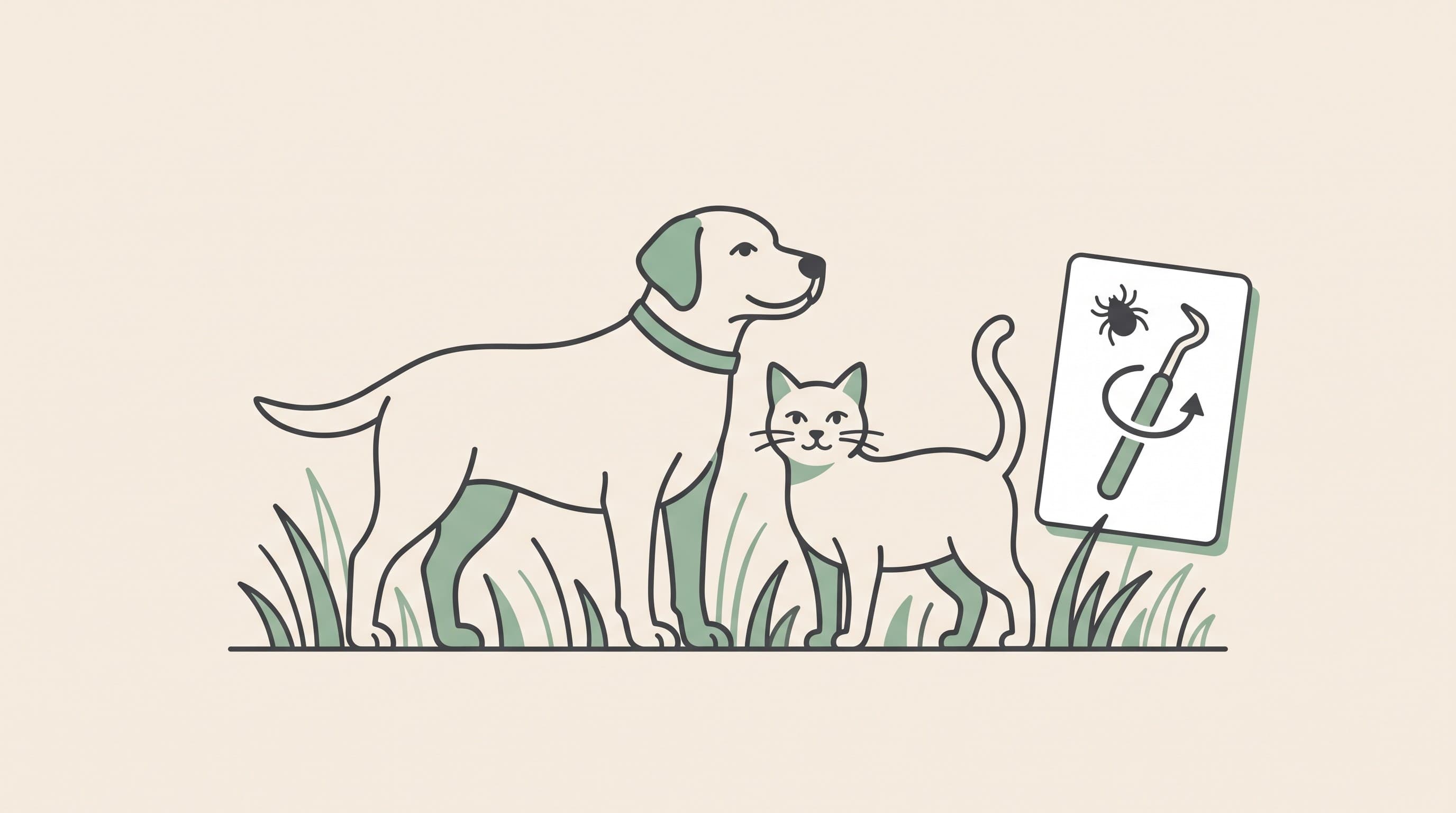
Finding a tick on your dog or cat, a small dark lump that turns out to have legs, is one of those moments that makes your skin crawl and your mind jump straight to Lyme disease. So let's take the panic out of it and put the useful information back in: what ticks actually are, what they can and can't pass on, how to remove one safely, and how to work out whether your pet needs regular tick protection or not.
Ticks are worth taking seriously, but they're also very manageable once you know what you're dealing with.
What a tick is, and why it matters
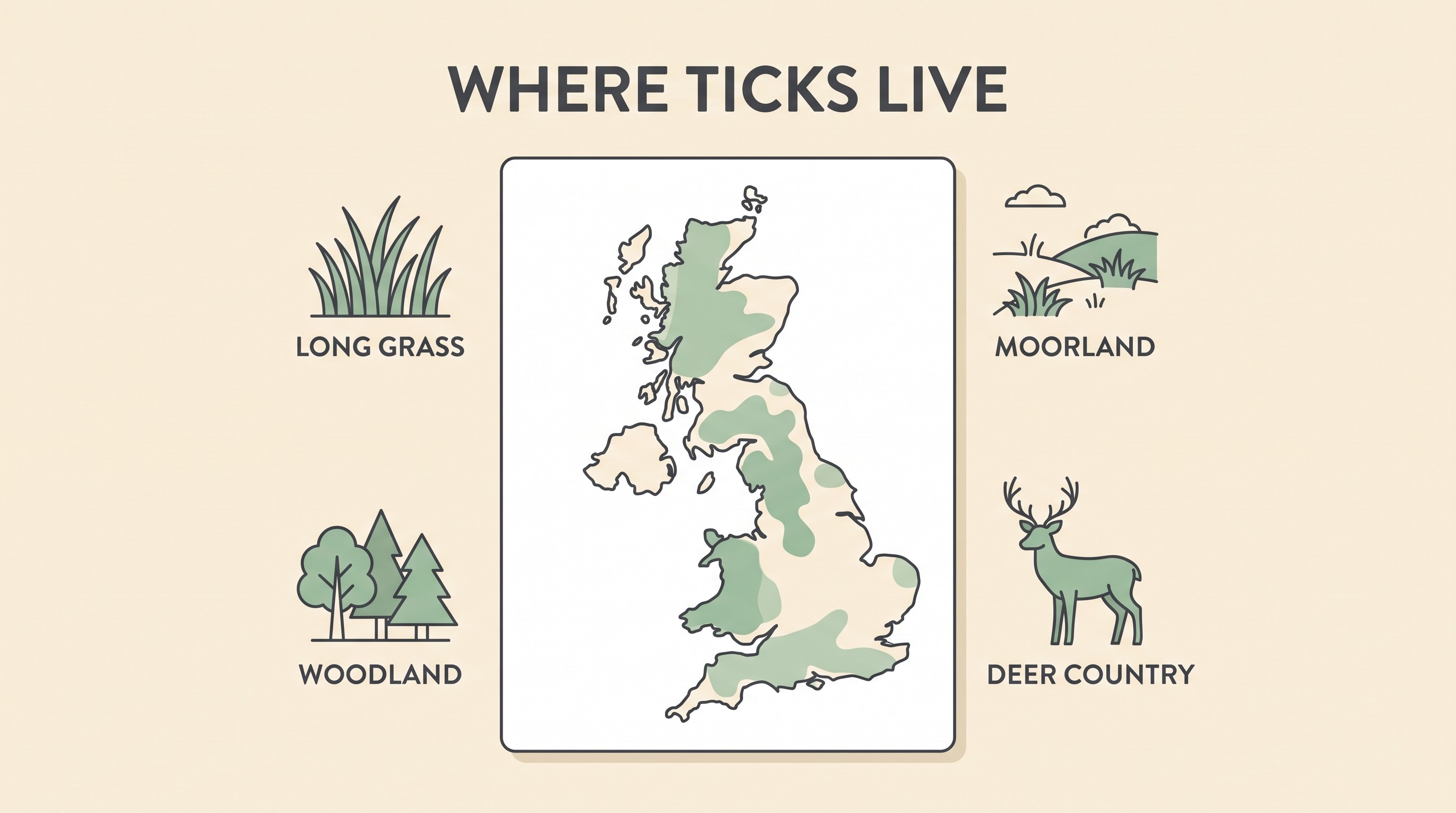
Ticks are small arachnids (relatives of spiders, not insects) that feed on blood. They wait in long grass, woodland edges, moorland and undergrowth, and climb onto a passing animal or person to attach and feed, sometimes for several days, swelling as they go (ESCCAP UK & Ireland, GL5 Control of Vector-Borne Diseases, 5th edition, December 2024).
They matter for two reasons. First, the bite itself can cause local irritation or, occasionally, a small infected wound. Second, and more importantly, ticks can carry and transmit disease while they feed. The good news is that transmission of the most talked-about disease, Lyme, generally takes time: a tick usually needs to be attached and feeding for a period, often quoted as around a day or more, before the bacteria that cause Lyme are passed on. That's exactly why prompt, correct removal genuinely reduces the risk, and why it's worth knowing how to do it.
Lyme disease, honestly
Lyme disease is caused by Borrelia bacteria, carried by certain ticks. It affects dogs, people and, less commonly, cats. In dogs the signs, when they appear, can include lameness that shifts from leg to leg, fever, lethargy, swollen joints and enlarged lymph nodes, and in a small number of cases more serious kidney problems. Many infected dogs, though, never show obvious illness at all.
Two honest caveats matter here. First, not every tick carries Borrelia, and not every bite from an infected tick leads to disease, so a single tick is not the same as a Lyme diagnosis. Second, Lyme is also a zoonotic concern in the sense that the same ticks that bite your pet can bite you, and Lyme in people is a real and sometimes serious illness. Your pet doesn't give you Lyme directly, but a pet bringing ticks into the home and garden raises the odds of a family member being bitten, which is one more reason to take tick control seriously in tick country.
Other tick-borne diseases, including one the UK is watching
Lyme gets the headlines, but ticks can carry other diseases too. Babesiosis, caused by a parasite that attacks red blood cells, causes anaemia, weakness and collapse and can be life-threatening. It has historically been mainly a risk for dogs travelling to or from continental Europe, but established cases have now been found within the UK, which changed the picture and is closely watched (ESCCAP UK & Ireland, GL5, 2024). Other tick-borne infections (such as ehrlichiosis and anaplasmosis) are largely travel-associated risks for UK pets.
This travel dimension is worth flagging: if you take your dog abroad, tick-borne disease risk rises significantly, and there are specific precautions and, in some cases, tick treatment expectations around travel. That's a conversation to have with your vet well before you go, not after you're back.
When ticks are most active, and where to look
Ticks aren't a year-round even risk in most of the UK. They're generally most active in the warmer, more humid months, with peaks typically in spring and autumn, though mild winters mean the season is lengthening and you can encounter them at almost any time (ESCCAP UK & Ireland, GL5, 2024). That matters for planning: for many pets, tick risk is genuinely seasonal, which shapes whether cover is needed year-round or concentrated in the active months.
Knowing where to look on your pet makes checking quick and effective. After a walk in tick habitat, run your hands slowly over your pet and check the warm, sheltered spots ticks prefer: around the head, ears and neck, under the collar, in the armpits and groin, between the toes, and around the tail base. On a dog you're feeling for a small firm lump; on long-haired pets you often find them by touch before sight. A quick daily check in tick season is one of the most effective and least invasive things you can do, and it fits neatly alongside any product plan rather than replacing it.
How to remove a tick safely
If you find a tick, the aim is to remove all of it promptly without squeezing its body or leaving the mouthparts behind. The reliable way is with a proper tick-removal tool (a tick hook or tick twister), which most vets and pet shops sell cheaply and which is well worth keeping at home.
- Slide the tool's notch around the tick, as close to your pet's skin as you can get.
- Twist gently and steadily, and the whole tick should come away. Fine-tipped tweezers can work too, pulling slowly and straight, but avoid blunt tweezers that squash the body.
- Don't use the old folk methods: don't burn it off, smother it in Vaseline, or douse it in alcohol first. These can make the tick regurgitate into the wound, which raises rather than lowers infection risk.
- Clean the area afterwards, wash your hands, and dispose of the tick.
If you're not confident, or the head seems to have been left behind, your vet or vet nurse will happily remove it or check the site. After removal, keep an eye on your pet over the following weeks and mention any lameness, lethargy or fever to your vet, noting that you found a tick.
Cats and ticks
Cats get ticks too, and they deserve more than a footnote here. Outdoor and hunting cats, especially those that roam through long grass, woodland edges or rough ground, pick up ticks just as dogs do, often around the head, neck and ears where they can't easily groom them off. Lyme disease is less commonly diagnosed in cats than in dogs, and cats seem more resistant to some tick-borne illnesses, but "less common" is not "never", and the ticks a cat brings home can still bite the people it lives with.
The single most important cat-specific point is a safety one, and it bears repeating because it kills cats every year: never put a dog tick or flea product on a cat without checking it's licensed for cats. Several dog products contain permethrin, which is severely toxic and often fatal to cats, and cats can also be poisoned by grooming a recently treated dog they live with (NOAH Compendium). If you have both a dog and a cat, tell your vet, because it affects which products are safe to use in your household. For an outdoor cat in tick country, safe, cat-licensed tick cover is a reasonable thing to ask about, and checking your cat over when it comes in is a gentle, effective habit.
A few myths worth clearing up
Ticks attract a lot of half-truths, so here are the ones worth correcting. A tick is not a sign of a dirty or neglected pet; the cleanest, best-cared-for animal can pick one up on a single walk through the wrong bit of grass. Ticks don't jump or fly; they climb aboard from vegetation as your pet brushes past, which is why long grass and undergrowth matter so much. A tick that's already attached and feeding won't simply drop off if you leave it; it needs removing. And finding an engorged tick doesn't mean your pet is definitely infected with anything; most tick bites don't transmit disease, especially if the tick is removed promptly. Holding these straight helps you respond to a tick with brisk practicality rather than alarm.
Does your pet need regular tick prevention?
Here's the risk-based part, in the honest-broker spirit that runs through this whole section. Whether your pet needs routine tick protection depends heavily on where you live and what you do together. Prevention makes clear sense for:
- Dogs and cats in, or regularly walking in, tick habitat: countryside, moorland, heath, woodland, long grass, deer country.
- Pets that travel abroad, or to known UK tick hotspots.
- Households where a pet has picked up ticks before.
For a pet that lives in a low-risk area and rarely encounters tick habitat, routine year-round tick product may be more than it needs, and prompt tick-checking after walks may be a reasonable part of the plan instead. As always, this is about matching protection to genuine risk, not about going without where risk is real. A pet in tick country should be protected, and that isn't a decision to skip to save money or product.
It's also worth knowing that products differ: some flea treatments also cover ticks and some don't, and, as with fleas, never use a dog tick product on a cat without checking, because some contain ingredients toxic to cats. Which product suits your pet is a question for your vet (NOAH Compendium).
The parasite risk quiz includes where you live and how your pet spends its time, so it can flag whether ticks are a real consideration for you, and give you something concrete to raise at your next appointment.
The question to take to your vet: "Given where we walk and whether we travel, does my pet need routine tick prevention, and does the product we already use cover ticks?" And if you've just found one, the immediate action is simple: remove it correctly, note the date, and watch for any signs over the next few weeks. Whatever plan you and your vet agree, the Preventive Care Scheduler can hold the tick-season reminders so they don't slip.
References
- ESCCAP UK & Ireland. *Guideline 5: Control of Vector-Borne Diseases in Dogs and Cats*, 5th edition (December 2024). Tick biology, Lyme (*Borrelia*), babesiosis, transmission and control.
- NOAH Compendium. UK licensed-product datasheets; which products carry a tick licence, and species contraindications (e.g. permethrin in cats).
- British Veterinary Association, British Small Animal Veterinary Association and British Veterinary Zoological Society (2021, updated 31 October 2025). *Responsible use of parasiticides for cats and dogs*; risk-based approach.
Keep track of how your pet is doing
The owners who cope best are the ones who notice changes early. A simple health log shows you what is working, and what is not, before the next vet visit.
Start tracking, freeYou're not doing this alone
Compare treatment journeys and talk to owners managing staying well. Free to join.
Join PetsLikeMine