The Quality-of-Life Decision, and Where to Go Next
Alastair Greenway
BVM&S MRCVS
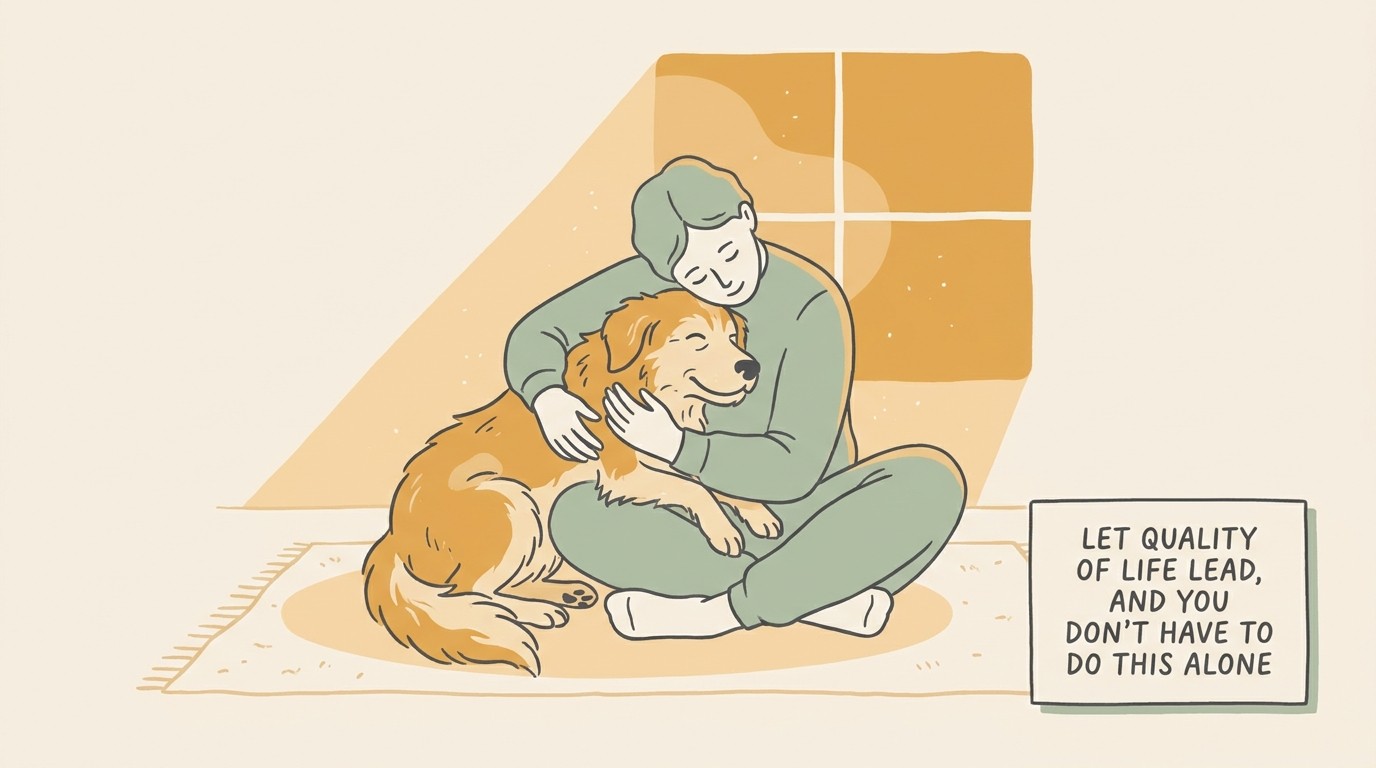
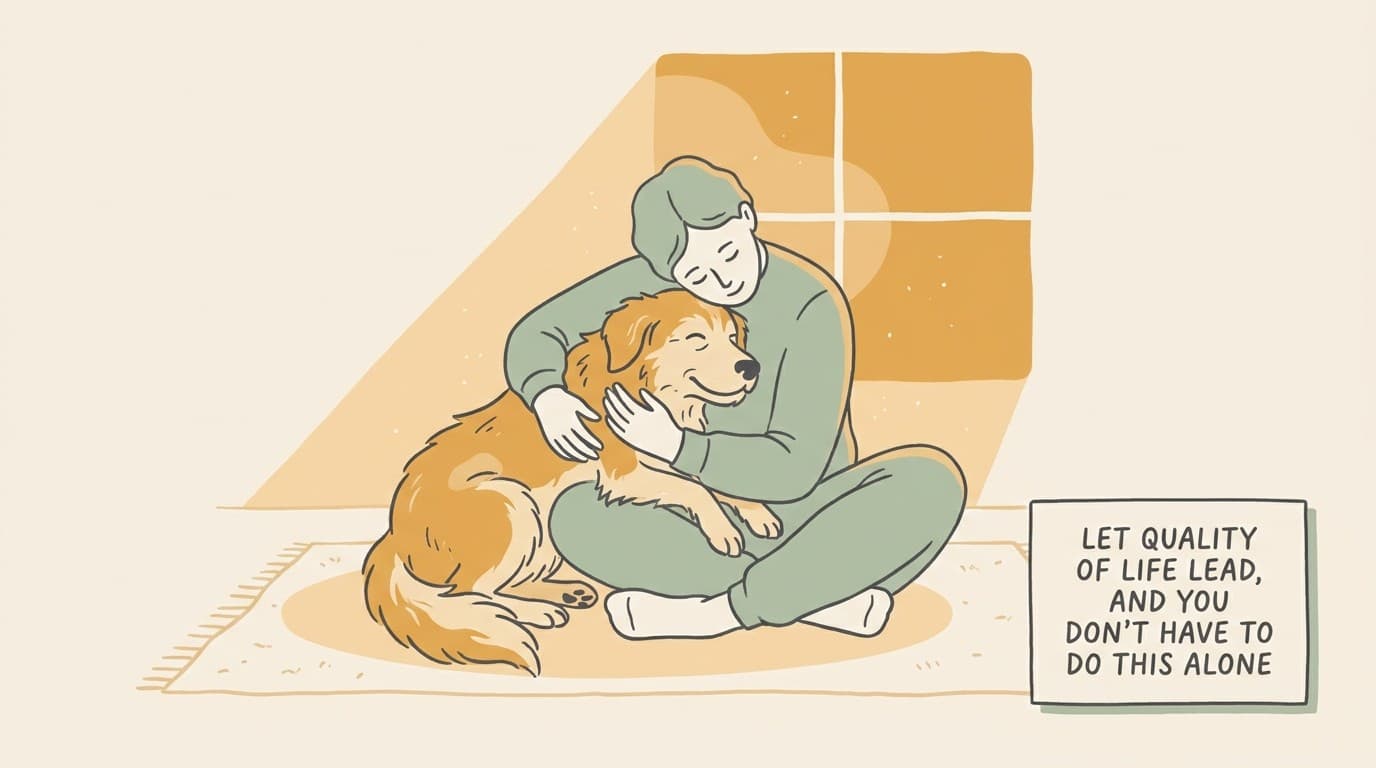
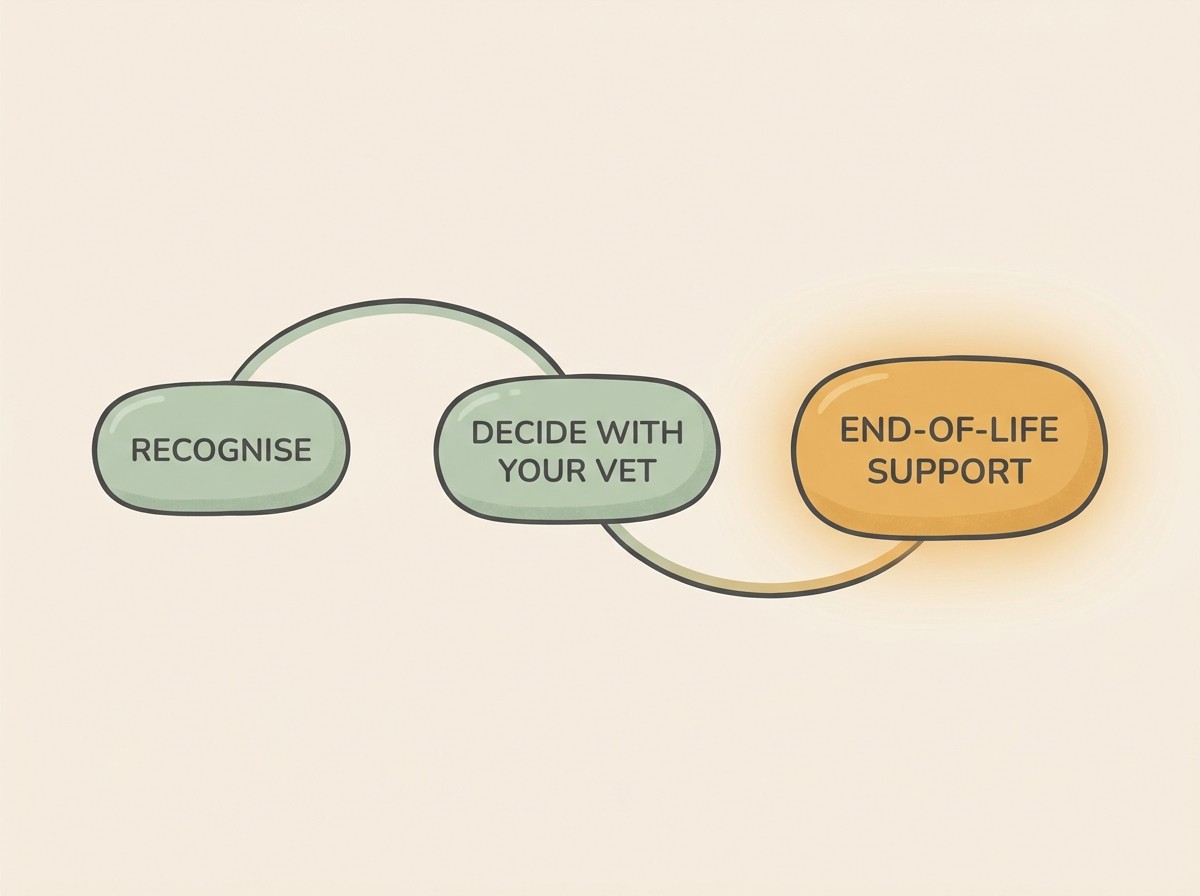
When a pet's cancer can no longer be held back, the decision an owner faces is whether, and when, to let them go gently. It's one of the hardest decisions you will ever make, and you don't have to make it quickly or on your own. This page is here to help you see where your pet is, and to think the choice through calmly. It stops short of everything that comes after, because we have a whole space devoted to that, and we'll point you to it when you're ready.
The fear of getting the timing wrong
Most owners in this position are frightened of two things at once: acting too soon, and acting too late. That fear comes from love. It's what you'd expect from someone trying hard to do right by an animal they adore.
The part that helps is this. There is rarely a single perfect day that announces itself. What there usually is instead is a kind window, a stretch of time in which letting your pet go gently is a loving choice. You aren't aiming at an invisible bullseye. You're aiming to stay inside that window, and that's a far more forgiving target than it feels like at 3am.
Letting quality of life lead, not the calendar
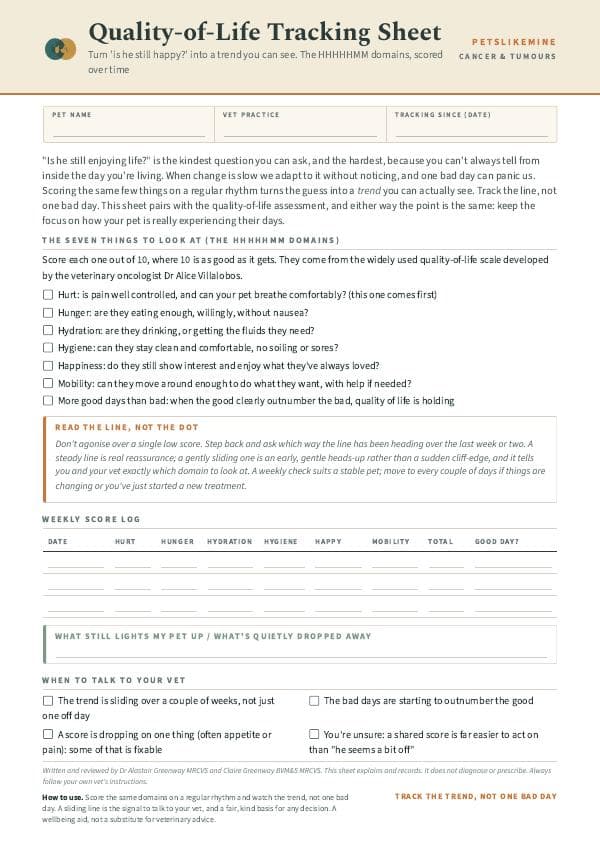
The kindest way to find that window is to follow your pet's quality of life rather than a date or a survival figure you were once quoted. If you've been keeping track of quality of life as the cancer has progressed, this is where that quiet record pays off, because it shows you the trend rather than just how today happens to look.
The simplest test that vets and hospice teams return to is whether your pet is still having more good days than bad. The widely used HHHHHMM scale, created by veterinary hospice pioneer Dr Alice Villalobos, scores the things that make up a pet's day (hurt, hunger, hydration, hygiene, happiness, mobility) and then adds the one that often matters most: more good days than bad (VCA, 2024). When the bad days begin to outnumber the good ones, or when your pet seems "turned off" to life, comfort is genuinely slipping (VCA, 2024).
Scales only take you so far, and you know your pet better than any scale does. So think about the few things that matter most to your animal: the greeting at the door, the favourite walk, the spot in the sun, the appetite for their best-loved food. When those small, particular joys fade one by one and don't come back, that's often the clearest sign of all. If you'd like a structured way to weigh it, our [quality-of-life assessment] runs through the same domains in a few short questions, and [recognising decline] goes through the physical signs in more detail.
What a good decision actually looks like
A good decision is rarely a heroic one or a perfectly timed one. More often it's a calm one, made together with your vet, and built around your pet's experience rather than your own dread of being without them.
Your vet is your steadiest ally here. They can tell you plainly whether comfort is still achievable, what the next days or weeks are likely to hold, and whether you're inside that kind window or close to the edge of it. Lean on them. This is one of the most important conversations they have, and most vets would much rather you came to them early, while there's still room to plan, than wait until a crisis forces the moment.
That leads to the counsel you'll hear from many vets and hospice teams: that being a little early is usually kinder than being too late. It often gets put as "better a week too early than a day too late." This is shared veterinary wisdom rather than a hard rule, and thoughtful vets do debate it, because there are real considerations on both sides of the line (Allen, 2024). The instinct behind it is still sound and worth holding onto. The aim isn't to end suffering that has already arrived. It's to prevent suffering before it does (Lap of Love, 2024). Owners going through this for the first time tend to wait until the very end, and afterwards the regret is almost always about having waited too long, never about a day of good life given up (Lap of Love, 2024).
So if you're agonising over whether it's "too soon," let that ease a little. Choosing a peaceful goodbye while your pet still has good in their days is among the kindest things you'll ever do for them.
References
- VCA Animal Hospitals. "Quality of Life at the End of Life for Your Dog." (HHHHHMM scale, Dr Alice Villalobos; "more good days than bad"; "turned off to life" when bad days predominate.)
- Lap of Love Veterinary Hospice. "How Will I Know It's Time to Say Goodbye?" (Dr Dani McVety: preventing suffering rather than ending it; owners' regret at waiting too long; recognising decline at the beginning rather than the end.)
- Allen, C. "Euthanasia: better a day too early than a day too late?" Vet Times, 2024. (The saying examined as veterinary counsel rather than a hard rule, with genuine considerations on both sides; a contextual-care approach.)
- American Animal Hospital Association (AAHA). "12 Things Pet Owners Should Know About End-of-Life Care for Dogs and Cats." (Hospice and palliative care, the euthanasia decision, aftercare and grief as the end-of-life domain; quality-of-life scales to track symptoms over time; ~30% of owners experience significant grief.)
- International Association for Animal Hospice and Palliative Care (IAAHPC). "Nurturing Their Journey: When to Consider Hospice/End-of-Life Care for Your Pet" and General Animal Hospice & Palliative Care Guidelines. (Quality-of-life parameters; a declining quality of life warranting euthanasia; hospice as the end stage of palliative care.)
Free downloads
Companion worksheets to put what you've read into practice. Free PDFs, print at home.