

Testing for FIV and FeLV: When to Test, How It Works and Reading the Results
Alastair Greenway
BVM&S MRCVS
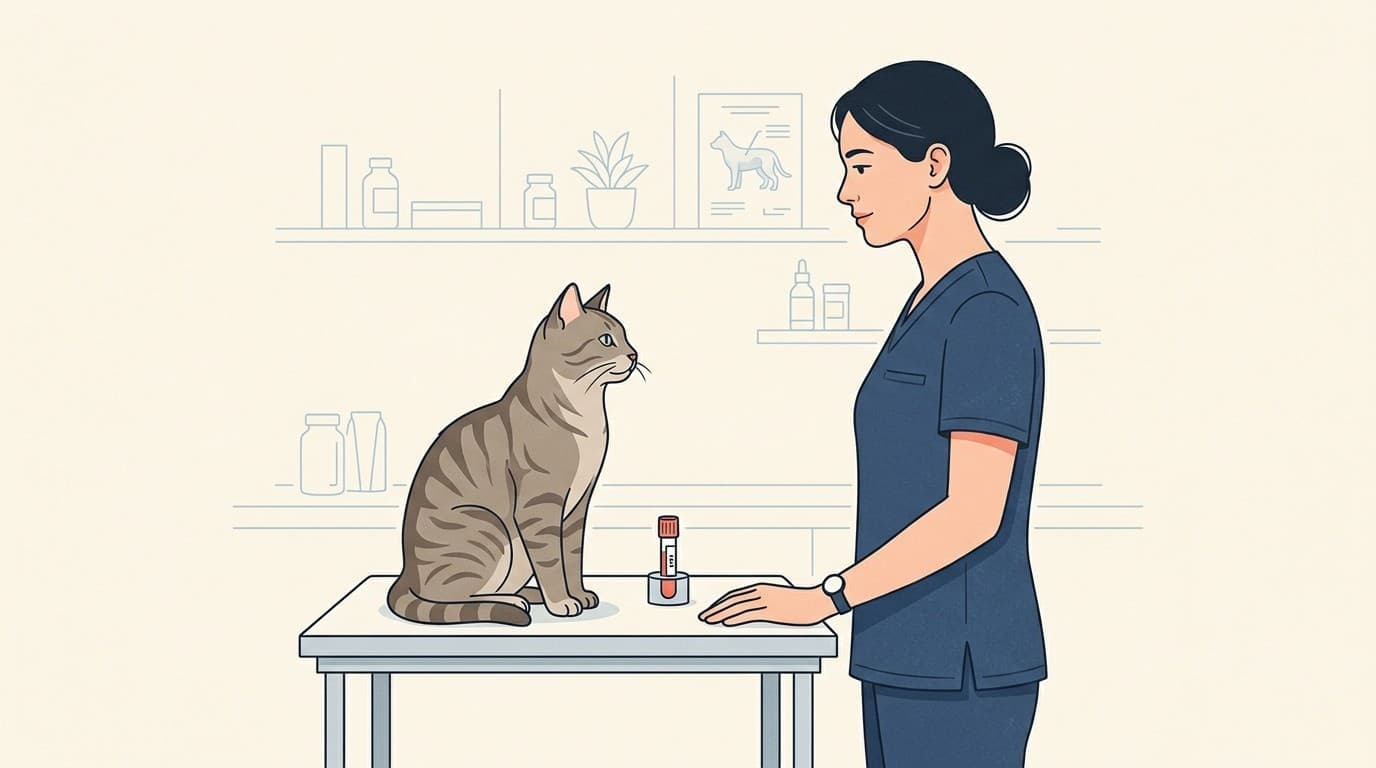
Testing a cat for FIV (feline immunodeficiency virus) and FeLV (feline leukaemia virus) means a small blood test that tells you something important about your cat's health and future. Knowing the result is part of responsible care, but reading it well matters just as much. This guide walks you through when to test, how the tests work and what the answers really mean.
What the status changes
FIV and FeLV are the two retroviruses that small-animal vets test for most often, and the status shapes a surprising amount: which cats can safely live together, which vaccines a cat needs, how closely you watch for illness, and how you plan for the years ahead. A cat can carry either virus for a long time while looking entirely well, so you cannot tell from the outside. The only way to know is to test.
It's worth holding one thing in mind from the start. A test result is information, not a verdict. Many cats live long, happy lives with one of these viruses, and a single result, especially an unexpected one, should never be the thing that decides a cat's fate on its own.
When it's worth testing
The major feline-health authorities broadly agree on when a cat should be tested. The 2020 AAFP Feline Retrovirus Testing and Management Guidelines (Little and colleagues), International Cat Care and the Cornell Feline Health Center all point to the same key moments.
Any new cat, before it joins the household. Whether you have adopted from a rescue, taken in a stray or bought a kitten, test before that cat meets your resident cats. This protects the cats you already have and gives you a clear starting point for the newcomer.
Any cat that is unwell. Both viruses can cause or contribute to a wide range of illnesses, from mouth and gum disease to recurrent infections, weight loss and certain cancers. When a cat is sick without an obvious cause, retrovirus testing is a sensible early step.
Before vaccinating against FeLV. There is no benefit in vaccinating a cat that is already infected, so the guidelines recommend confirming a cat is negative before starting an FeLV vaccine course.
After a bite, a fight or known exposure. FIV in particular spreads mainly through deep bite wounds, so cats that go outside and tangle with others are at higher risk. If your cat has been in a fight, or has lived with a cat later found to be positive, testing is wise (with the important caveat about timing that we cover below).
If your cat's circumstances do not fall neatly into one of these, it is still reasonable to test simply so you know. Many owners choose to test at the first vet visit and never have to wonder again.
The quick test in the practice
Most testing starts with a quick test your vet can run in the practice on a small blood sample, often just a few drops. These are point-of-care tests (you may hear them called SNAP tests, after one common brand) and they typically check for both viruses at once using a method called ELISA or rapid immunomigration. You usually get the result within minutes, in the same visit.
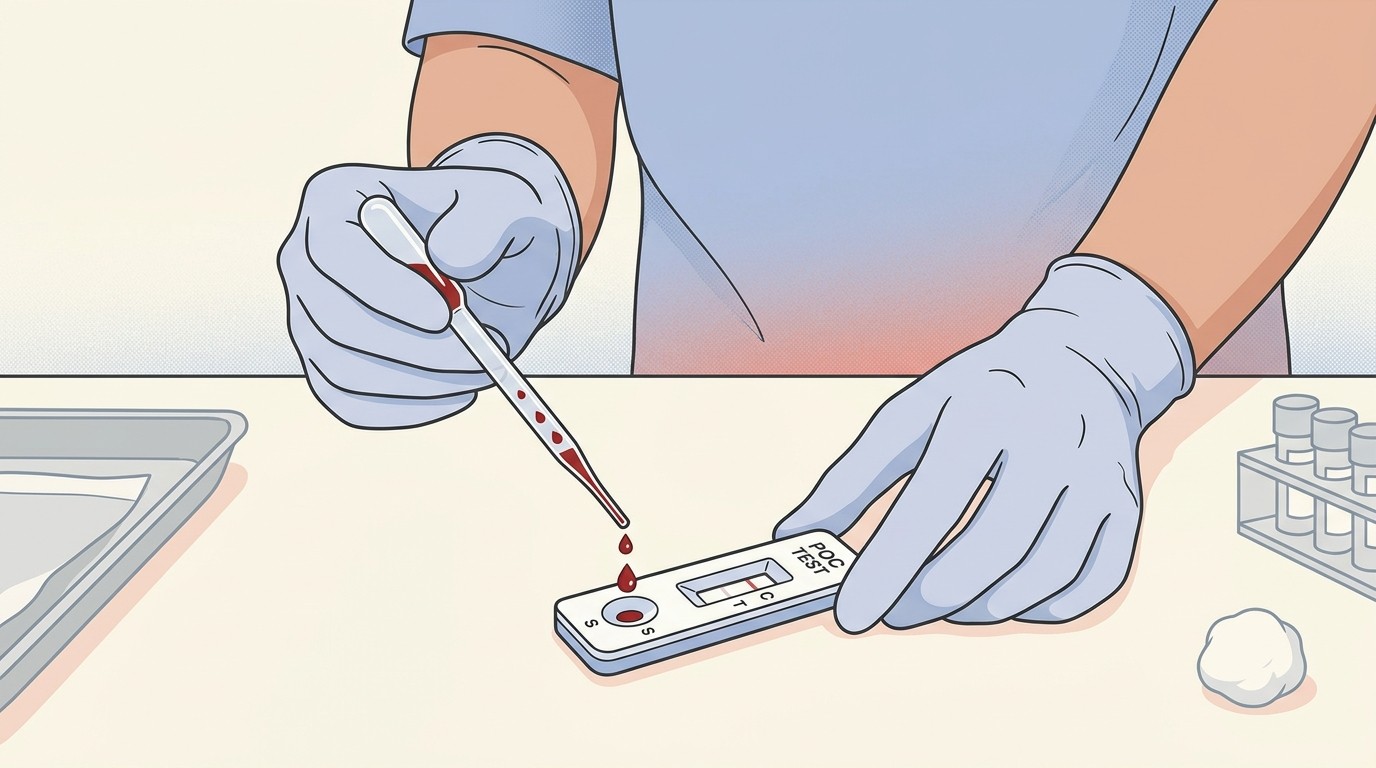
It helps to know that the two viruses are detected in different ways.
For FeLV, the screening test looks for the virus itself. Specifically, it detects a viral protein called p27 antigen circulating in the blood. Because it finds part of the virus, a positive result suggests the virus is actually present. Most infected cats will test positive within about 30 days of exposure, although in some cats it takes longer.
For FIV, the screening test looks for antibodies. It detects the cat's immune response to the virus rather than the virus directly. This distinction matters a great deal, because antibodies can come from places other than active infection (mainly a mother's milk in young kittens), and because they take time to appear. International Cat Care notes that most cats produce detectable FIV antibodies within about 60 days of infection, and Cornell describes a window of roughly two to six months.
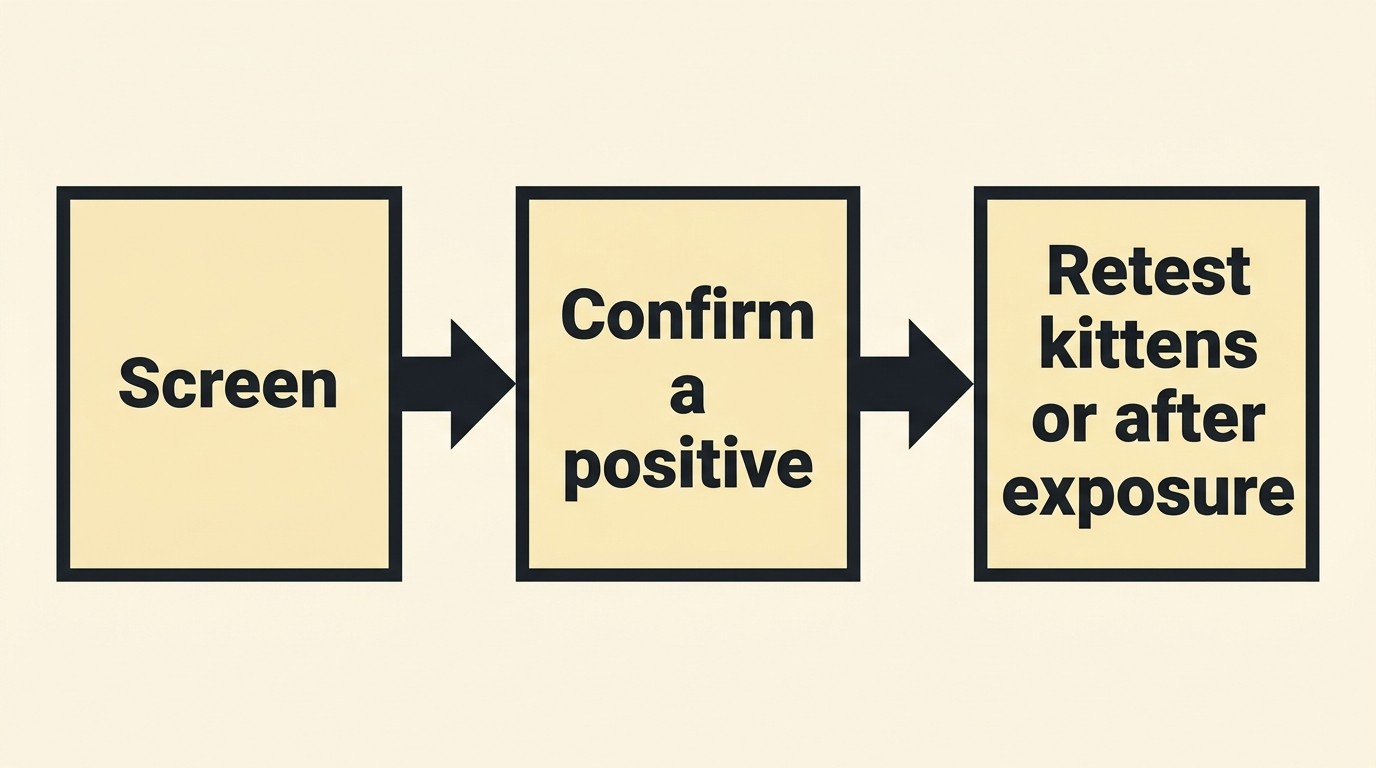
So what does a screen tell you? A negative result in a healthy cat with no recent risky exposure is usually reliable and reassuring. A positive result is a flag that needs a closer look, not a conclusion. That is where confirmatory testing comes in.
When a positive needs checking again
A point-of-care screen is designed to be sensitive, which is exactly what you want from a first test. The trade-off is that, especially in a healthy, low-risk cat, a positive screen has a meaningful chance of being a false alarm. The feline retrovirus guidelines are clear: a positive screen should be confirmed by a different method before you treat it as settled, particularly when the cat seems well and is unlikely to have been exposed.
Confirming FIV. Because the FIV screen detects antibodies, confirmation traditionally uses a different antibody-based method, the Western blot, run at a reference laboratory (results usually take around a week). A PCR test, which looks for the virus's genetic material rather than antibodies, can give further clarification. There is one historical wrinkle worth knowing: an FIV vaccine once existed that left vaccinated cats testing antibody-positive, and the antibody tests cannot tell vaccine antibodies apart from infection antibodies. In the UK and Europe that vaccine was never licensed or available, and it was withdrawn worldwide around 2016 to 2017, so for a UK cat it is not a practical concern. It matters only for a cat imported from a region where the vaccine was once used, so do mention any overseas vaccination history to your vet.
Confirming FeLV. A positive FeLV screen, especially in a healthy low-risk cat, should also be confirmed. The two main confirmatory approaches are a PCR test, which detects the virus's DNA that has become woven into the cat's own cells (provirus), and an IFA (indirect immunofluorescent antibody) test, which looks for viral protein inside blood cells and signals that the bone marrow is involved. PCR is especially useful because it is highly sensitive and detects a different part of the virus than the in-clinic test does, so it confirms by a genuinely independent route.
Progressive and regressive FeLV: why confirmation tells you more
With FeLV, confirmation does more than rule out a false positive. It helps work out what kind of infection you are dealing with, and that hugely affects the outlook.
When a cat meets FeLV, its immune system may either fail to control the virus (a progressive infection) or succeed in suppressing it (a regressive infection). The European Advisory Board on Cat Diseases (ABCD) explains the pattern simply: a cat that is PCR-positive and antigen-positive has a progressive infection, while a cat that is PCR-positive but antigen-negative is likely regressively infected. Progressively infected cats shed the virus and have a shorter average survival, whereas regressively infected cats do not shed infectious virus through normal contact and often do much better. Cornell cites a median survival of around 2.5 years after a progressive FeLV diagnosis, but averages hide enormous individual variation, and a regressive cat's outlook is different again. This is precisely why a single antigen-positive screen should never be the end of the story.
Why kittens are a special case
Kittens deserve their own section, because both tests can mislead in the very young.
FIV in kittens. A kitten that nurses from an infected mother absorbs her antibodies through the milk. Because the FIV screen detects antibodies, those borrowed maternal antibodies can make a perfectly healthy, uninfected kitten test positive. This can persist up to around six months of age. International Cat Care describes one study in which all kittens born to infected queens tested antibody-positive shortly after birth, yet by 12 weeks of age all had tested negative again, simply because they were never infected and the maternal antibodies faded. The practical advice: a kitten under about six months that tests FIV antibody-positive should not be assumed infected. Cornell recommends retesting at 60-day intervals until the kitten is at least six months old; only a result that is still positive after six months points to true infection. A PCR test, which detects the virus rather than antibodies, can clarify a kitten's status sooner.
FeLV in kittens. FeLV testing in kittens is less about maternal antibodies (the test looks for viral antigen, not antibodies) and more about timing. After exposure, the virus moves through the body in stages: viral RNA can be found within about a week, proviral DNA within about two weeks, and detectable antigen usually by around 30 days. In the earliest "eclipse" phase, and during a developing regressive infection, a cat (kitten or adult) can be infected yet still screen negative. That is why FeLV testing has its own retesting timetable rather than relying on a single early result.
How a test can mislead: false results and timing
No test is perfect, and understanding the two ways a test can mislead helps you see why one result is rarely the whole picture.
False positives are most likely with a positive screen in a healthy, low-risk cat, simply because true infection is uncommon in that group, so a larger share of positives turn out to be false. This is the single biggest reason to confirm before acting. False positives can also arise from a test that was run or stored incorrectly.
False negatives happen mainly because of timing. Test too soon after a possible exposure and the cat may not yet have mounted the antibody response (FIV) or developed detectable antigen (FeLV). For FIV, the guidelines advise retesting no earlier than 60 days after the last possible exposure. For FeLV, where antigen usually appears by about 30 days but regressive infections can complicate the picture, your vet may recommend repeating the test several weeks to a few months later (Cornell suggests follow-up testing roughly 6 to 12 weeks on for many positives, and repeating in about 3 to 6 weeks where recent exposure is the concern).
If two tests disagree, your cat has what vets call a discordant result. Until the picture is clear, it is sensible to keep that cat separate from other cats and to keep working with your vet to resolve the question rather than guessing.
Turning results into decisions
Never make an irreversible decision, such as euthanasia or rehoming, on the strength of one unconfirmed test. The feline retrovirus guidelines state plainly that a retrovirus diagnosis should not be the sole basis for euthanasia, and that owners should be told about the possibility of false positives and offered further testing wherever feasible. Confirm first. Then plan.
A confirmed positive is the beginning of a management plan, not an ending. Many FIV-positive cats live full, normal-length lives, especially when kept indoors and protected from other infections. FeLV asks for more careful management and closer monitoring, but a regressive infection in particular can carry a far better outlook than the word "leukaemia" suggests.
If your cat has just tested positive, our guide for owners whose cat has just tested positive walks you through the immediate, practical next steps and the questions to ask. If you are settling in for the long haul, our guide to living with an FIV-positive cat covers daily care, indoor life and keeping other cats safe. And if FeLV is on the table, our guide to FeLV and protecting other cats explains shedding, household management and vaccination for the cats around them. Take the testing one careful step at a time, lean on your vet for the interpretation, and let a confirmed result, never a single screen, guide what you do next.
References
- Little S, Levy J, Hartmann K, Hofmann-Lehmann R, Hosie M, Olah G, St Denis K. 2020 AAFP Feline Retrovirus Testing and Management Guidelines. Journal of Feline Medicine and Surgery (AAFP). 2020.
- International Cat Care. Feline immunodeficiency virus (FIV). International Cat Care. 2023.
- Cornell Feline Health Center. Feline Immunodeficiency Virus (FIV). Cornell University College of Veterinary Medicine. 2023.
- Cornell Feline Health Center. Feline Leukemia Virus. Cornell University College of Veterinary Medicine. 2023.
- European Advisory Board on Cat Diseases (ABCD). Guideline for Feline Leukaemia Virus Infection. ABCD cats and vets. 2024.
Keep track of how your pet is doing
The owners who cope best are the ones who notice changes early. A simple health log shows you what is working, and what is not, before the next vet visit.
Start tracking, freeYou're not doing this alone
Compare treatment journeys and talk to owners managing immune & blood. Free to join.
Join PetsLikeMine