

Getting a Referral to a Veterinary Oncologist, and When to Seek a Second Opinion
Alastair Greenway
BVM&S MRCVS
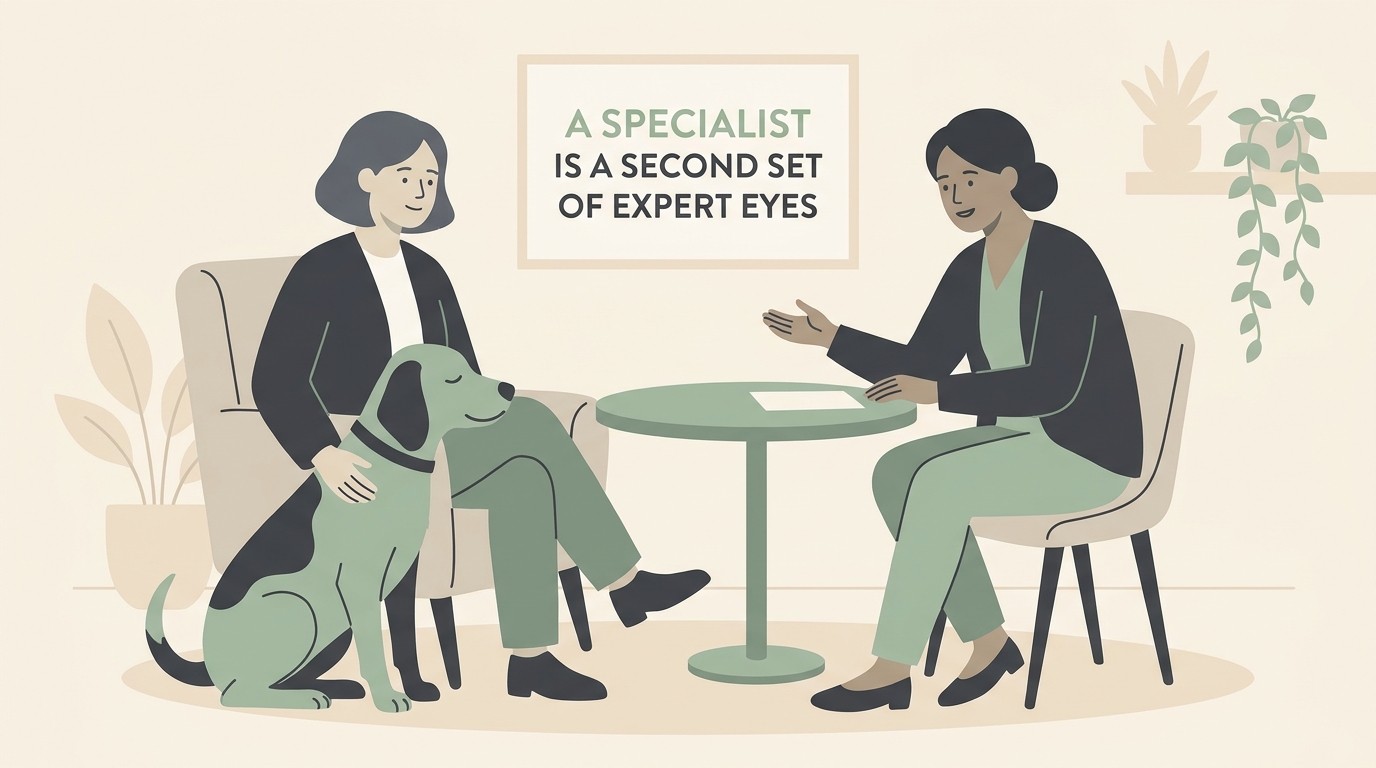
Two questions tend to surface once cancer is on the table, and most owners are too polite to ask them out loud. Should we be seeing a specialist? And would asking for one offend our own vet? The answers are kinder than people fear. Seeing a specialist is a normal, well-trodden path, and it doesn't mean anything has gone wrong. Asking for one, or for a second opinion, is your right as the person who knows your pet and pays for their care. A good vet expects the question, and very often raises it before you do.
This piece covers what an oncology specialist actually adds, how referral works here in the UK, and how to ask for a second look without it ever feeling like a betrayal.
Your own vet, and what a specialist adds
Your everyday vet, your GP vet, is a skilled generalist. They diagnose and manage cancer cases all the time, and for many tumours they can run the whole thing well, from the lump to the treatment. The RCVS is clear that vets "should recognise when a case or a treatment option is outside their area of competence and be prepared to refer it" (RCVS, 2024). Knowing when to bring in more expertise is part of good medicine, not a gap in it.
A veterinary oncologist is a vet who has spent years in extra training focused entirely on cancer. Their working week is staging tumours, designing chemotherapy and radiation plans, and weighing options that a general practice meets only now and then. In the UK, the credential to look for is an RCVS Specialist in Veterinary Oncology, or an EBVS European Veterinary Specialist holding the diploma of the European College of Veterinary Internal Medicine (Dipl. ECVIM-CA) in oncology. That diploma means examined, certified expertise in companion-animal oncology, recognised across Europe (ECVIM-CA, n.d.). To use the protected title "Specialist", a vet has to hold an eligible postgraduate qualification, show national or international recognition, keep up substantial specialist training, and stay on the RCVS Specialist list (RCVS, n.d.). It's a high bar, and it's the term worth trusting. You'll sometimes see "board-certified" online, but that's an American phrase. In the UK, look for RCVS Specialist or the ECVIM diploma.
The team behind the specialist is where the real value often sits. At a referral centre, a medical oncologist, a surgeon, a radiation oncologist, a pathologist and an imaging specialist can look at your pet together and build one joined-up plan. That matters when the path isn't obvious, when chemotherapy or radiation is being considered, or when several treatments need sequencing in the right order.
When a referral helps (and when you may not need one)
Referral adds the most when the case is complex or the stakes are high. An unusual or aggressive tumour, a cancer in an awkward spot, chemotherapy or radiation on the table, or simply a situation where the best route isn't clear and you'd value an expert's read before committing. It's also worth it when you just want the fullest possible picture before a big decision, which is completely fair.
Plenty of cancers, though, are managed beautifully in first opinion. A straightforward lump with a clear plan may not need a referral at all. Your vet is the right person to talk this through with, and "would this benefit from a specialist's view?" is exactly the question to put to them.
How referral works in the UK
The mechanics are simpler than people expect. Your own vet makes the referral. As the RCVS guidance puts it, "the initial contact should be made by the referring veterinary surgeon, and the referral veterinary surgeon should be asked to arrange the appointment" (RCVS, 2024). In practice your vet sends the specialist centre a referral letter, your pet's clinical history, and, crucially, the histopathology or cytology report and any scans, so nothing gets repeated unnecessarily and the specialist starts fully briefed.
Your vet should also tell you who they're referring to and what their status is. The RCVS requires referring vets to "identify whether the possible referral surgeons are on the RCVS Specialist list or the RCVS Advanced Practitioner list" and to explain the difference (RCVS, 2024). So it's perfectly reasonable to ask, "is the person we're seeing an RCVS Specialist?".
There's a money side worth getting straight upfront. Most UK pet insurance policies cover specialist referrals within your main vet-fee limit, as long as the condition is eligible and not pre-existing, but insurers almost always need that written referral letter from your own vet before they'll cover the specialist's fees (Pet Insurance Hub, 2025). So get the referral done properly through your vet, and check your policy wording and your remaining limit first. An initial specialist consultation commonly runs to somewhere around £180 to £300, separate from any tests or treatment that follow (Pet Insurance Hub, 2025). There's a fuller breakdown in our piece on [what cancer treatment costs].
A second opinion is normal, and it's your right
This is the part that worries people most, so I'll be plain about it. Asking for a second opinion isn't disloyal, and it isn't a slight on your vet. It's something you're entitled to. The RCVS tells owners directly: "You also have the right to seek a second opinion. This could also be from another person in the same practice, or from a different practice entirely" (RCVS, n.d.).
A second opinion and a referral aren't quite the same thing. A referral hands a specific job, whether a diagnosis, a procedure or treatment, to another vet, after which the case comes back to your own practice. A second opinion is narrower. It's seeking another vet's view, often to feel confident in a diagnosis or a plan before you go ahead (RCVS, 2024). Either is reasonable, especially for a major decision like cancer treatment, and neither means changing vets unless you choose to. The other vet shouldn't try to take the case over uninvited.
Asking gracefully is easy. You might say, "this is a big decision and I'd feel more settled with a specialist's view, could you help me arrange that?". Most vets respond warmly, because they'd far rather you felt sure than carried a quiet doubt. Tell the second vet about the first consultation so your records and reports can be sent over, which spares your pet repeated tests and means everyone's working from the same information.
What to expect at the appointment, and getting ready
A first oncology appointment is usually unhurried. The specialist will go over the history, examine your pet, often recommend staging tests to see exactly what you're dealing with, and then talk you through the realistic options, with straight pros, cons and costs for each. Nobody will push you into anything. The aim is to give you a clear picture so the choice stays yours.
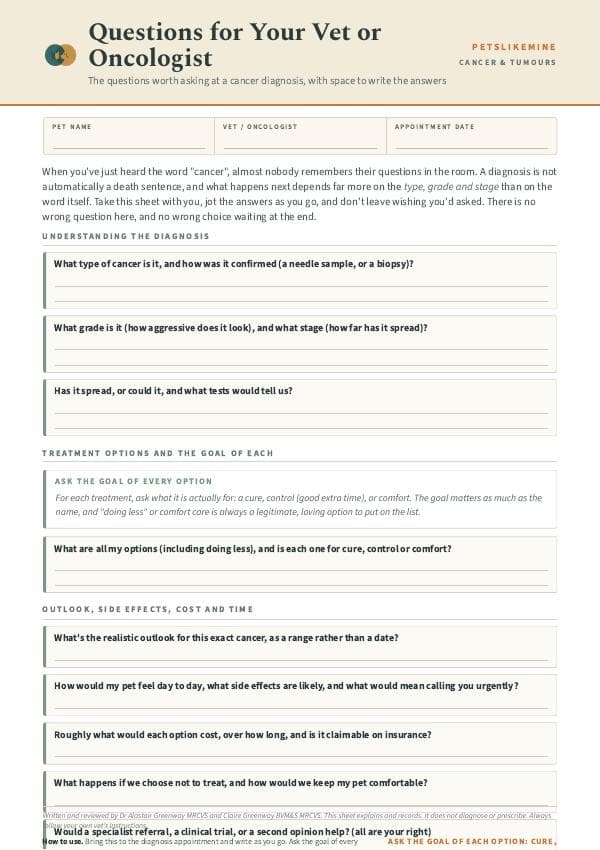
It helps enormously to arrive prepared, because almost nobody remembers their questions once they're in the room.
"WHAT TO BRING AND ASK: your pet's records and the histopathology report · a written list of your questions · your insurance details and remaining limit · what's the realistic outlook for this exact cancer? · what are all my options, including doing less? · what would each cost, and over how long? · how would my pet most likely feel on treatment?"
Our [questions for your oncologist] sheet lays these out so you can take it along and not come away wishing you'd asked.
There's one modern option worth knowing about. If a specialist centre is a long way off, ask your vet about oncology telemedicine. A number of UK specialists and services now offer remote case advice to GP vets, so you can sometimes get specialist input on the plan without a long journey, with referral kept for when hands-on care is needed (Langford Vets, n.d.; Virtual Veterinary Specialists, n.d.). Bear in mind this is specialist-to-vet support that works through your own practice, rather than something you book directly yourself.
Whichever route you take, none of it commits you to a particular treatment. A referral or a second opinion simply buys you the clearest possible understanding before you decide, and there is genuinely [no wrong answer] in where you go from there.
References
- Royal College of Veterinary Surgeons (RCVS). Supporting guidance: 1. Referrals and second opinions (Code of Professional Conduct for Veterinary Surgeons).
- Royal College of Veterinary Surgeons (RCVS). Animal owners: Treatment and care (your right to a second opinion and to request a referral).
- Royal College of Veterinary Surgeons (RCVS). Specialist status (criteria to be an RCVS Specialist; the RCVS Specialist list).
- European College of Veterinary Internal Medicine - Companion Animals (ECVIM-CA). About ECVIM-CA (training, examination and certification of specialists in internal medicine, cardiology and oncology; Dipl. ECVIM-CA / EBVS European Veterinary Specialist title).
- European Board of Veterinary Specialisation (EBVS). European College of Veterinary Internal Medicine - Companion Animals.
- Royal Veterinary College (RVC). Veterinary Oncology specialist referral service (multidisciplinary oncology team; how owners are referred).
- Pet Insurance Hub. Does Pet Insurance Cover Specialist Referrals UK 2025? (referral letter requirement; referrals covered within the vet-fee limit; initial referral consultations typically £180 to £300), published 13 December 2025.
- Langford Vets, University of Bristol. Telemedicine (small animal referral hospital remote specialist consultation, accessed via the owner's local practice).
- Virtual Veterinary Specialists (VVS). Remote specialist advice for veterinary practices, including oncology.
Free downloads
Companion worksheets to put what you've read into practice. Free PDFs, print at home.
Sister tool · Sightline
Track quality of life over time
Sightline, a separate ConciergeVet tool, runs a short adaptive weekly assessment with a quality-of-life focus mode built around exactly these frameworks, tracks a single composite score over time so you can see the trend rather than judge a single bad day, and produces a Sightline Report PDF you can bring to your vet.
A written log, or our printable quality-of-life sheet, does much the same job.
See how Sightline tracks quality of lifeFound a lump? Track it, and know when to act
A lump cannot be told apart by look or feel; only your vet sampling it can. The Lump & Bump Tracker records its size and how it changes, flags when it has crossed a line worth a vet visit, and builds a clean history to take in.
Open the Lump & Bump TrackerYou're not doing this alone
Compare treatment journeys and talk to owners managing cancer. Free to join.
Join PetsLikeMine