

Radioiodine: the one-and-done cure most owners aren't offered
Alastair Greenway
BVM&S MRCVS
Of all the treatments for an over-active thyroid, radioiodine is the one most likely to make an owner say "nobody told me that was an option." It cures the condition outright in the great majority of cats, with a single injection and no anaesthetic, yet plenty of cats are never offered it. This article explains what it actually involves, why it's so effective, and the practical realities (the hospital stay, the cost, who it suits) that mean it isn't automatically the right choice for every cat.
What it actually is
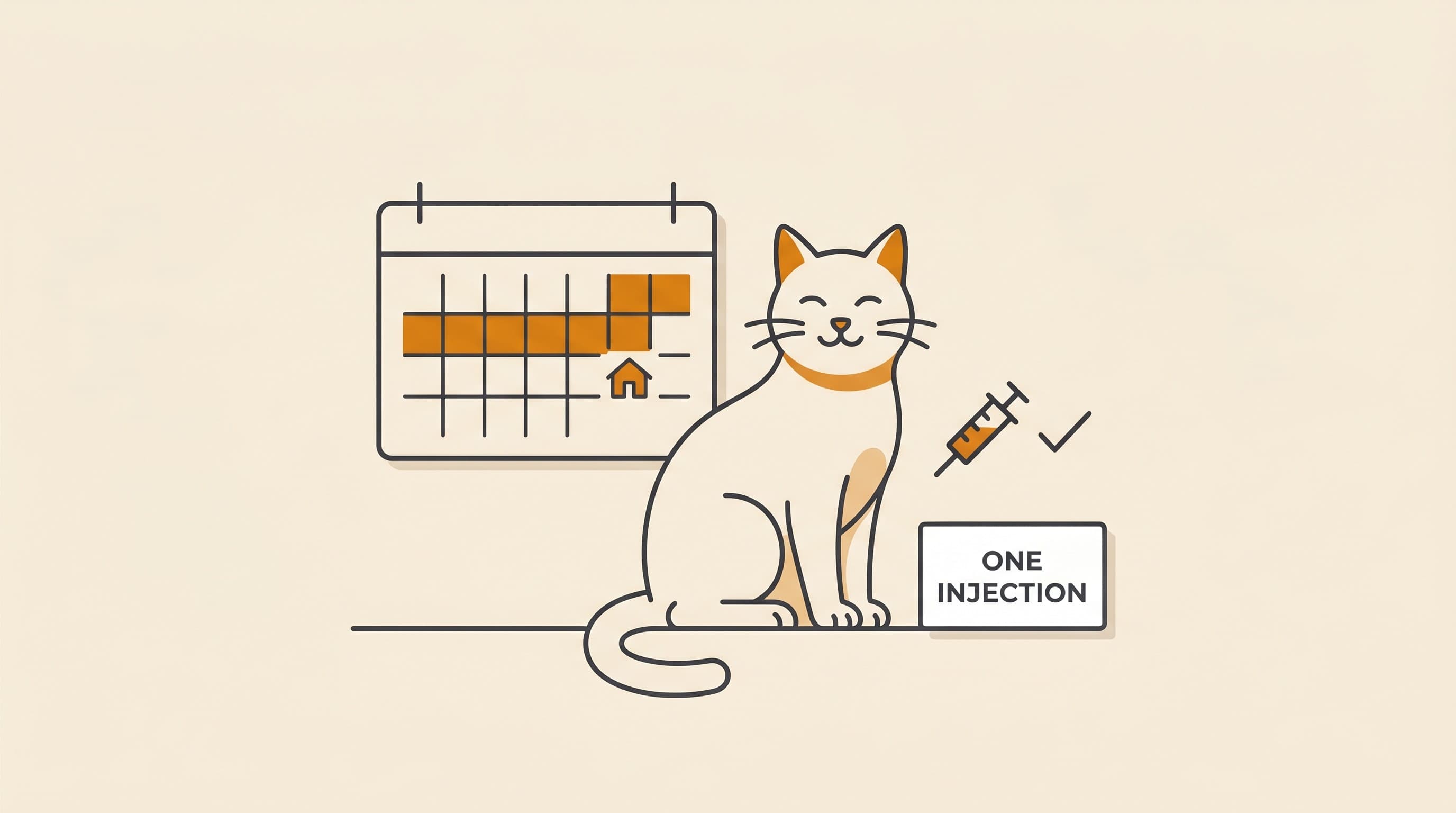
Radioiodine treatment uses a form of iodine called I-131. It's given as a single injection under the skin, much like a vaccine, and is absorbed into the bloodstream from there (Cornell). The clever part is that the thyroid is the only tissue in the body that hungrily takes up iodine, so the radioactive iodine concentrates almost entirely in the overactive thyroid cells (AAFP 2016). Once inside, it delivers its radiation over a very short range, a maximum of about two millimetres, so it destroys the abnormal thyroid tissue from within while sparing everything around it (AAFP 2016). There's no cutting, no anaesthetic, and nothing for you to give at home.
It has one more quiet advantage. In a minority of cats, some of the overactive tissue sits in an unusual spot in the chest or neck where a surgeon couldn't easily reach it. Radioiodine treats that stray tissue automatically, because it goes wherever the iodine-hungry cells are (AAFP 2016).
Why it's the treatment of choice for most cats
The headline is simple: a single treatment cures roughly 95% of cats, with success rates of 95 to 98% reported (AAFP 2016; Cornell). Most experts regard it as the treatment of choice for the majority of hyperthyroid cats (AAFP 2016). For most cats, hormone levels return to normal within a week or two of the injection (Cornell). If the rare cat isn't fully cured by the first treatment, a second can be given (Cornell).
Set that against the alternatives. Medication controls the condition but never cures it and must be given for life; the diet only works if it's the sole food forever; surgery can cure but carries an anaesthetic risk. Radioiodine offers a genuine cure with none of those ongoing commitments. For the right cat, it's the cleanest answer there is.
So why isn't it offered more?
The reasons are practical, not medical. Radioiodine can only be given at specially licensed centres, so it's a referral rather than something your own vet does in the consulting room, and those centres aren't on every doorstep (AAFP 2016). And because your cat is briefly radioactive afterwards, there's a logistical tail that puts some people off before they've even weighed it up.
The isolation reality
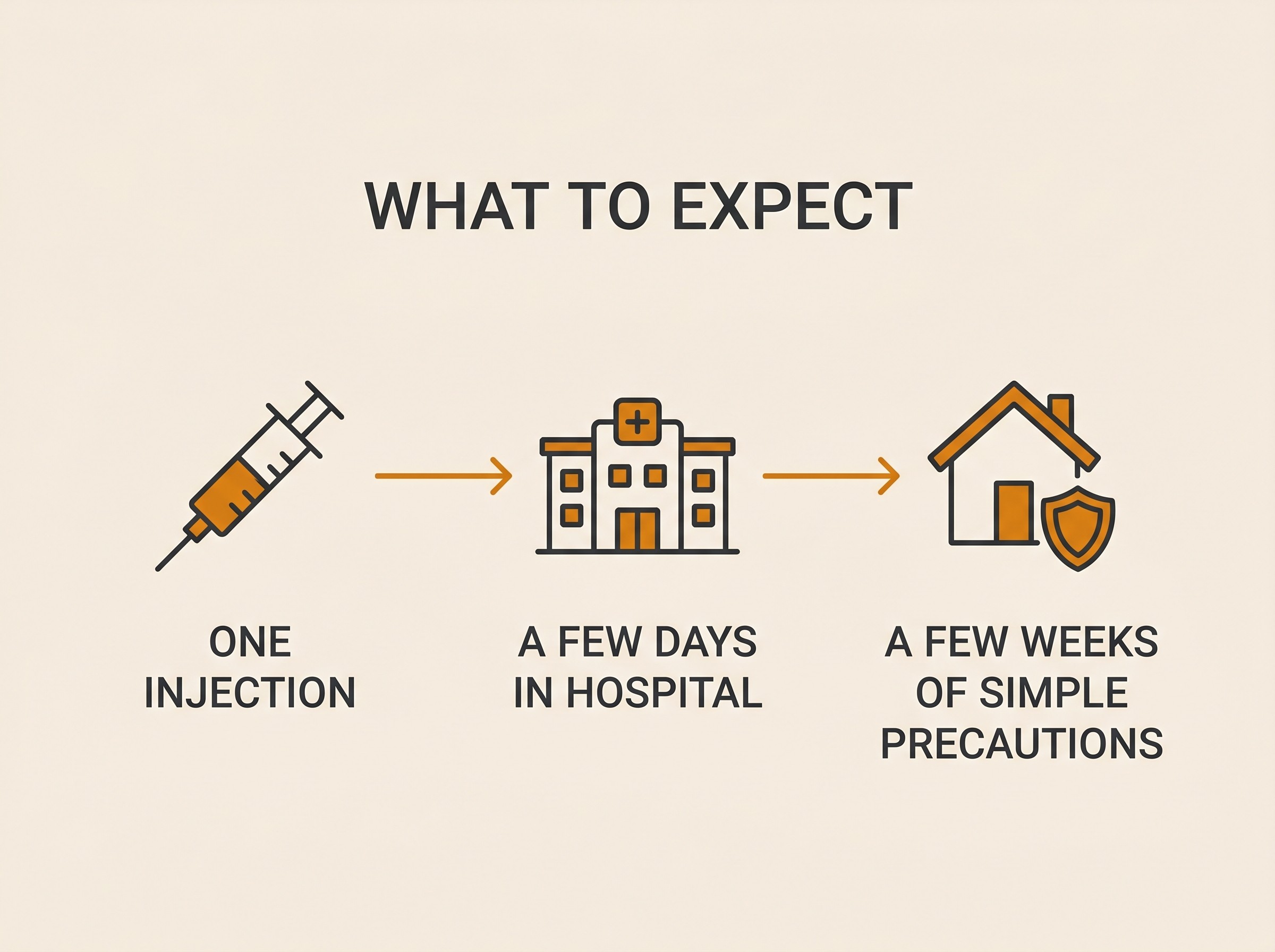
This is the part to go in with your eyes open. After the injection your cat needs to stay in hospital in isolation while the radioactivity falls to a safe level. How long depends entirely on local radiation regulations, which vary from a few days to a few weeks; a typical stay is around three to five days (AAFP 2016; Cornell). During that time you usually can't visit, which is hard, especially with a cat used to being at home.
Once your cat comes home, there are simple radiation-safety precautions to follow for a couple of weeks or so: avoid long cuddles and don't share a bed, keep your cat's litter and food separate from any other cats, wash your hands after handling, and keep young children and anyone pregnant at a sensible distance (Cornell). They're straightforward, but they're real, and worth knowing before you commit.
The cost, and who it suits
There's a meaningful upfront cost, more than a course of tablets to begin with, though medication's lifelong cost can catch up over the years. Prices and waiting times vary between centres, so the practical answer is to ask a referral centre directly rather than rely on a quoted figure.
Just as importantly, radioiodine suits some cats better than others. Physiologically stable cats do best (AAFP 2016). Cats with significant heart, kidney, gut or other hormonal disease may not be good candidates, and a cat that needs a lot of hands-on nursing can struggle with the enforced isolation (AAFP 2016; Cornell). Age by itself isn't a barrier, very elderly cats have been treated successfully (Cornell).
The kidneys deserve a special mention, because radioiodine is irreversible. Treating the thyroid can unmask hidden kidney disease, and once the thyroid tissue is gone you can't change your mind. That's exactly why vets often run a reversible trial of medication first: it shows how the kidneys behave once the thyroid is controlled, so you can move to the permanent cure with confidence, or step back if the kidneys struggle (AAFP 2016). The kidney-catch article covers this in full.
What to expect afterwards
For most cats it's wonderfully uneventful: the thyroid level settles into the normal range within a week or two and the weight, coat and temperament gradually recover (Cornell).
One thing to expect is that some cats dip the other way for a while. Up to three-quarters of treated cats become temporarily under-active (hypothyroid) for a period, which your vet watches for; permanent under-activity is uncommon, and where supplementation is needed it's often only for a time (AAFP 2016). Your vet will recheck the thyroid and the kidney values after treatment to make sure the landing is a soft one.
If your cat's kidneys are sound and you'd like this dealt with once rather than managed forever, radioiodine is well worth asking about, even if it means a referral. Weigh it against the other three routes in the treatment-compare article, and read the kidney-catch piece before you decide, because the kidneys, as ever with this condition, have the casting vote.
References
Keep track of how your pet is doing
The owners who cope best are the ones who notice changes early. A simple health log shows you what is working, and what is not, before the next vet visit.
Start tracking, freeYou're not doing this alone
Compare treatment journeys and talk to owners managing hormone health. Free to join.
Join PetsLikeMine