
Oral Tumours: Canine Melanoma and Feline Oral Squamous Cell Carcinoma
Alastair Greenway
BVM&S MRCVS
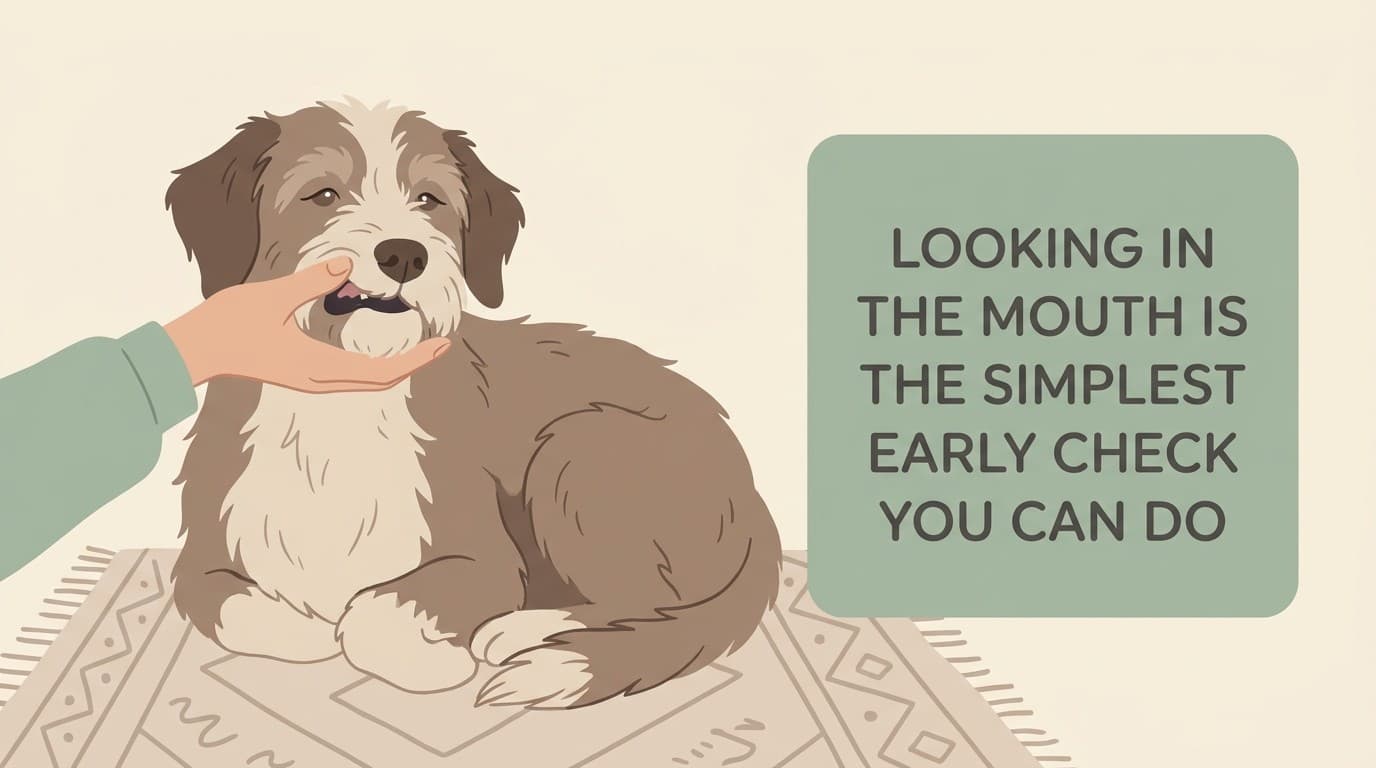
Most of us check our pets' eyes, their ears, the lump on the flank. The inside of the mouth is the one place we almost never look until something makes us. So oral tumours tend to show up late, and through their side effects rather than the lump itself. A smell on the breath that wasn't there before. A bit of blood in the water bowl. Drooling, a loose tooth, a pet who's gone fussy with food or started chewing on one side. By the time many are found, they've had weeks to grow somewhere nobody could see.
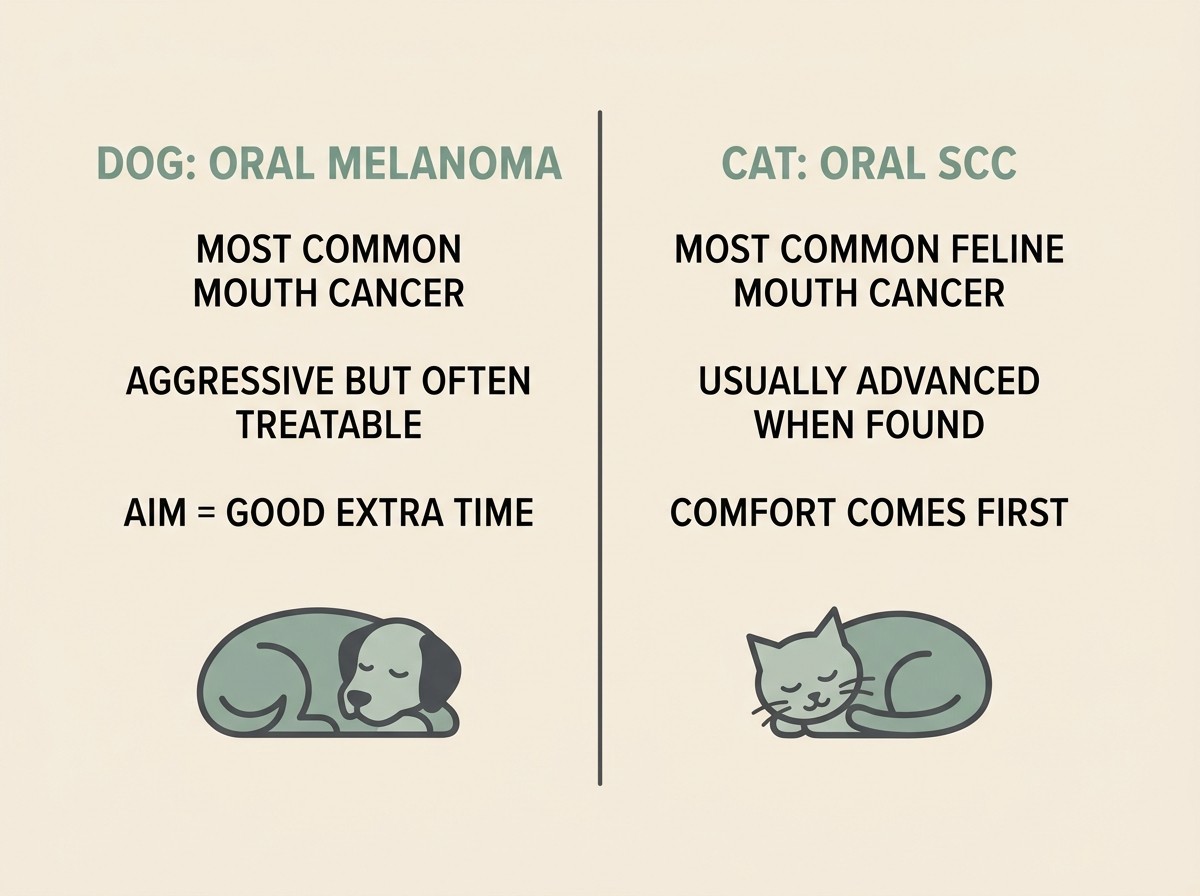
Two oral cancers matter more than the rest, and they sit at opposite ends of the scale. One is the commonest mouth cancer in dogs, the other the commonest in cats, and the realistic outlook for each is about as different as it gets. Which one you're dealing with changes everything, so it's worth taking them separately. And before either: plenty of mouth lumps are neither of these, and some aren't cancer at all.
How mouth tumours hide
The mouth does its job out of sight, and that's the heart of the problem. A small mass on the gum, under the tongue or right at the back of the throat can grow for weeks before it gets in the way of anything you'd spot. The early signs are vague and easy to pin on something ordinary: bad breath blamed on dental disease, a little drooling, slower eating, dropped food, pawing at the face, a reluctance to have the head touched. Blood-tinged saliva, or a swelling of the face or jaw, usually turns up later (NC State Veterinary Hospital, 2024).
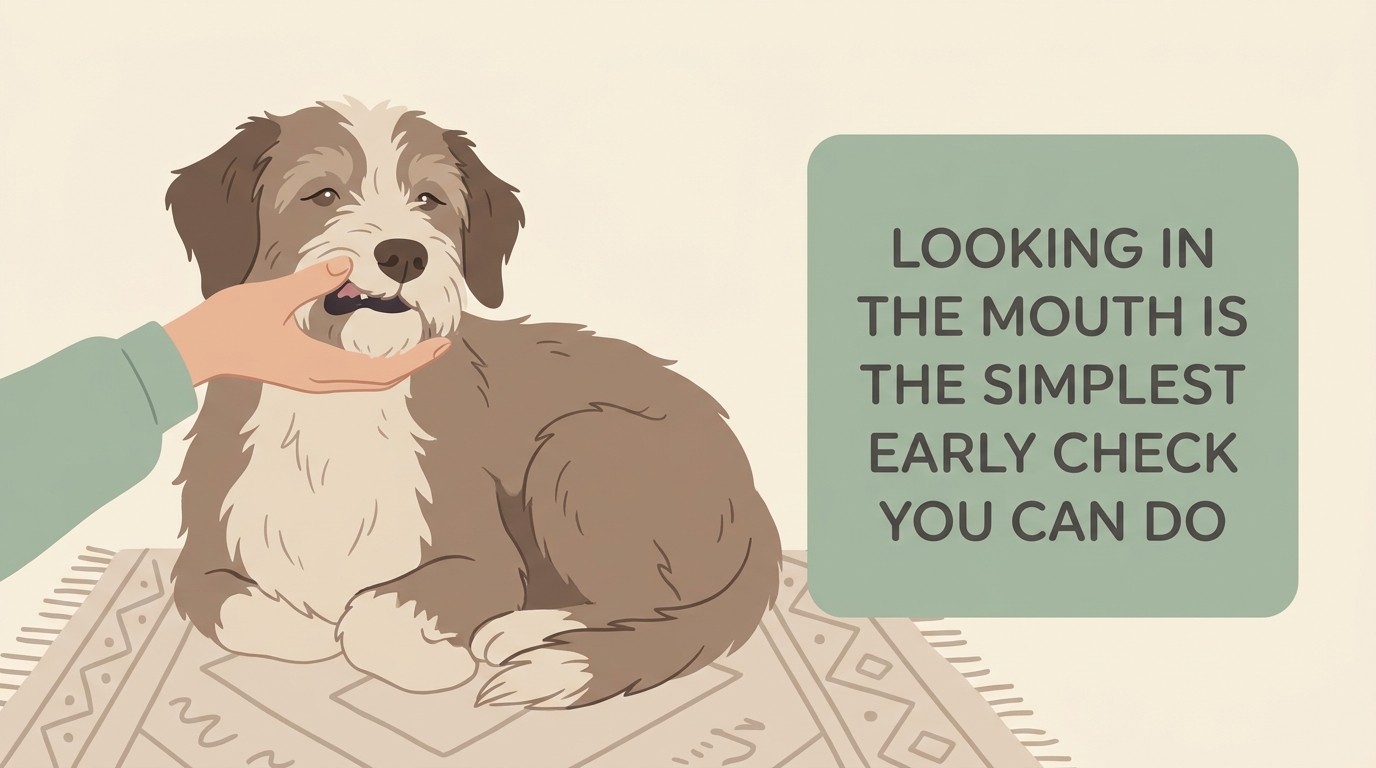
Cats are especially good at hiding it. A cat with a sore mouth often just goes quiet, grooms less, hides more and eats a little less, and those signs are so subtle and so unspecific that an owner has no real way of knowing what's behind them until the tumour is large (NC State Veterinary Hospital, 2024). None of that is a failing on your part. It's the nature of the place these cancers grow. What helps is also the simplest thing there is: lifting the lip now and then for a look, and getting any mouth change, smell or eating difficulty checked rather than waited on. Our [warning signs of cancer] guide walks through what's worth watching for.
Canine oral melanoma: aggressive, but far from hopeless
Melanoma is the most common mouth tumour in dogs (Dr Buzby's ToeGrips, 2024). It usually appears as a dark, or sometimes pink, mass on the gum, lip or palate, and often comes with drooling, a smell, bleeding, loose teeth or trouble eating (Dr Buzby's ToeGrips, 2024). It behaves badly in two ways at once. Locally it invades the surrounding tissue and often the jawbone, and it also tends to spread, commonly to the local lymph nodes and then the lungs. In one study of dogs with oral melanoma, around 40% of those whose mandibular lymph nodes felt a normal size turned out to have cancer in them anyway (Williams & Packer, 2003). That's why your vet will want to check the nodes and the chest, not just the mouth.
Treatment usually starts with getting local control. Surgery to remove the mass with a wide margin, which for a jaw tumour can mean removing part of the jaw, and dogs generally cope with that far better than owners expect. Radiation is the other main local option, particularly when surgery can't get clear margins or the site won't allow it, and melanoma tends to respond well to it (BluePearl, 2024). There's also the canine melanoma vaccine, sold as Oncept, which primes the dog's own immune system against the tumour and is given once the visible disease is under control. More on what that actually delivers in a moment.
Outlook depends enormously on size and position. Small tumours near the front of the mouth do considerably better than large ones at the back (Dr Buzby's ToeGrips, 2024). With surgery for local control, reported median survival sits broadly in the range of several months to over a year, and radiation lands in a similar bracket; left untreated, melanoma progresses fast, with a median survival of only a couple of months (Dr Buzby's ToeGrips, 2024). "Median" means the midpoint, so half of dogs live longer, and our [reading a prognosis] guide explains why a range is the honest answer rather than a date.
Now the vaccine, because it's where hope and evidence pull in different directions. The licensing study suggested that dogs given it after local control lived longer than historical comparison dogs, and it's very safe (Pellin, 2022). But several later studies that compared vaccinated and unvaccinated dogs more directly found no clear survival difference (Ottnod et al., 2013; Verganti et al., 2017; Pellin, 2022). So it's a reasonable, low-risk addition that some oncologists offer, rather than a proven cure-all, and it's worth asking your vet to set out the real expected benefit before you decide. Our [real hope versus hype] piece is built for exactly these conversations.
Feline oral SCC: the hard one, told straight
I won't soften this part, because you deserve the truth and then the kindness. Oral squamous cell carcinoma is the commonest mouth cancer in cats, making up around 70 to 80% of feline oral tumours (Today's Veterinary Practice, 2016). It typically grows on the gum, under the tongue or at the back of the mouth, invades deeply and quickly, and because cats hide their discomfort, most are found when the tumour is already large and can't be fully removed (NC State Veterinary Hospital, 2024).
The hard part is that no treatment has reliably worked against it. Surgery, radiation and chemotherapy have all been tried, and across them median survival is usually only around two to four months, with fewer than one in ten cats alive a year after diagnosis (NC State Veterinary Hospital, 2024). Cats with a small tumour right at the front of the lower jaw that can genuinely be removed do better, though they're the minority (NC State Veterinary Hospital, 2024).
In practice, that means for most cats the kindest and most realistic goal is comfort rather than cure. A cat with this tumour that won't eat is in pain, not simply off its food, and keeping that pain controlled is the heart of good care here (NC State Veterinary Hospital, 2024). That can include strong pain relief, anti-inflammatories, sometimes a short course of palliative radiation that eases discomfort for a while, and help with eating. Our [managing pain and comfort] piece goes into how that's done well. Choosing comfort-focused care for a cat with oral SCC is not giving up on them. It's often the most loving thing on offer, and there's no wrong answer in how far you take treatment. When the time comes that comfort can't be held, our [quality-of-life decision] guide is there, and it leads gently into our [End-of-Life space].
When a mouth lump is something kinder
Before the fear runs away with you, hold onto this. Plenty of growths in the mouth are benign, and the gum is a common place for them. The old catch-all term was "epulis", and you may still hear it, though vets now name these lesions more precisely because they don't all behave the same (Today's Veterinary Practice, 2019). A peripheral odontogenic fibroma is genuinely benign and slow-growing, doesn't spread elsewhere and, unlike the ameloblastoma below, doesn't invade bone; removing it completely usually settles it (VCA Hospitals, 2024; Today's Veterinary Practice, 2019). A canine acanthomatous ameloblastoma is also classed as benign and doesn't spread to other organs, but it is locally aggressive and digs into the surrounding bone, so it needs proper margins to stop it coming back (PetCure Oncology, 2024).
All of which matters for the same reason it always does with lumps: you cannot tell which is which by looking, and neither can your vet. A sample is what tells you, and our [aspirates and biopsies] piece explains how that's done. So a mouth mass is a reason to get a proper look and a sample, not a reason to assume the worst tonight.
If you've found a mouth change, the powerful move is the unglamorous one: book a look. The earlier a mouth tumour is sampled, the more options stay open, and for the benign ones it's often the end of the story. Whatever the result turns out to be, you'll be deciding from facts rather than fear, which is the best place to stand.
References
- NC State Veterinary Hospital. Feline Oral Squamous Cell Carcinoma.
- Today's Veterinary Practice. Feline Oral Squamous Cell Carcinoma. (2016).
- Dr Buzby's ToeGrips for Dogs. Oral Melanoma In Dogs: Symptoms, Treatment, and Prognosis.
- BluePearl Pet Hospital. Canine Oral Melanoma.
- Williams LE, Packer RA. Association between lymph node size and metastasis in dogs with oral malignant melanoma: 100 cases (1987-2001). J Am Vet Med Assoc (2003), 222(9):1234-1236.
- Ottnod JM, et al. A retrospective analysis of the efficacy of Oncept vaccine for the adjunct treatment of canine oral malignant melanoma. Veterinary and Comparative Oncology (2013).
- Verganti S, Berlato D, Blackwood L, et al. Use of Oncept melanoma vaccine in 69 canine oral malignant melanomas in the UK. Journal of Small Animal Practice (2017), 58(1):10-16.
- Pellin MA. The Use of Oncept Melanoma Vaccine in Veterinary Patients: A Review of the Literature. Veterinary Sciences (2022), 9(11):597.
- Today's Veterinary Practice. It Is Not Called an Epulis Anymore. (2019).
- VCA Animal Hospitals. Oral Tumors - Peripheral Odontogenic Fibromas.
- PetCure Oncology. Acanthomatous Ameloblastoma in Dogs: Diagnosis, Treatment & Prognosis.
Sister tool · Sightline
Track quality of life over time
Sightline, a separate ConciergeVet tool, runs a short adaptive weekly assessment with a quality-of-life focus mode built around exactly these frameworks, tracks a single composite score over time so you can see the trend rather than judge a single bad day, and produces a Sightline Report PDF you can bring to your vet.
A written log, or our printable quality-of-life sheet, does much the same job.
See how Sightline tracks quality of lifeFound a lump? Track it, and know when to act
A lump cannot be told apart by look or feel; only your vet sampling it can. The Lump & Bump Tracker records its size and how it changes, flags when it has crossed a line worth a vet visit, and builds a clean history to take in.
Open the Lump & Bump TrackerYou're not doing this alone
Compare treatment journeys and talk to owners managing cancer. Free to join.
Join PetsLikeMine