

Living With an FIV-Positive Cat: Lifespan, Indoor Life and Multi-Cat Homes
Alastair Greenway
BVM&S MRCVS
A positive FIV result carries a worse reputation than it deserves. Many cats carrying feline immunodeficiency virus live a normal or near-normal lifespan, especially when they are kept indoors, neutered and seen promptly when anything is wrong. With sensible day-to-day care, your cat can stay comfortable and well for years.
Start with the lifespan figures
The single most useful thing to know about FIV is that it is far less of a sentence than its reputation suggests. Several studies have looked at how long infected cats actually live, and they reach broadly the same conclusion: many FIV-positive cats survive just as long as cats without the virus.
The 2020 AAFP Feline Retrovirus Testing and Management Guidelines, the main veterinary reference on this condition, summarise the evidence plainly. In one study the median survival after diagnosis was 3.9 years for infected cats compared with 5.9 years for uninfected cats, a difference that was not statistically significant. In another, infected cats lived a mean of 785 days versus 620 days for uninfected cats, again with no significant difference. The Cornell Feline Health Center puts it simply: cats with FIV commonly live average life spans, provided they are not also infected with feline leukaemia virus.
The honest caveat is that these are averages, and FIV is a lifelong infection that you manage rather than cure. The guidelines are emphatic on one point, though, and so am I: a positive FIV test should never on its own be a reason to put a cat to sleep. Your cat in front of you, how they are eating, playing and getting on, matters far more than the label.
If the diagnosis is very recent and still sinking in, our companion guide for owners whose cat has just tested positive walks through those first weeks and the questions worth asking your vet.
How FIV actually spreads, and why your other cats are usually fine
Understanding transmission is what lets you judge the real risk to any other cats in your home, and it is reassuring once you have the facts.
FIV spreads mainly through deep bite wounds. The virus lives in saliva and infected white blood cells, and the efficient way it passes from cat to cat is when an infected cat sinks its teeth into another during a serious fight. The AAFP guidelines describe most natural infections as the result of inter-cat aggression between cats that do not get along. This is why the classic FIV patient is an un-neutered, free-roaming tom who has spent years fighting over territory and mates.
It does not spread readily through ordinary, friendly contact. Cornell and the AAFP guidelines agree that casual contact, sharing food and water bowls, mutual grooming and using the same litter tray do not efficiently pass the virus. The virus is also fragile and survives very poorly in the environment. Spread from a mother to her kittens has been shown in the laboratory but appears uncommon in naturally infected cats, and sexual transmission is not a significant route.
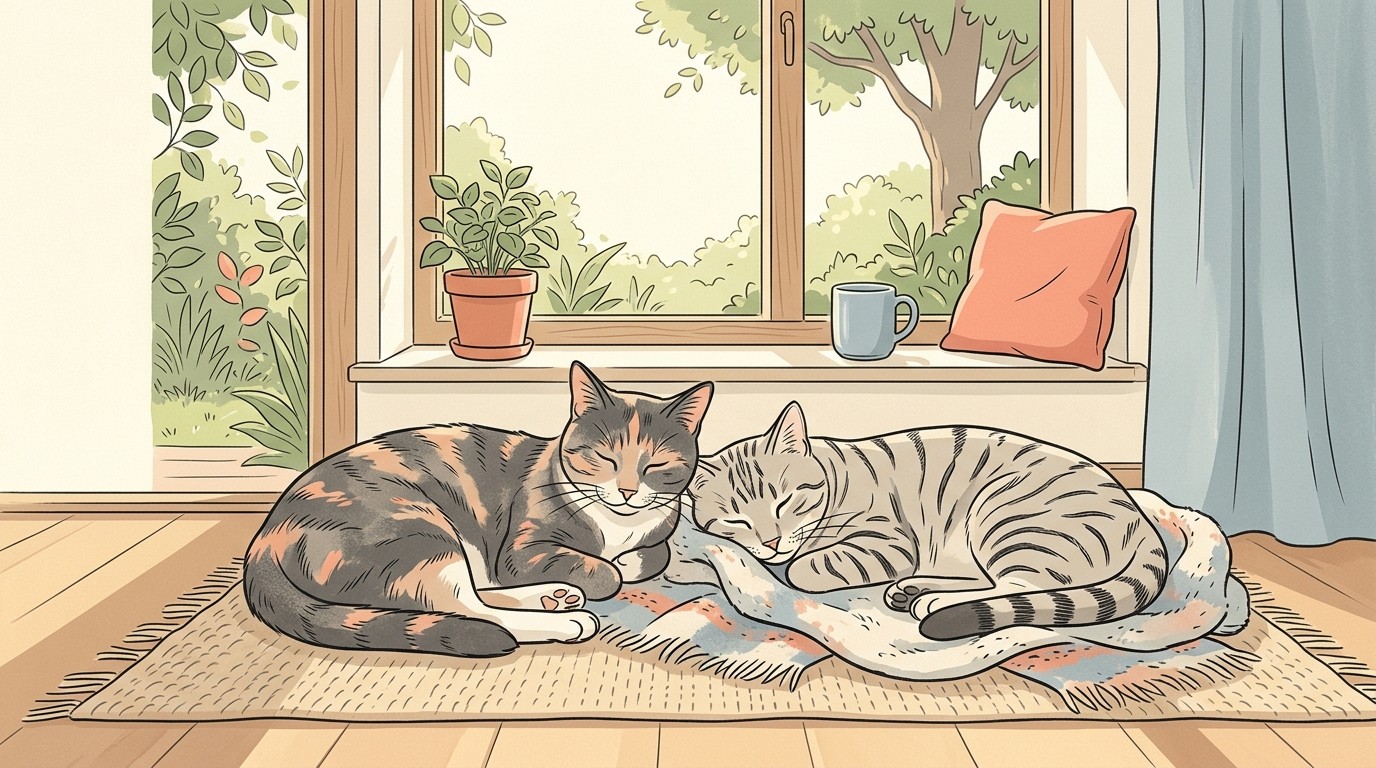
So what does this mean for a multi-cat home? If your cats are neutered, settled and not fighting, the risk of FIV passing between them is low. The AAFP guidelines state that cats in households with stable social structures, where the cats do not fight, are at negligible risk of acquiring the infection, and that infected and uninfected cats can live together in such homes. International Cat Care reaches the same view, noting it is very unlikely an FIV-positive cat will spread the virus in a multi-cat household as long as all the cats are neutered and the home is low-stress without fighting. There is real-world evidence behind this too: a study of cats in rescue shelters found no evidence of FIV spreading despite years of cohabitation between infected and uninfected cats.
This does not mean zero risk, and I would not pretend otherwise. A degree of risk remains, particularly if a new cat is introduced and tension flares, so the prudent advice is not to bring new cats into the home and to test any cats already there. But for a stable, neutered, non-fighting indoor group, you usually do not need to permanently separate your FIV-positive cat from the others. Watch how they get on, intervene early if friction appears, and keep the household calm. Our guide to FeLV and protecting other cats is worth a read too, because feline leukaemia virus behaves differently and the precautions are not identical.
Indoor life, catios and keeping everyone safe
Keeping your FIV-positive cat indoors does two jobs at once, and both genuinely matter.
First, it protects your cat. An immune system that is gradually being worn down copes less well with the everyday infections an outdoor cat meets, so reducing exposure to other cats, to fight injuries and to picked-up bugs helps your cat stay well for longer.
Second, it protects the neighbourhood. Your cat carries a virus that spreads by biting, and a cat that roams and squabbles can pass FIV to local cats. Keeping your cat in is the responsible choice for the wider cat population.
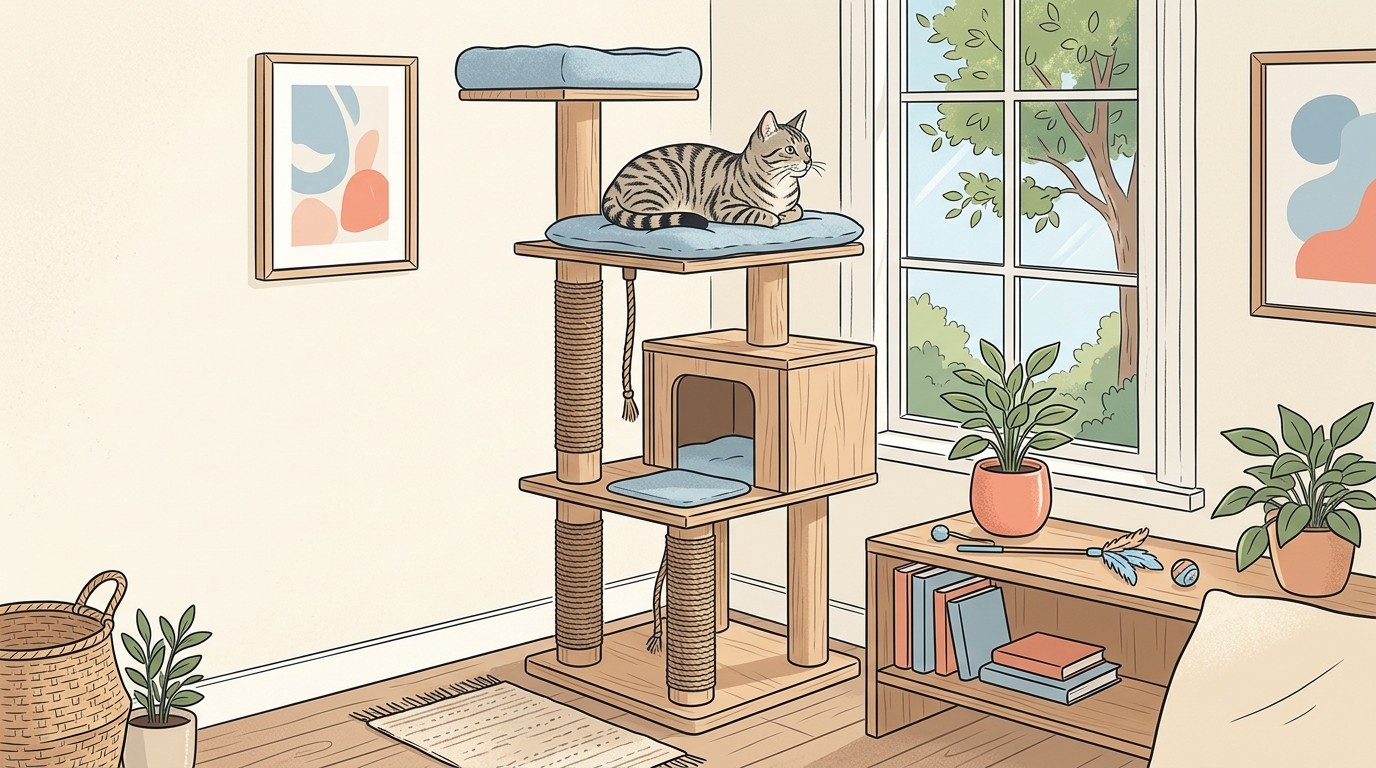
Indoors does not have to mean dull. A cat that has always had a garden may find a sudden confinement frustrating, so the goal is a rich indoor life or safely contained outdoor access rather than a bare room. A secure garden enclosure or a catio lets your cat feel the sun and watch the world without meeting other cats. Inside, height matters enormously to cats, so cat trees, shelves and windowsill perches give them somewhere to survey from. Add scratching posts, puzzle feeders, regular play with you, and quiet hiding spots, and most cats settle very well.
The care that genuinely makes a difference
Day-to-day management of FIV is mostly good, attentive ordinary cat care, with a few points sharpened up. None of it is exotic or expensive on a routine basis, and it is the steady consistency that pays off.
Routine wellness checks, usually twice a year. This is the cornerstone. The AAFP guidelines recommend that retrovirus-infected cats are examined at least every six months rather than once a year, so that any change is caught early while it is still easy to treat. Your vet will typically pay close attention to the mouth and gums, weigh your cat and check body and muscle condition, and will usually suggest annual blood tests and a urine sample to keep an eye on the bigger picture. Twice-yearly visits do add to the cost over a year, and that is worth budgeting for, but catching problems early usually saves money and suffering later.
Treat infections promptly, and take the mouth seriously. Because the immune system is compromised, secondary infections that a healthy cat would shrug off can take hold and linger. The ones to act on quickly are dental and gum disease, abscesses (often from bites or scratches), and respiratory signs such as a snotty nose or runny eyes. Painful gum and mouth inflammation, known as gingivostomatitis, is one of the most common problems in FIV-positive cats, and a sore mouth quietly stops a cat eating. Good dental care, and in stubborn cases dental treatment under your vet's guidance, makes a real difference to comfort and appetite. Infections may need longer courses of treatment than usual, so follow your vet's plan through to the end rather than stopping early.
Keep core vaccinations and parasite control up to date, discussed with your vet. It is a common myth that you should not vaccinate an FIV-positive cat. In fact the guidelines advise the opposite, because an infected cat can suffer more severely if it catches a preventable disease, so protection still matters. There are nuances your vet will weigh up for your individual cat, which is exactly why this is a conversation to have together rather than a fixed rule. The same goes for worming and flea treatment: infected cats should stay on suitable parasite prevention, and your vet will recommend products that suit a cat staying mostly indoors.
Feed well, and avoid raw diets. A complete, balanced diet keeps body and muscle condition up, which is one of the best buffers against illness. The one clear dietary caution is raw food. Both Cornell and the AAFP guidelines advise against raw meat and raw or unpasteurised dairy for these cats, because raw food carries a higher risk of food-borne bacteria and parasites, and a cat with a weakened immune system is less able to fight those off. A good-quality cooked or commercially prepared complete diet is the safer choice. If you have specific dietary plans, talk them over with your vet.
Neuter, if your cat is not already. Neutering reduces the urge to roam and fight, which both lowers the chance of your cat passing FIV on through bites and reduces the stress of mating behaviour. The guidelines recommend that all infected cats are neutered, and it is one of the simplest, most worthwhile steps you can take.
What to watch for at home
You see your cat every day, which makes you the most important monitor it has. You do not need to become anxious or hover, just stay quietly observant and trust your sense of when something is off. Book a vet visit if you notice:
- Weight loss, or your cat looking or feeling thinner. A monthly weigh on kitchen scales is a simple habit that catches gradual loss you might not see by eye.
- Mouth pain or gum disease, such as bad breath, drooling, pawing at the mouth, dropping food, or eating on one side. Sore mouths are common in FIV cats and very treatable.
- Persistent or recurrent infections, including runny eyes or nose, skin or ear problems, or wounds that are slow to heal.
- Lethargy or a drop in your cat's usual energy, appetite or interest in things.
A single off day is rarely a crisis, but signs that persist for more than a day or two, or that recur, are worth a call. Given the twice-yearly check-up rhythm, you are never far from a chance to raise small concerns either.
If you ever want to revisit how the diagnosis was reached or are considering testing other cats in the home, our guide to FIV and FeLV testing explains what the tests do and do not tell you, and how positive results are confirmed.
The long view, told straight
I would not be doing my job if I left you with only the bright side. FIV is a lifelong infection, and over a span of years the virus gradually wears at the immune system. Infection moves through phases: an early acute phase soon after infection, then often a long asymptomatic phase lasting months to years in which your cat seems entirely well, and in some cats a later phase where immunity has declined enough that infections, mouth disease and other problems become more frequent or harder to clear. Not every cat reaches that final phase, and many live out a full life in the comfortable, well stretch.
So think of management as keeping your cat well for as long as possible, and noticing promptly when their needs change. Indoor safety, a calm home, twice-yearly vet checks, quick attention to infections and the mouth, good food and steady observation are the levers in your hands, and together they make a genuine difference to both how long and how well your cat lives. Plenty of FIV-positive cats go on to be unremarkable, contented household pets for many years, and there is every reason to expect yours can be one of them.
References
- Cornell Feline Health Center. Feline Immunodeficiency Virus (FIV). Cornell University College of Veterinary Medicine. 2024.
- Little S, Levy J, Hartmann K, Hofmann-Lehmann R, Hosie M, Olah G, St Denis K. 2020 AAFP Feline Retrovirus Testing and Management Guidelines. Journal of Feline Medicine and Surgery. 2020.
- EveryCat Health Foundation. Feline Retrovirus Testing and Management Guidelines, Part Two: FIV. EveryCat Health Foundation. 2020.
- International Cat Care. Feline immunodeficiency virus (FIV). icatcare.org. 2023.
- Litster AL. Transmission of feline immunodeficiency virus (FIV) among cohabiting cats in two cat rescue shelters. The Veterinary Journal. 2014.
Keep track of how your pet is doing
The owners who cope best are the ones who notice changes early. A simple health log shows you what is working, and what is not, before the next vet visit.
Start tracking, freeYou're not doing this alone
Compare treatment journeys and talk to owners managing immune & blood. Free to join.
Join PetsLikeMine