

IMHA Recovery: The Long Steroid Taper and Watching for Relapse
Alastair Greenway
BVM&S MRCVS
Your dog is home and through the immediate danger of an IMHA crisis. The hard part isn't over, though; it has simply changed shape. What comes next is months of medication, a slow taper guided by blood tests, and a watchful eye for relapse. This guide explains what that long haul actually looks like.
If you have landed here without the earlier chapters, it is worth reading our guide to IMHA in dogs explained, which covers what the disease is and why the immune system turns on the red blood cells, and our guide to treating IMHA, which walks through the emergency stabilisation, transfusions and the first decisions in hospital. This article picks up afterwards, in the long, quieter weeks and months of recovery at home.
Why this is a job of months, not weeks
The single most important thing to understand is that IMHA treatment is long. The medicines that calm your dog's immune system, chiefly steroids such as prednisolone alongside, in many cases, a second immunosuppressant, are not a short course you finish and forget. The international expert guidance, the ACVIM consensus statement on treatment, expects a typical course of three to six months of steroid treatment in most dogs, and four to eight months for all immunosuppressive medication combined. Some dogs need treatment for longer still, and a minority stay on a low dose for life.
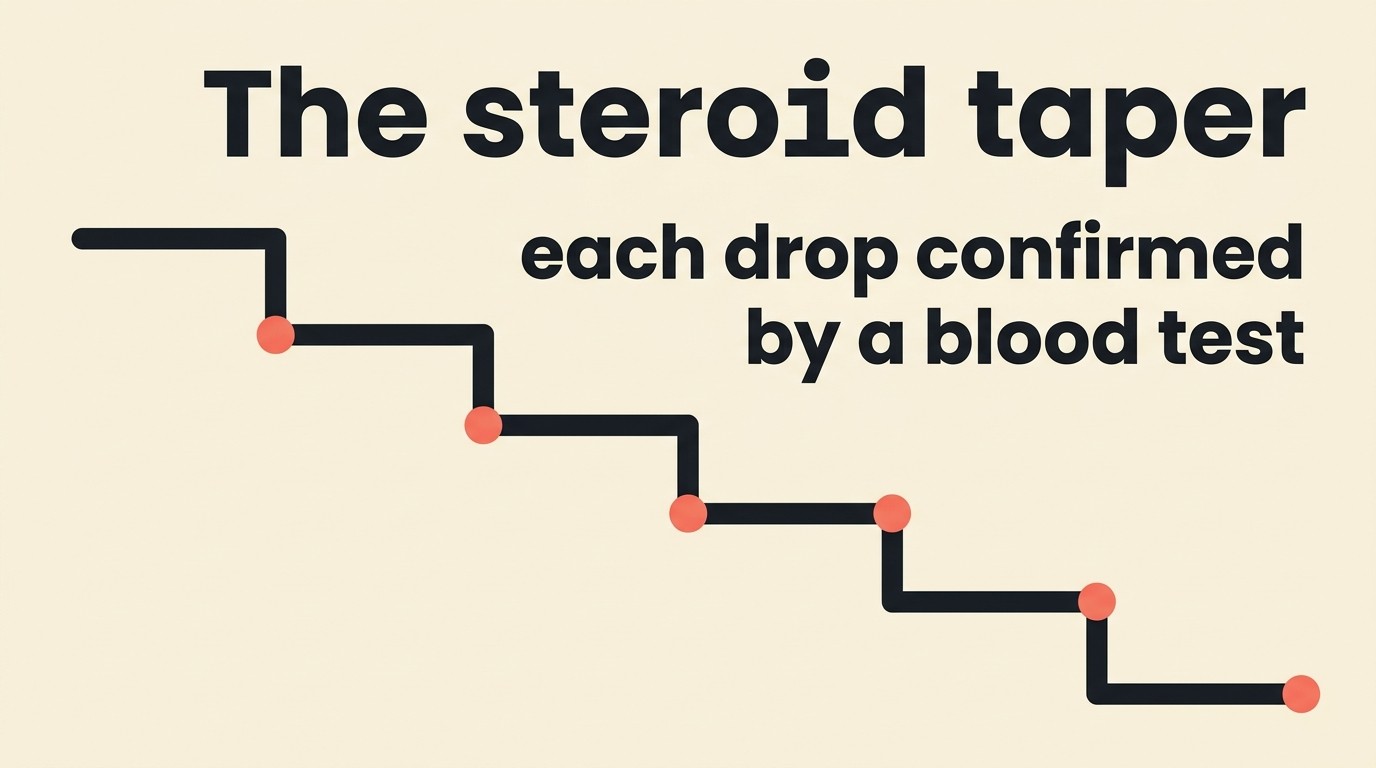
The reason is straightforward. The immune system has learned to attack the red blood cells, and it does not unlearn this quickly. Reduce the medication too fast, or stop it before the immune system has truly settled, and the attack can flare straight back up. So your vet will taper the dose down only slowly, in small steps, with blood tests to confirm it is safe at each stage. The dose is never simply stopped early because your dog looks well. Looking well and being safe to come off medication are two different things, and only the blood will tell you which one you are dealing with.
It helps to reset your expectations now. You are not waiting for a finish line a few weeks away. You are settling in for a steady, monitored journey where patience genuinely protects your dog.
Letting the blood lead
The packed cell volume, or PCV (also called the haematocrit), is the number that guides everything. It is a simple, quick measure of how much of the blood is made up of red cells, and it tells your vet whether the red cells are holding steady or being lost again.
In the recovery phase your vet will recheck the PCV regularly. The treatment consensus suggests checking it roughly every one to three weeks during active treatment, and again after each reduction in dose. The pace of the taper is set by these results, not by the calendar alone. The general principle in the consensus guidance is that the steroid dose is only reduced once the PCV has stayed stable and above a healthy threshold (the guideline uses above 30 percent) for a couple of weeks, with the other signs of red cell destruction settling too. Then the dose comes down by a modest step, often around a quarter, with another wait of about three weeks before the next reduction, provided the blood holds.
Alongside the PCV, your vet may look at a blood smear, the reticulocyte count (young red cells, a sign the bone marrow is responding), and bilirubin (a breakdown product that rises when red cells are being destroyed). Periodic full blood counts, biochemistry and urine tests also watch for medication side effects and infection. The exact schedule is something to agree with your own vet, and it will flex with how your dog is doing.
This rhythm can feel relentless, especially the cost and the repeated trips. It is reasonable to talk openly with your vet about spacing rechecks sensibly, balancing safety against your budget and your dog's stress. The aim is enough information to taper safely, not testing for its own sake.
Living with long-term steroids
Steroids are remarkable, lifesaving drugs in IMHA, but they are not gentle ones at the high doses used early on. Knowing what to expect makes the side effects far less alarming, and most of them ease as the dose comes down.
The common, expected effects include:
- Increased thirst and urination. Your dog may drink far more and need to go out much more often, including overnight. The consensus statement notes these affect the large majority of treated dogs. Always leave water freely available, and plan for extra toilet breaks rather than restricting fluids.
- A ravenous appetite. Many dogs act permanently hungry. Measure meals, resist the pleading eyes, and watch the waistline.
- Weight gain and a pot-bellied look. Partly appetite, partly the drug's effect on fat and muscle. It usually reverses as the dose falls.
- Panting and reduced exercise tolerance. Excessive panting is common at higher doses and tends to settle with tapering.
- Muscle weakness or wastage, thinning coat and skin, and slower wound healing with prolonged use.
- A higher risk of infection, because the same immune suppression that protects the red cells also lowers the body's defences. Mention any cough, sore skin, off-colour spell or urinary signs to your vet promptly.
There is also a raised risk of dangerous blood clots in IMHA, a leading cause of death in this disease, and steroids themselves can add to that clotting tendency. This is why many dogs are also on a blood-thinning medicine. Cornell's veterinary researchers describe treating affected dogs with blood thinners specifically to try to prevent these clots.
This is exactly where a second immunosuppressant earns its place. Drugs such as mycophenolate, azathioprine or ciclosporin work alongside the steroid. Adding one lets your vet either improve the chance of getting the disease under control or, crucially for the long haul, taper the steroid down faster and to a lower dose. Less steroid means fewer of the side effects above. Whether and when to add a second drug is a decision to make together with your vet, weighing your dog's severity, response and the cost of the extra medication.
Relapse, said plainly
A proportion of dogs with IMHA relapse, and it is fairer to you to say so plainly. Reported relapse rates vary between studies; the treatment consensus cites long-term figures of around 11 to 15 percent, and other sources put it as high as roughly 20 percent. Relapse most often happens as the doses are being reduced, which is precisely why the taper is slow and blood-led rather than rushed.
The good news, and it is genuine good news, is that relapse does not mean failure and it is usually treatable. Your vet will typically step the medication back up, often to a level that previously worked, and many dogs regain control.
Your job at home is to be the early-warning system between rechecks. Watch for the signs that the red cells may be under attack again:
- Returning lethargy and weakness, a dog that is suddenly flat, tired or reluctant after having perked up.
- Pale gums. Lift the lip and look; healthy gums are pink, and pale or whitish gums are a red flag.
- Dark or orange urine, or a yellow tinge to the gums or the whites of the eyes, signs that red cells are breaking down.
- Fast breathing, a racing heart, reduced appetite or collapse, all reasons to seek help straight away.
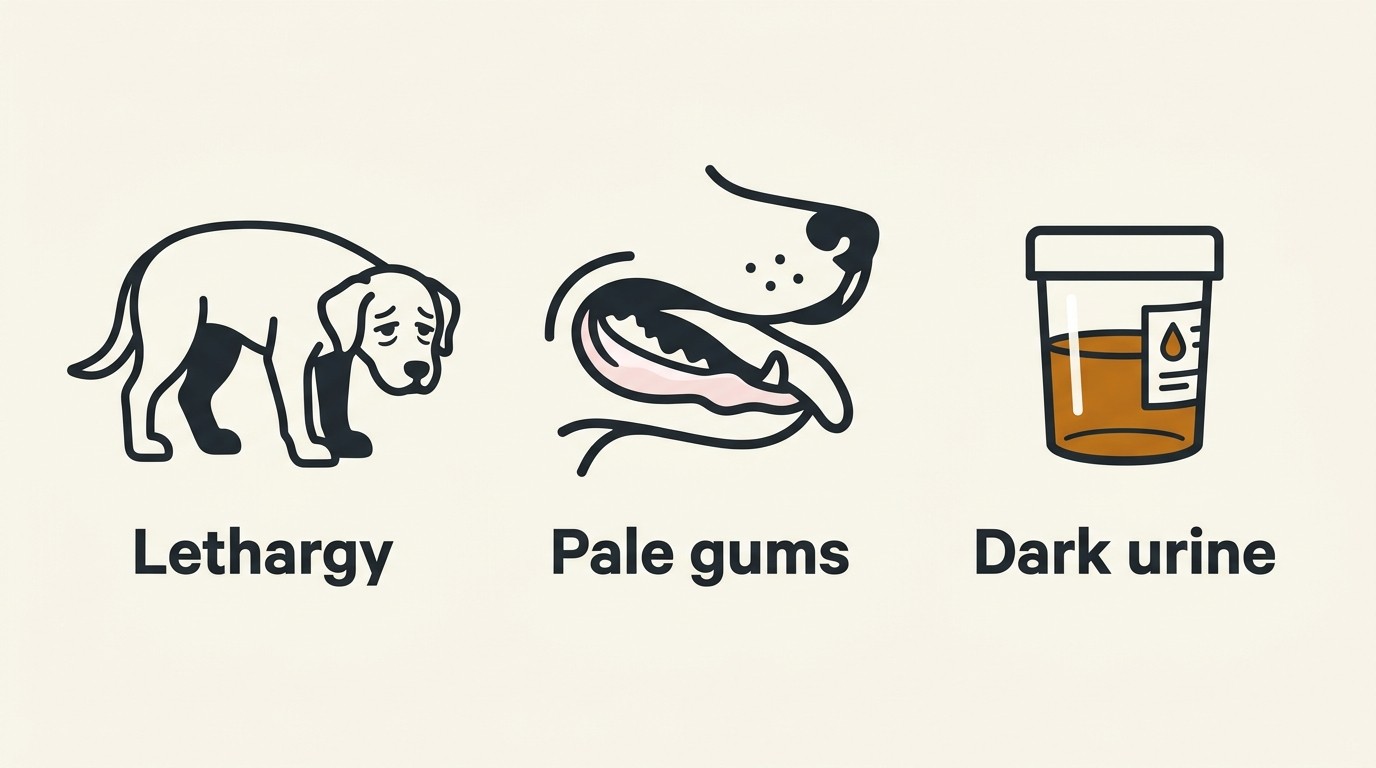
If you see these, do not wait for the next scheduled appointment. Contact your vet the same day, and out of hours if your dog is collapsing, breathing fast or very weak. Equally, keep to the recheck schedule even when your dog seems perfectly well, because the blood can show trouble brewing before you can see it.
What remission looks like, and the path to stopping
Remission means the disease is controlled, not cured. In remission, the red cell destruction has settled, the PCV is stable in a healthy range, and the other markers of haemolysis have calmed down. IMHA is not something we cure and walk away from; it is something we put into remission and manage, and many dogs stay there for years.
The path off medication is cautious and gradual. Some dogs can begin to be weaned after around three months of treatment, but only once the blood has held steady through the taper. The steroid usually comes off first, in steps, with the second immunosuppressant withdrawn slowly afterwards if one was used, each reduction confirmed by blood tests. Even after the final dose, your vet will usually want a recheck or two to be confident the remission is holding, because relapse remains possible for a while after stopping.
Set against the seriousness of the disease, this is a hopeful picture. The first few weeks carry the highest risk, but dogs that come safely through that early period and into a stable taper have a fair long-term outlook, and many go on to live full, happy lives with good quality of life.
Looking after yourself through it
It would be strange not to find this hard. You have already been through the fear of the crisis. Now you are living with months of medication, the disruption of constant thirst and night-time toilet trips, the expense of repeated blood tests, and a low hum of worry every time your dog seems a little quiet. The relapse watch can make you scrutinise your own dog anxiously, reading meaning into every yawn. That is a normal response to a frightening illness, not a sign you are coping badly.
A few things genuinely help:
- Keep a simple log. Note appetite, energy, toilet habits, gum colour and medication times. Patterns are easier to spot on paper, and it gives you something concrete to bring to rechecks instead of relying on memory.
- Make medication boring and routine. Pair pills with a favourite treat or meal, set phone reminders, and use a pill organiser. Consistency matters more than perfection.
- Agree a clear plan with your vet for what is normal, what warrants a phone call, and what is an emergency. Knowing where the lines are reduces the constant second-guessing.
- Be honest about cost. If the financial weight is becoming a strain, say so. Your vet can often prioritise the essential tests, discuss generic medications, or talk through what is realistic. This is a conversation to have early, not in crisis.
- Lean on others. Family, friends who can cover a recheck trip, or online communities of owners who have walked the same road can lighten the load. You do not have to carry the worry alone.
Above all, take it one recheck at a time. Each stable blood test is a small win, and they add up. The slow taper that feels so frustrating is the very thing protecting your dog.
References
- Swann JW, Garden OA, Fellman CL, et al. ACVIM consensus statement on the treatment of immune-mediated hemolytic anemia in dogs. Journal of Veterinary Internal Medicine. 2019.
- Garden OA, Kidd L, Mexas AM, et al. ACVIM consensus statement on the diagnosis of immune-mediated hemolytic anemia in dogs and cats. Journal of Veterinary Internal Medicine. 2019.
- Today's Veterinary Practice. Immune-Mediated Hemolytic Anemia. Today's Veterinary Practice. 2020.
- Cornell University College of Veterinary Medicine. Investigating the cause of blood clotting in dogs with IMHA. Cornell Richard P. Riney Canine Health Center. 2023.
- MSPCA-Angell. Immune-Mediated Hemolytic Anemia (IMHA) in Dogs. MSPCA-Angell. 2021.
Keep track of how your pet is doing
The owners who cope best are the ones who notice changes early. A simple health log shows you what is working, and what is not, before the next vet visit.
Start tracking, freeYou're not doing this alone
Compare treatment journeys and talk to owners managing immune & blood. Free to join.
Join PetsLikeMine