

FeLV: The More Serious Retrovirus, Its Outlook and Protecting Other Cats
Alastair Greenway
BVM&S MRCVS
Of the two feline retroviruses, FeLV (feline leukaemia virus) is the more serious. It suppresses the immune system and is linked to anaemia and cancer, and many cats with persistent infection die within a few years. Yet with good care some live well for longer, and you can protect your other cats.
This guide speaks to two owners at once: the owner of a cat who has tested positive for FeLV, and the owner of healthy cats sharing a home or neighbourhood with a positive cat. Both of you have decisions to make, and both deserve honest, calm information rather than either false reassurance or doom.
What sets FeLV apart from FIV
It helps to start with the honest comparison, because owners often hear the two viruses spoken of in the same breath. FeLV and FIV are both retroviruses of cats, but they behave very differently.
FeLV damages the bone marrow and the immune system more directly and more aggressively. It is the most common infectious cause of cancer in cats, lymphoma above all, and it causes blood disorders including a serious non-regenerative anaemia where the marrow stops making enough red cells. By weakening the immune system it also opens the door to secondary infections that a healthy cat would shrug off. The 2020 AAFP feline retrovirus guidelines list the typical FeLV-associated problems as cancer (chiefly lymphoma), bone marrow suppression, neurological disease, and infections that take hold because immunity is impaired.
The numbers reflect this. In the data the AAFP guidelines cite, cats with persistent (progressive) FeLV infection had a median survival of around 2.4 years, against 6.3 years for uninfected control cats. Cornell Feline Health Center quotes a median survival of about 2.5 years after diagnosis, while noting this can be considerably longer for cats whose infection turns out to be regressive. Those are sobering figures, and I would rather you heard them from a vet who will also tell you what they do not mean: a median is a midpoint, not a verdict on your individual cat, and "a few years" is still a great deal of good life to give well.
FIV, by contrast, tends to progress slowly, many FIV cats live a normal or near-normal lifespan, and it spreads mainly through deep bite wounds during fighting rather than through everyday contact. That difference in how readily the virus passes between cats is the single most important practical reason FeLV is handled with more caution.
Progressive versus regressive infection: the fork in the road
Two cats can both "have FeLV" and face completely different futures.
When a cat is exposed to FeLV, the outcome depends largely on how well its immune system contains the virus early on. Vets describe several outcomes, but the two that matter most day to day are these.
Progressive infection is persistent infection. The immune system fails to contain the virus, it replicates throughout the body, and the cat stays positive on blood antigen testing and sheds virus in its saliva. This is the form with the poorer outlook, the form behind those survival figures above, and the form that is infectious to other cats. Roughly 30 to 40% of cats exposed to FeLV develop progressive infection according to Cornell, and kittens are far more likely to end up here than cats first exposed as adults.
Regressive infection is contained infection. The cat mounts a partially effective immune response, clears the virus from its bloodstream, and the virus then sits dormant, integrated silently into the cat's own cells. Around 30 to 40% of exposed cats fall into this group. A regressively infected cat usually does not shed virus, is very unlikely to develop FeLV-related disease, and can do well for a long time. The catch is that the dormant virus is not gone: under significant stress, illness or anything that weakens the immune system, it can reactivate and turn into progressive infection. International Cat Care notes the chance of reactivation falls the longer it has been since exposure.
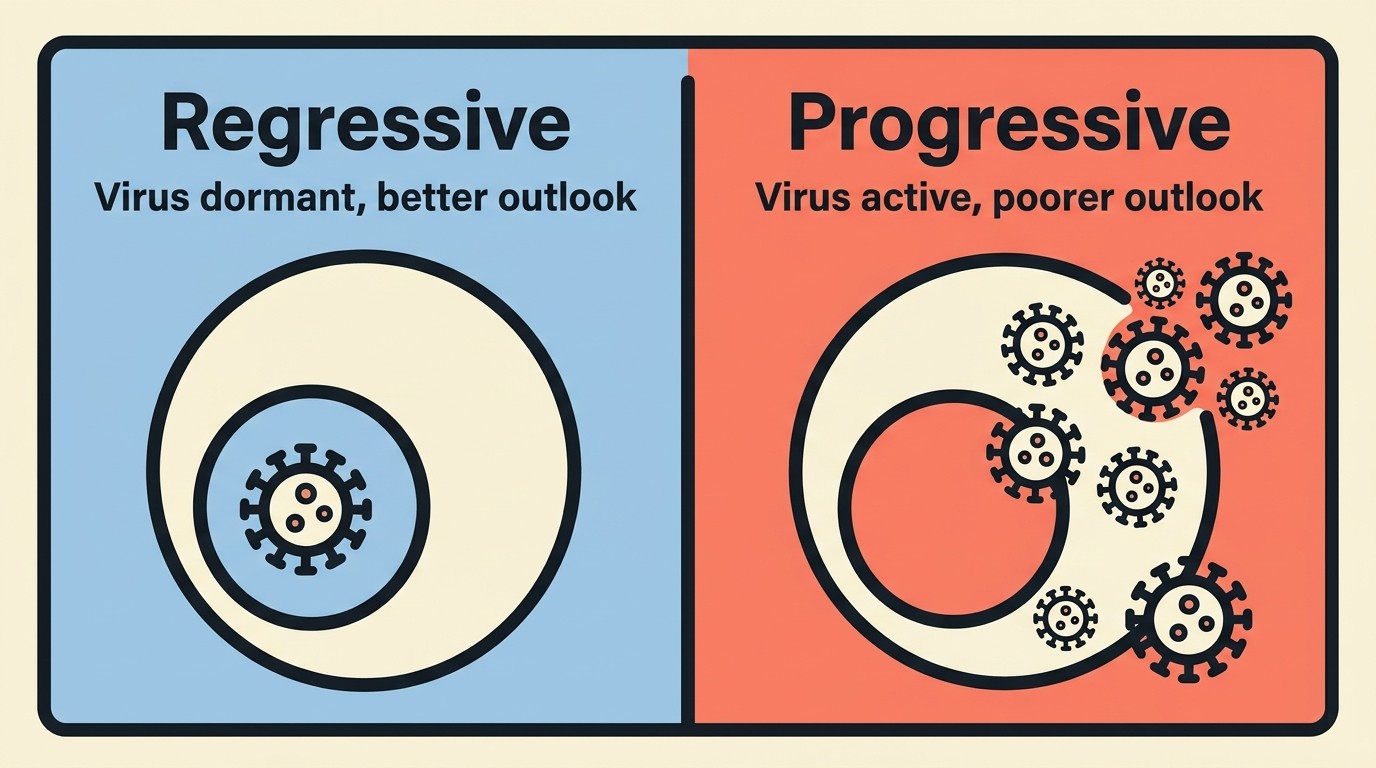
A third outcome, abortive infection, means the cat fought the virus off completely and is left only with antibodies, neither infected nor infectious. Some cats also have a focal or atypical course that does not fit neatly into either box.
Telling progressive from regressive matters enormously, and it is something testing can sort out over time rather than in a single snapshot. A persistently positive antigen result some weeks apart points to progressive infection, whereas a cat that clears the antigen has likely contained it. Our guide to FIV and FeLV testing walks through how the antigen test and the more sensitive PCR test work together, why the timing of testing matters, and why a single positive result should always be confirmed before any major decision is made.
How FeLV spreads, honestly
FeLV is shed in large quantities in saliva, and to a lesser extent in nasal secretions, urine, faeces and milk. The crucial point, and the reason it is more contagious than FIV, is that it passes through ordinary friendly contact rather than fighting.
The everyday routes are exactly the gentle, sociable things cats do together: mutual grooming, sharing food and water bowls, sharing litter trays, and simply living in close prolonged contact. A queen can also pass it to her kittens in the womb or through her milk. The AAFP guidelines describe transmission as occurring through close, intimate contact among cats, such as nursing, mutual grooming and the sharing of food, water and litter trays, with saliva as the main vehicle.
There is genuinely reassuring news in the detail, though. The virus is fragile outside the cat. Cornell notes it survives "less than a few hours under normal household conditions," and the AAFP guidelines describe retroviruses as having little or no environmental persistence, being readily inactivated by drying and by ordinary household detergents and disinfectants. So FeLV is not something that lurks on surfaces for days or travels easily between homes. The risk is about cat-to-cat contact, which is precisely why separation works.
Because everyday social contact is enough to pass FeLV on, the standard advice is that FeLV-positive and FeLV-negative cats should ideally be kept apart. That is a hard sentence to read if your cats are bonded, and I will not pretend otherwise, but it is the honest position.
Keeping your other cats safe
If you have a positive cat and one or more negative cats, you have three tools, and they work best together.
Separate positive cats from negative cats. The most reliable protection is to prevent direct contact: house the positive cat in its own room or part of the home, and keep food bowls, water bowls and litter trays separate rather than shared. If a positive cat is kept genuinely apart from negative housemates, transmission is unlikely. This is also why FeLV-positive cats should live indoors only, both to protect the neighbourhood's cats and to shield your own cat from the infections an outdoor life would expose it to.
Vaccinate the negative in-contact cats. FeLV vaccination is recommended for uninfected cats that share a home with a positive cat, even when the cats are separated, as a safety net. Be clear-eyed about its limits, though: no FeLV vaccine is perfect and vaccination will not protect every cat. Reported efficacy varies between studies and the vaccine reduces risk rather than guaranteeing immunity. Treat it as one layer of protection, not a reason to relax the separation. Your vet can advise on whether and how often to vaccinate based on your particular household.
Test any new cat before you introduce it. Whether you are bringing a kitten home or thinking of adopting a companion for a positive cat, test first. A new cat of unknown status should never simply be mixed in. Our guide to FIV and FeLV testing covers what to ask for and how to interpret the result.
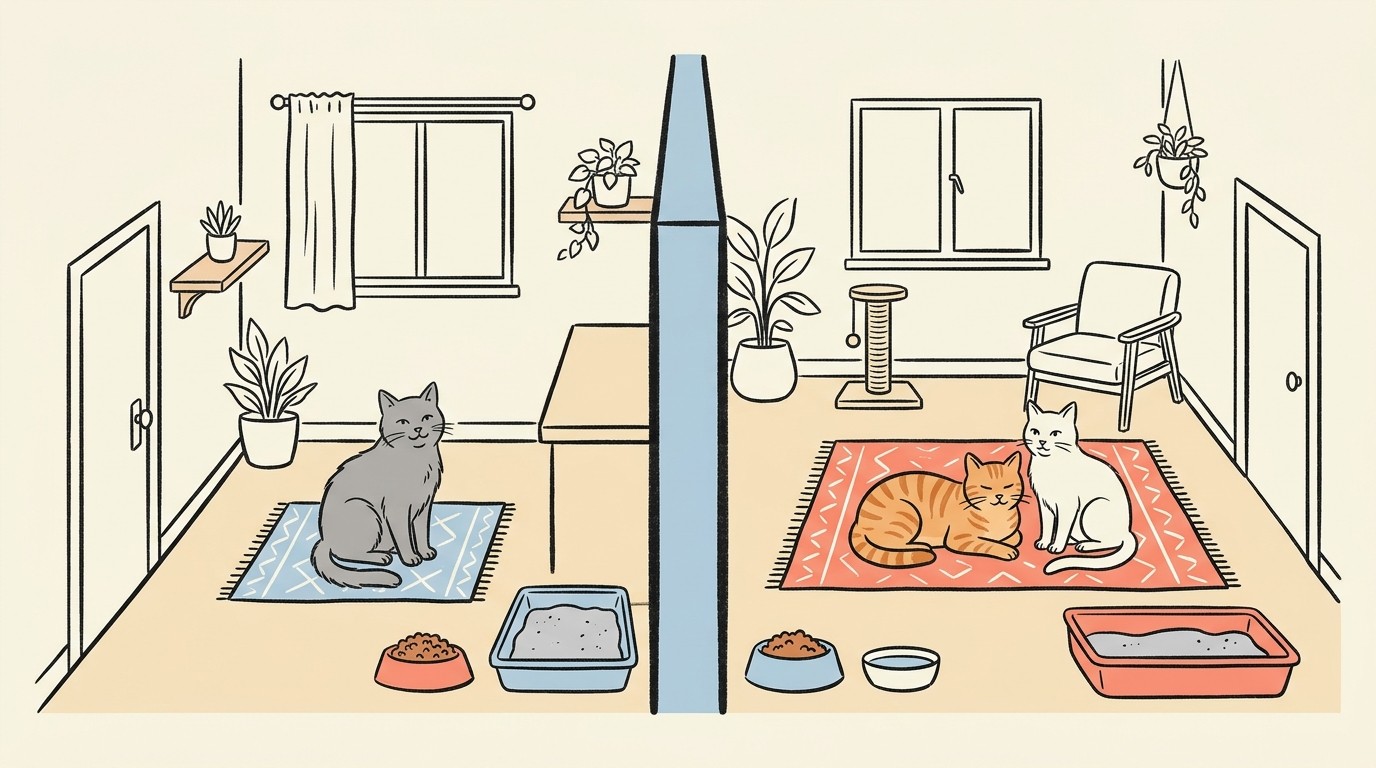
If your cats are devoted to each other, talk the situation through with your vet rather than assuming the worst. The risk is real, but families do find workable arrangements, and the right answer depends on your cats, your home and how the virus is behaving.
Daily care that keeps a FeLV cat well
There is no cure for FeLV. The virus cannot be cleared from a progressively infected cat, so everything we do is about managing it and keeping your cat as healthy and comfortable as possible for as long as possible. That work genuinely makes a difference, and most of it is in your hands.
Keep your cat indoors. This protects other cats from infection, and just as importantly protects your cat from the everyday bugs and injuries that a compromised immune system handles badly.
Treat infections promptly. Because FeLV weakens immunity, problems that would be minor in another cat can escalate. Do not wait and see with things you might otherwise leave a few days: a snuffly nose, a sore mouth, a wound, a change in appetite. Early veterinary attention is one of the most valuable things you can offer.
See your vet at least twice a year. Six-monthly check-ups are the recommended standard for retrovirus-positive cats. These visits let your vet catch anaemia, weight loss, dental disease or early signs of cancer while there is still time to act, often with blood tests to monitor the marrow.
Feed a good, complete diet, and avoid raw food. Raw meat and unpasteurised dairy are discouraged for FeLV cats because they can carry bacteria and parasites that an impaired immune system struggles to fight. A high-quality complete diet, adjusted with your vet if appetite or weight change, is the safer choice.
Reduce stress. Stress can tip a contained infection towards reactivation and generally makes any chronic illness harder to weather. A calm, predictable home, gentle routines, hiding places, vertical space and minimal upheaval all help. Keep up routine parasite control and your vet's recommended vaccinations against other diseases too, since prevention matters more than ever here.
None of this is dramatic, and that is rather the point. Steady, attentive, ordinary care is what lets a FeLV cat live well.
Quality of life and the harder conversations
I want to be gentle but honest here, because you deserve both. For some cats, particularly those with progressive infection, FeLV does eventually lead to illness that supportive care can no longer hold at bay, whether that is severe anaemia, lymphoma or repeated infections. When that time approaches, the kindest question is not how long we can keep going but how well your cat is living.
Quality of life is best judged on the ordinary things: eating with interest, grooming, comfortable movement, interest in you and the household, and freedom from pain and distress. Your vet can help you weigh these honestly, and many practices use simple quality-of-life scoring to take some of the loneliness out of the decision. If you reach the point where suffering outweighs the good days, choosing a peaceful, planned goodbye is an act of love, not failure, and end-of-life support is there to guide you through it with compassion. You will not have to navigate that moment alone.
For now, though, if your cat is well, let it be well. A FeLV diagnosis asks you to be watchful and to protect other cats, but it does not ask you to stop enjoying the cat in front of you.
Where to go next
If your cat has only just been diagnosed and you are still finding your feet, start with our guide for owners whose cat has just tested positive, which covers those first practical and emotional days. To understand the tests themselves and what the results really mean, see our guide to FIV and FeLV testing. And if you would like the gentler counterpart to this article, our guide to living with an FIV-positive cat explains why that virus is usually less serious and what daily life looks like, which can be reassuring context even when the diagnosis here is FeLV.
References
- International Cat Care. Feline leukaemia virus (FeLV). icatcare.org. 2023.
- Cornell Feline Health Center. Feline Leukemia Virus. Cornell University College of Veterinary Medicine. 2023.
- Little S, Levy J, Hartmann K, Hofmann-Lehmann R, Hosie M, Olah G, St Denis K. 2020 AAFP Feline Retrovirus Testing and Management Guidelines. Journal of Feline Medicine and Surgery. 2020.
- Hofmann-Lehmann R, Hartmann K. Feline leukaemia virus infection: a practical approach to diagnosis. Journal of Feline Medicine and Surgery. 2020.
- European Advisory Board on Cat Diseases (ABCD). Guideline for Feline Leukaemia Virus Infection. abcdcatsvets.org.
Keep track of how your pet is doing
The owners who cope best are the ones who notice changes early. A simple health log shows you what is working, and what is not, before the next vet visit.
Start tracking, freeYou're not doing this alone
Compare treatment journeys and talk to owners managing immune & blood. Free to join.
Join PetsLikeMine