

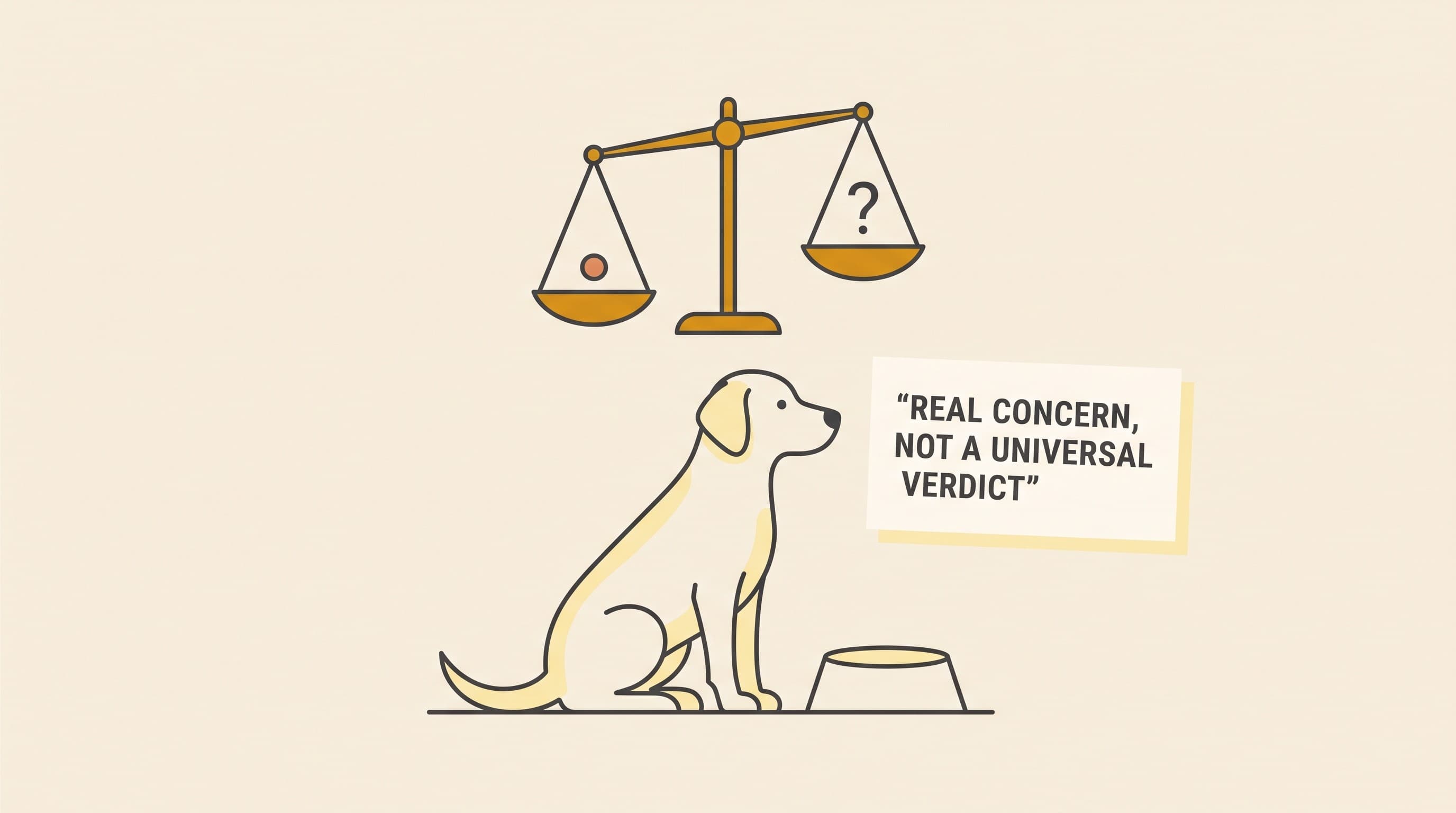
Copper and the Liver: The Dog-Food Copper Debate, Honestly
Alastair Greenway
BVM&S MRCVS
You have probably arrived here worried, and possibly a little angry. Somewhere in the last few days you have read that the copper in ordinary dog food is damaging dogs' livers, that it has been quietly rising for years, and that owners have been unknowingly poisoning their pets. Now you are looking at the bag in your cupboard and wondering whether you have done harm without meaning to. That is a horrible feeling, and you deserve a straight, unhurried answer rather than either the viral panic or the dismissive shrug.
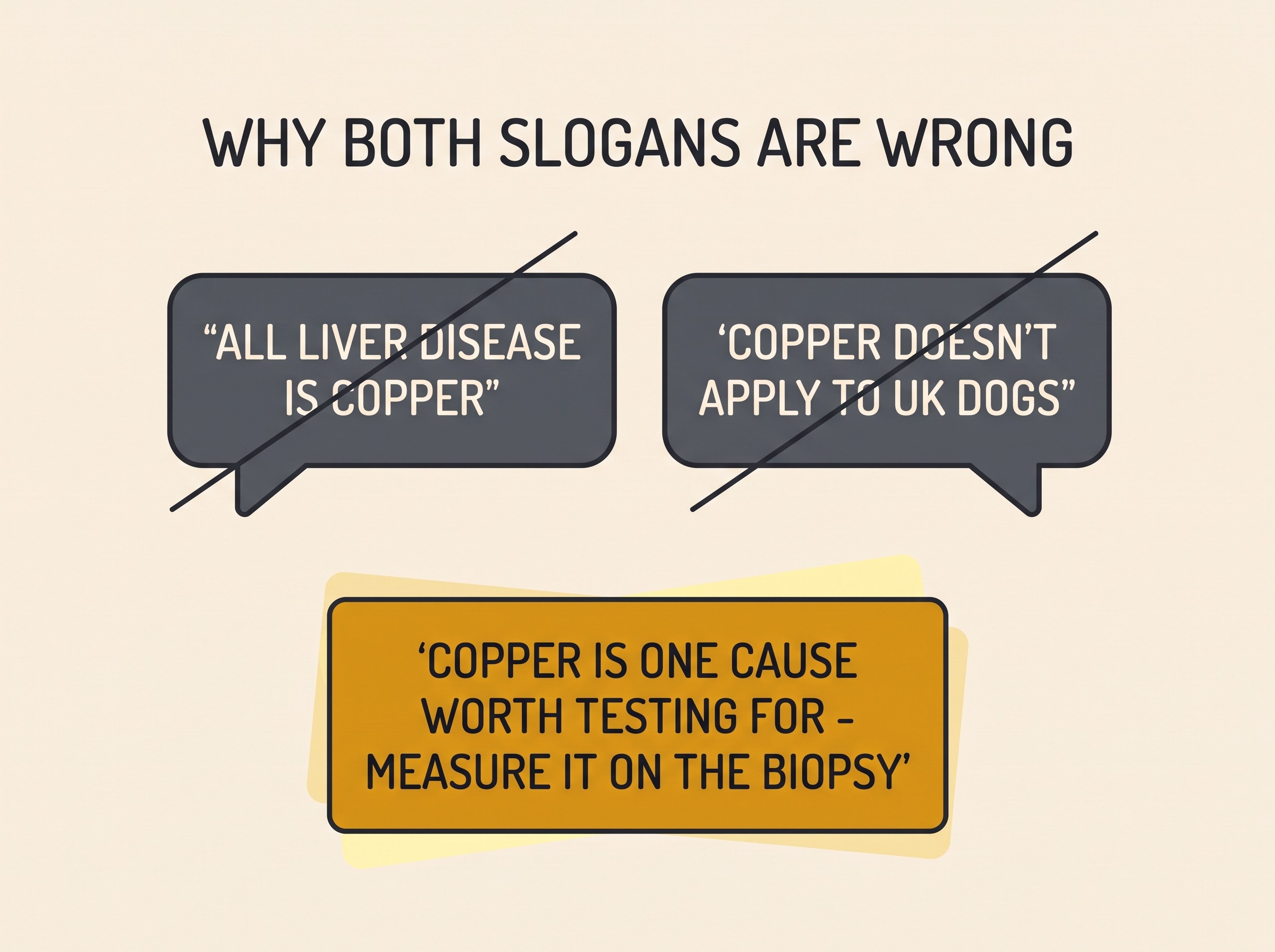
Here is the honest position, and it refuses to give you a slogan, because both of the popular slogans are wrong. Copper-associated liver disease in dogs is real, it is taken seriously by specialists, and the concern that dietary copper has climbed is a genuine, published scientific argument rather than internet noise. So "copper doesn't apply to my dog" is complacent. But it is equally untrue that "all canine liver disease is a copper problem caused by pet food", and for UK dogs in particular the picture is genuinely different from the North American headlines. The truthful answer sits in between, and it is more useful than either extreme. Let's work through it properly.
First, the question is a good one
Let's take the fear off the table before anything else. You have not been reckless. Copper is an essential nutrient. Dogs need it, and every complete dog food is required to contain it. The question is not whether copper should be in the food, it always has been, but whether the amount and the form now provided are more than some dogs' livers can comfortably handle.
That is a legitimate scientific question, and it is being asked by veterinary hepatology specialists, not just by worried people online. Copper-associated hepatopathy, the condition where copper accumulates in the liver and damages it, is a recognised, described disease. So when you ask "could the copper in my dog's food be a problem?", you are asking exactly the right question. The answer is "it can be, for some dogs, and here is how you find out", not "don't be silly".
The North American case
The loudest version of this story comes from North America, and it has real substance behind it. A 2021 viewpoint article published in JAVMA argued that the prevalence of copper-associated hepatopathy in dogs had been rising, and connected that to changes in how dog food is formulated, in particular a shift towards more bioavailable forms of supplemental copper that the liver absorbs more readily. The argument, in essence, is that a regulatory decision decades ago about which copper compounds to use in pet food had the unintended effect of raising the copper load that dogs actually take up.
The case did not stop there. More recent work, in 2025, has added to it. One study compared the amount of copper stored in the livers of domestic dogs with that in wild coyotes eating a natural diet, on the reasoning that if commercial diets were driving copper accumulation, pet dogs should be carrying more than their wild counterparts. Other 2025 work has looked at what happens when affected dogs are put on copper-restricted diets. The veterinary hepatologist Sharon Center has been a consistent voice through much of this body of work over the years. Taken together, this is a serious, specialist-led argument that dietary copper matters more than the pet-food industry has acknowledged. It is not a fringe position, and it should not be dismissed as one.
The pushback and the regulatory reality
At the same time, and this is essential to an honest account, the science is contested, and the regulators have not been persuaded to act.
AAFCO, the body that sets pet-food nutrient standards in the United States, reviewed the question directly. In August 2022 it concluded that there was insufficient evidence to justify changing the maximum copper level in dog food, and in May 2024 a proposal to change the copper guidance was voted down. Reasonable people can read that two ways. You can see it as regulatory caution failing to keep up with emerging science, or you can see it as the responsible bodies declining to act on evidence they judged not yet strong enough. Either way, the honest summary is the same: this is an active, unresolved scientific debate, not a settled fact. Anyone who tells you the case is closed, in either direction, is overstating what is known.
Say that plainly to yourself, because it is the antidote to the panic. If the world's pet-food nutrition experts are still arguing about it, then the confident forum post declaring that your dog's food is poison is claiming a certainty that does not exist.
The UK twist that makes this our own
Now the part that almost every page you will read gets wrong, because almost every page you will read is written for a North American audience. The UK picture is different.
British research has found that copper is not the main driver of most chronic hepatitis in UK dogs. Bexfield's UK breed and signalment work, together with the studies on English Springer Spaniels, points to a large proportion of British chronic hepatitis being idiopathic and immune-mediated, linked to the dog's own immune-system genetics rather than to dietary copper. In other words, if you took a hundred UK dogs with chronic hepatitis, copper would be the answer for some of them, but for many others the liver inflammation is being driven by something else entirely.
This is where both slogans fall apart at once, and it is worth being precise, because this is the whole point:
- "All liver disease is copper" is wrong. For a great many UK dogs with liver disease, copper is not the cause. Fixating on copper alone would mean missing the immune-mediated disease, the shunt, the gallbladder problem or the endocrine cause that is actually responsible.
- "Copper doesn't apply to my UK dog" is also wrong. Some UK dogs do accumulate copper, certain breeds are genuinely predisposed to it, and dietary copper still matters for the individual dog even if it is not the population-level driver it is claimed to be in North America.
The only way to reconcile these is the honest one: copper is one important, breed-modulated and diet-modulated cause worth testing for, not the universal explanation. And the way you find out whether it applies to your dog is not to guess from a headline, but to measure it.
What this means for a real owner
So what should you actually do with all this? Not what the panic tells you.
Do not panic-switch foods on the strength of a headline. Abruptly changing your well dog's diet because of a viral post is more likely to upset their stomach than to protect their liver, and it may mean chasing a problem your dog does not have. A complete, reputable commercial diet is not "poison" for the average dog.
If your dog has confirmed liver disease, ask the specific question. The one that matters is: was quantitative copper measured on the biopsy? Copper-associated hepatopathy is diagnosed by actually measuring the copper concentration in a liver-tissue sample, not by inferring it from enzymes, breed or diet. If copper was not measured and your dog is a predisposed breed, it is entirely reasonable to raise it with your vet.
If copper loading is confirmed, then diet becomes genuinely relevant. At that point, a copper-appropriate diet, discussed with your vet, is part of the treatment, and there is a practical guide to feeding the copper-restricted dog and a comparison of the prescription hepatic diets to help you do it well. But that is a step you take after confirmation, not before.
Do not start treatment on suspicion alone. This is the safety line that matters most. Do not begin copper-chelation medication, such as penicillamine, or put your dog on a copper-restricted diet, on the basis of a raised enzyme or a breed alone. Chelation is a treatment for confirmed copper loading and is a veterinary decision, and over-restricting copper carries its own risks, because copper is, after all, an essential nutrient. And please do not name-and-shame a particular brand as "the toxic one". The debate is about copper levels across the category and the regulatory framework, not about a single villainous bag.
The questions to take to your vet
Rather than a tidy summary, here is what to actually do next, because that is more useful than a conclusion. If your dog has raised liver enzymes or a liver diagnosis, and copper is on your mind, bring these questions to your appointment:
- "Given my dog's breed, how likely is copper to be part of the picture?"
- "If we biopsy, will the copper concentration be measured on the sample?"
- "Do the results so far point to copper, to an immune cause, or to something else?"
- "If copper is confirmed, what diet and treatment would you recommend, and how would we monitor it?"
Those questions turn a frightening, contested topic into a plan for your individual dog, which is the only version of this that actually helps. Testing beats guessing, every time.
If you want to go deeper into the evidence itself, the year-by-year science of the copper debate from 2021 to 2025 is covered in its own piece, and if your dog is a predisposed breed, the guide to the copper-storage breeds gives you the breed-specific facts. But the single most important thing to carry away is this: copper is real, copper is not everything, and for your dog the answer comes from a measurement, not a slogan.
References
- Webster CRL, Center SA, Cullen JM, et al. ACVIM Consensus Statement on the diagnosis and treatment of chronic hepatitis in dogs. *Journal of Veterinary Internal Medicine* 2019;33(3):1173-1200.
- 2021 JAVMA viewpoint on rising dietary copper and canine copper-associated hepatopathy.
- AAFCO copper position: August 2022 "insufficient evidence" conclusion; May 2024 vote-down of proposed change.
- 2025 dog-vs-coyote hepatic copper comparison study.
- 2025 copper-restricted-diet study in affected dogs.
- Bexfield NH. Canine chronic hepatitis: UK breed and signalment study, copper not the main UK driver. 2012.
- English Springer Spaniel chronic hepatitis and DLA-haplotype association.
Keep track of how your pet is doing
The owners who cope best are the ones who notice changes early. A simple health log shows you what is working, and what is not, before the next vet visit.
Start tracking, freeYou're not doing this alone
Compare treatment journeys and talk to owners managing liver & gallbladder. Free to join.
Join PetsLikeMine