
Conservative Management for a Young Dog With Hip Dysplasia
Alastair Greenway
BVM&S MRCVS
A diagnosis of hip dysplasia in a young dog does not force a choice of surgery. For many dogs, especially milder cases, a carefully managed non-surgical path is a sensible first approach, and a good number do well on it for years. This guide explains what that path involves, when it suits a growing dog, and when to revisit the surgical question.
Conservative management is a real choice, not a fallback
It is easy to feel that declining surgery means doing nothing. It does not. Conservative, or non-surgical, management is a recognised first-line approach for many dysplastic dogs, particularly those with mild or only intermittent signs. The American College of Veterinary Surgeons lists weight control, exercise modification, physical therapy, anti-inflammatory medication and joint supplements as the core of medical management, and notes that surgery becomes the consideration mainly when pain and loss of function stop responding to those measures.
The reassuring point is that radiographs and real life often diverge. In a long-term study of 74 dogs managed without surgery for clinical hip dysplasia (Farrell and colleagues, 2007), most of the dogs re-examined had osteoarthritis visible on their hips, yet a substantial share were no longer clinically affected by their owners' assessment, and around two-fifths to a third had stopped showing signs altogether. In other words, the films can look worse than the dog does. That gap between what an X-ray shows and how a dog actually lives is the whole reason conservative management is worth taking seriously.
A few things make a young dog a good candidate: mild to moderate signs, hips that are uncomfortable rather than badly arthritic, an owner able to commit to lean weight and consistent activity, and a vet happy to monitor over time. As our guide for owners whose puppy has just been diagnosed explains, the first weeks are about gathering information and not rushing a decision.
Be clear about what it can and cannot do
This is where a young dog differs sharply from an old one. Conservative management controls signs and supports the joint. It does not tighten a loose hip. The underlying laxity, the looseness that lets the ball move within the socket, stays. That laxity is what drives arthritis over a lifetime, so managing a young dysplastic dog well is not a one-off fix but an ongoing partnership with your vet.
Two consequences follow. First, conservative care must be paired with monitoring, because a hip that is comfortable at ten months may not be at three years, and the plan should flex as your dog grows. Second, and this is the part owners most often miss, choosing the conservative path now must never mean sleepwalking past a narrow preventive surgical window. Some joint-preserving operations only work while a puppy is still growing. Juvenile pubic symphysiodesis, for example, is generally done between roughly 12 and 18 weeks of age because around 80% of pelvic growth is complete by 17 weeks, and pelvic osteotomy procedures are typically reserved for dogs of about 5 to 10 months before significant arthritis has set in. Total hip replacement and femoral head and neck excision remain options later in life, but the early window does not reopen.
So the framing is this: starting conservatively is reasonable, but it should be a decision you and your vet take with the timing options clearly in front of you. As our guide to which surgery options are open at each age sets out, knowing the calendar protects you from regret. If your dog is a very young puppy, ask your vet specifically whether an early procedure should be on the table before you settle into a purely medical plan.
The pillars, adapted for a growing dog
Lean weight is the single most powerful lever
If you do one thing well, make it this. The landmark lifetime study of Labradors (Kealy, Smith and colleagues) split littermates into a group fed normally and a group fed 25% less for life. The lean dogs developed hip arthritis far later: the median age at which arthritis first appeared on X-ray was around 12 years in the lean group against about 6 years in the control group. By the end, half the lean dogs showed radiographic hip arthritis compared with 83% of the others.
For a growing dog the lesson is to keep your puppy properly slim, with a visible waist from above and a tucked tummy from the side, and to resist the urge to feed a large-breed puppy up to a big frame quickly. Rapid growth and excess weight both load an already unstable joint. Cornell's Riney Canine Health Center is blunt about this, advising against overfeeding during the critical growth phases of large-breed puppies. Feed a good-quality large-breed puppy diet to the lower end of guidance, weigh meals rather than eyeballing them, and count treats as part of the daily ration. Our arthritis hub guide on weight goes into how to body-condition score at home and adjust portions safely while a puppy is still growing.
Controlled exercise that builds muscle without hammering the joint
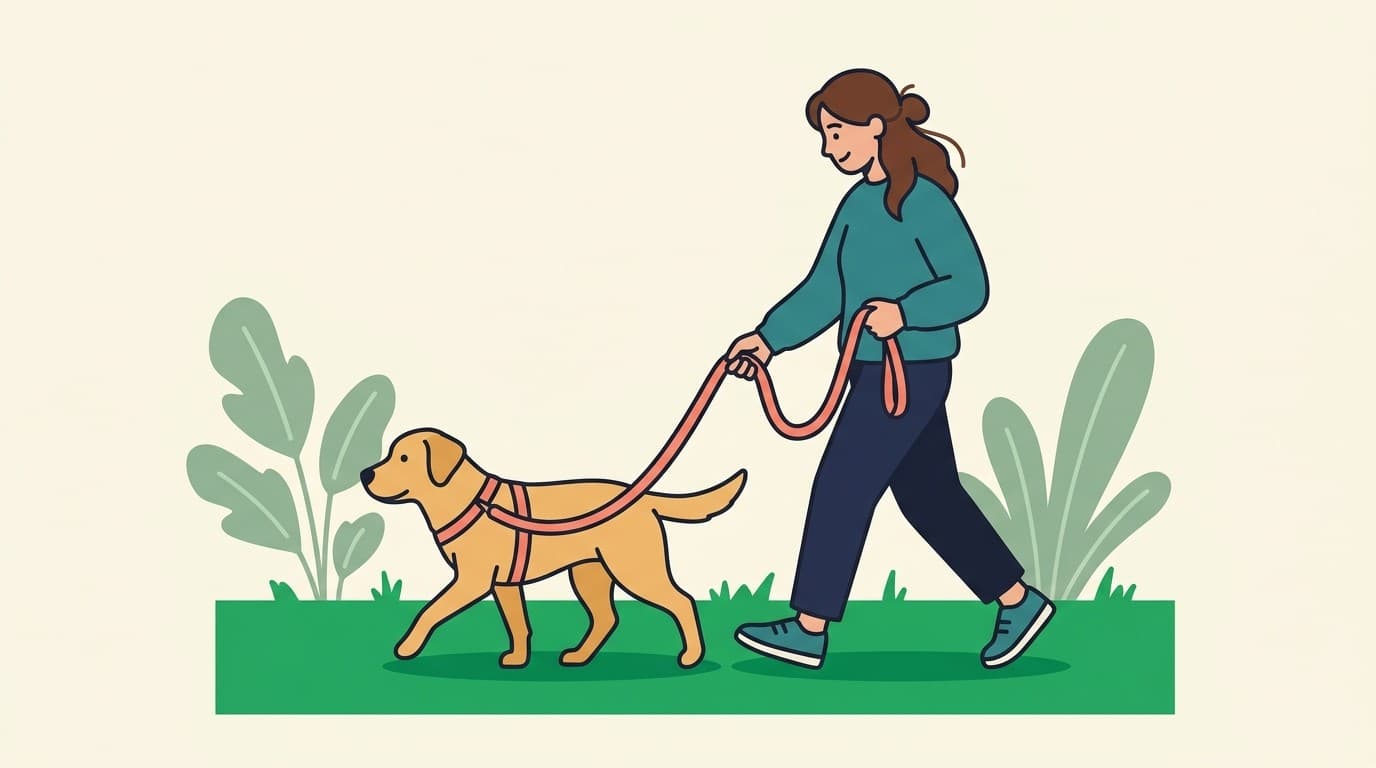
Strong muscle around the hip acts like a living brace, so the goal is to build it while sparing the joint from high-impact loading during growth. That balance is more delicate in a young dog than an old one, because growth plates are still open and tissue is still maturing. The principle from both Cornell and the wider literature is regular, low-impact activity rather than weekend bursts: steady lead walks of a length your dog tolerates comfortably, gentle controlled play, and swimming, while avoiding repetitive jumping, hard sprinting, twisting games and slippery chaos until your dog is mature.
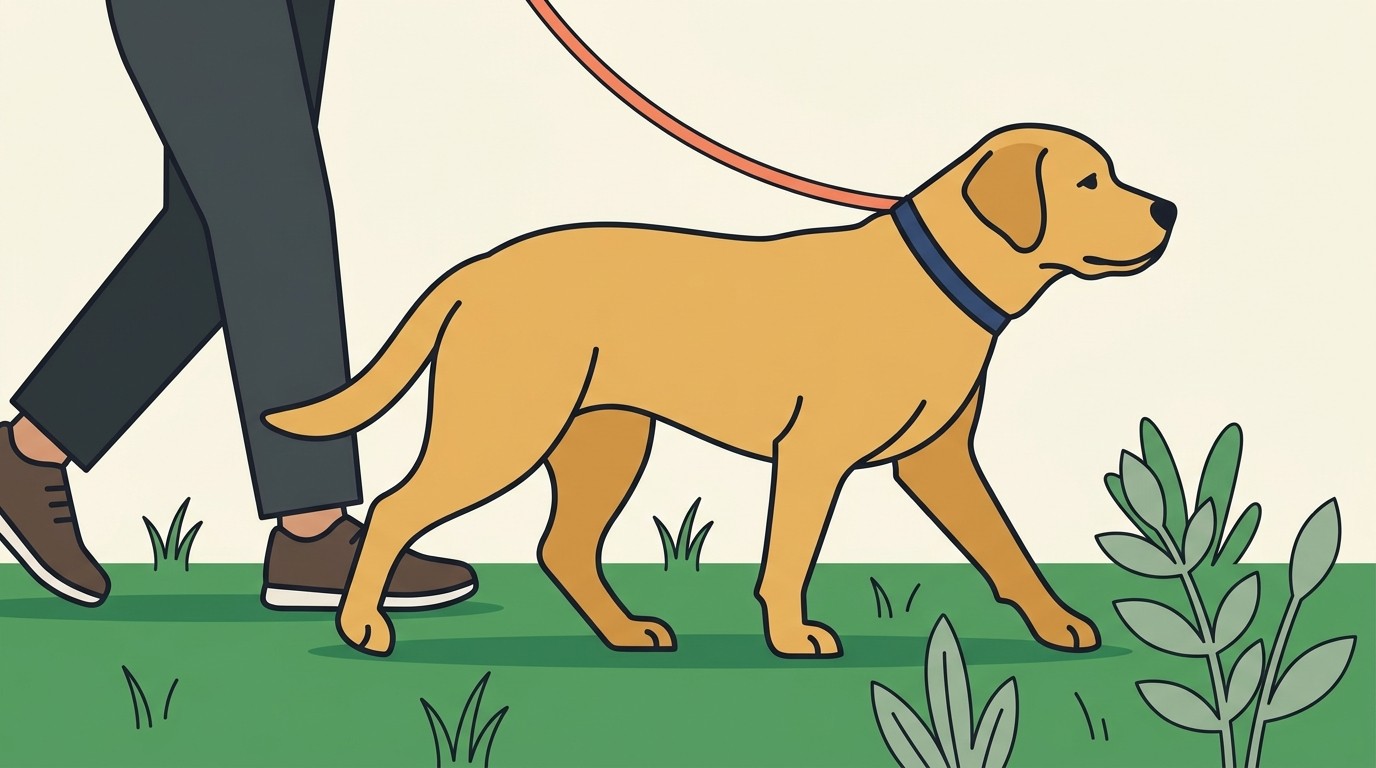
A useful rule of thumb is little and often: several short, calm outings beat one long exhausting one, and consistency matters more than intensity. Watch for stiffness the morning after, which usually means you overdid it. Our arthritis hub guide on controlled exercise has structured plans you can adapt, but for a growing dog err on the gentler side and let your vet steer how much is right for your dog's stage.
Physiotherapy and hydrotherapy
Veterinary physiotherapy and hydrotherapy can be valuable, particularly for building the gluteal and thigh muscle that stabilises the hip without the joint having to bear full weight. Cornell includes physical therapy and muscle-strengthening within its conservative protocol, and water work lets a dog exercise hard with the buoyancy taking the load off the joint. Ask your vet for a referral to a registered veterinary physiotherapist or a licensed hydrotherapy centre, because a tailored programme is safer and more effective than improvising, and a good therapist will adjust the work to a still-growing skeleton. Our arthritis hub guide on physiotherapy explains what to expect from sessions and how to reinforce the work at home.
Pain relief, layered and led by your vet
When a young dog is uncomfortable, pain relief matters, both for welfare and because a sore dog will not use the limb enough to build the muscle it needs. Modern management is multimodal, meaning several approaches layered together rather than one drug doing all the work. Non-steroidal anti-inflammatory drugs are the usual mainstay, and both the ACVS and Cornell stress that they require monitoring, including periodic blood tests when used long term, to protect the kidneys and liver. Omega-3 fatty acids from fish oil are recommended by both as a mild anti-inflammatory adjunct.
I will give no doses here on purpose. Pain relief in a young, growing dog is a decision to make with your vet, who will weigh the drug, the dose, the monitoring and your dog's individual picture. Never reach for human painkillers, several of which are toxic to dogs. The right question to ask your vet is not only what to give but how you will tell whether it is working and when to step it up or down.
What the evidence really says on joint supplements
Owners are often handed a cabinet's worth of joint supplements, so it is worth being straight. The ACVS states plainly that there is no evidence in the peer-reviewed literature that cartilage-protective supplements repair or protect cartilage. They are generally safe and many owners feel they help, so they are not unreasonable to try, but they should be seen as a possible minor adjunct, not a substitute for the things that genuinely move the needle: lean weight, sensible exercise and good pain control. Omega-3 fish oils have better support as an anti-inflammatory than glucosamine-type products. Spend your money where the evidence is strongest and discuss any supplement with your vet so it fits the wider plan.
The home environment
Conservative management does not stop at the surgery door, and the everyday environment is one of the easiest places to reduce strain on a young dysplastic hip.
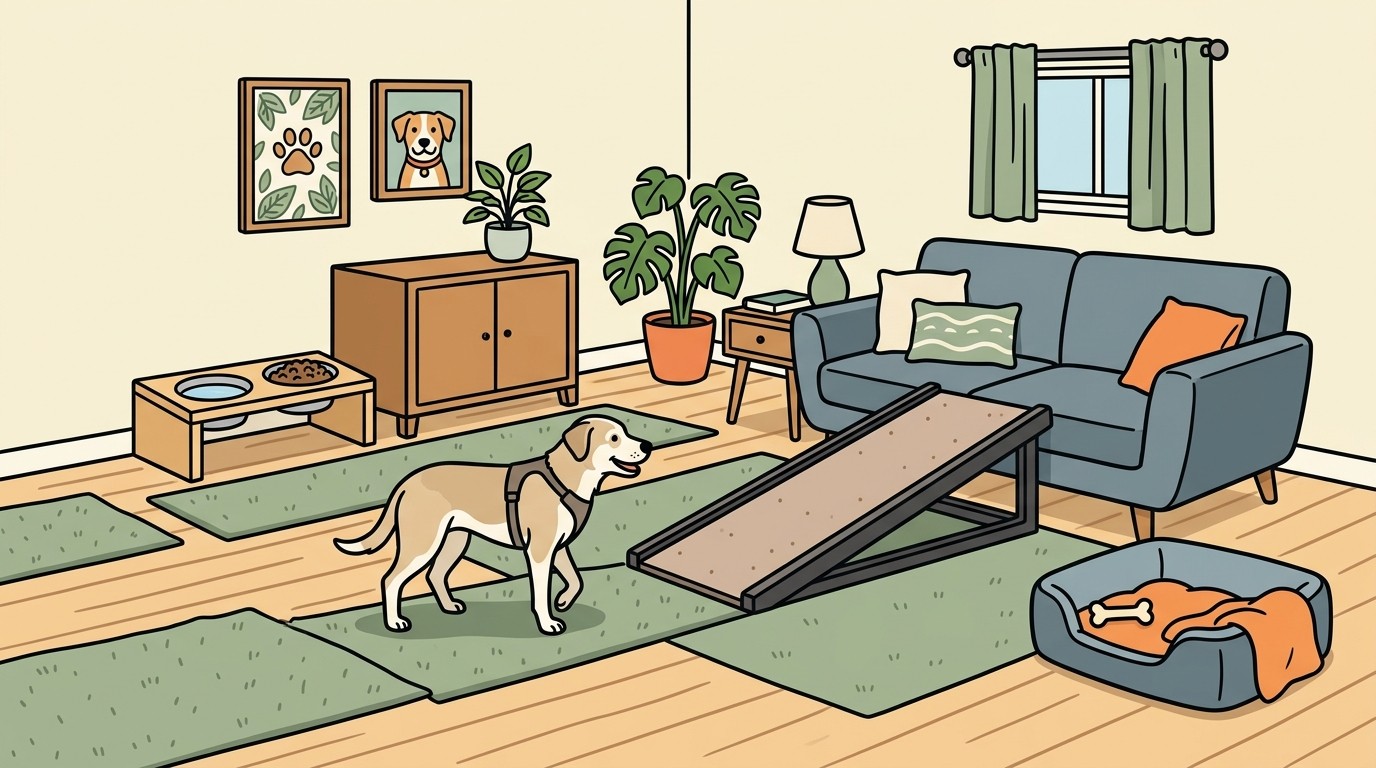
Give the floors grip. Slippery laminate, tile and wood make a loose hip work hard to stay under the dog, and the splaying and scrabbling are exactly the loads you want to avoid. Lay rugs, runners and non-slip mats along the routes your dog uses most, especially around food bowls, doorways and the bottom of stairs.
Swap jumping for ramps. Leaping on and off the sofa, the bed or into the car sends a sharp impact through the joint. A gently angled ramp or a set of pet steps lets your dog get up and down under control. Encourage the ramp early so it becomes habit.
Manage stairs sensibly. Stairs are not banned, but repeated charging up and down is hard on developing hips. Slow your dog down, fit grip to the treads where you can, and for a young puppy consider carrying or limiting stairs until they are stronger and steadier.
Feed for the weight you want. This loops back to the most important lever. A raised, slip-free feeding station is kinder on a sore dog, but what goes in the bowl matters more than the bowl. Keep portions weighed and lean throughout growth.
Monitoring progress and when to revisit surgery
Because conservative management treats the signs and not the laxity, the plan only works if you keep watching. Set a baseline now, ideally with photos or short videos of your dog walking and trotting, and note things like how readily they rise, whether they sit square or to one side, how they manage stairs, and how keen they are on exercise. Re-check with your vet at planned intervals rather than only when something goes wrong, and keep weight logged at every visit.
Certain changes should prompt a fresh conversation about surgery rather than simply more medication. Reach back out to your vet, and consider asking for referral to an orthopaedic surgeon, if you see worsening or persistent lameness that no longer settles with rest, pain that needs steadily more medication to control, a dog that is losing muscle or reluctant to exercise, stiffness that is clearly limiting daily life, or a clear downward trend over weeks to months. None of these mean you made the wrong call earlier. They mean the picture has shifted and the options deserve a fresh look.
Be realistic too. A dysplastic dog managed conservatively is unlikely to become an agility or working athlete, and some good and bad days are normal. The aim is a comfortable, active companion, and as the Farrell study suggests, that is an outcome many conservatively managed dogs reach and hold for years. Diagnostic context can help you and your vet judge risk: where it has been measured, a PennHIP distraction index below about 0.3 carries very low risk of future arthritis, while higher laxity means more vigilance, and the BVA and Kennel Club hip scoring scheme, scored from 0 to 106 in dogs from 12 months of age, gives a further picture, though it is designed mainly for breeding decisions.
Whatever the numbers, the day-to-day plan is the same and reassuringly ordinary: keep your dog lean, keep them moving sensibly, support the muscle, control pain with your vet's guidance, make the home kind to a loose joint, and keep the surgical door open.
References
- American College of Veterinary Surgeons. Canine Hip Dysplasia. ACVS. 2024.
- Cornell University College of Veterinary Medicine, Riney Canine Health Center. Canine Hip Dysplasia (CHD). 2023.
- Today's Veterinary Practice. Hip Dysplasia: Navigating Surgical Options and Timing. Today's Veterinary Practice. 2022.
- Farrell M, Clements DN, Mellor D, et al. Retrospective evaluation of the long-term outcome of non-surgical management of 74 dogs with clinical hip dysplasia. Veterinary Record. 2007.
- Smith GK, Paster ER, Powers MY, et al. Lifelong diet restriction and radiographic evidence of osteoarthritis of the hip joint in dogs. Journal of the American Veterinary Medical Association. 2006.
- Antech Diagnostics / PennHIP. Measuring Hip Joint Laxity with PennHIP. Antech Imaging Services. 2023.
- British Veterinary Association. BVA Hip Dysplasia Scheme for dogs. BVA Canine Health Schemes. 2024.
Keep track of how your pet is doing
The owners who cope best are the ones who notice changes early. A simple health log shows you what is working, and what is not, before the next vet visit.
Start tracking, freeYou're not doing this alone
Compare treatment journeys and talk to owners managing hip dysplasia. Free to join.
Join PetsLikeMine