

The Bile Acids Test, Explained
Alastair Greenway
BVM&S MRCVS
So your vet has recommended a "bile acid stimulation test", and you've said yes without entirely understanding what you agreed to. There's a fasting sample, then a meal, then a second sample a couple of hours later, and the whole thing feels like one more test on top of the liver surprise you're already digesting. You want to know two honest things: is it worth it, and what would a "high" result actually mean?
Here's the short version, and then I'll explain it properly. The bile acids test is the cheap, non-invasive step that answers a question your dog's ordinary blood panel couldn't. The enzymes on that first panel told you liver cells were leaking. Bile acids tell you whether the liver is actually working, and whether blood is flowing through it the way it should. It's a genuinely useful test, it usually spares you from jumping straight to expensive imaging, and a normal result is one of the more reassuring things we can hand you.
What bile acids actually test
Bile acids are made by the liver, stored in the gallbladder, and released into the gut after a meal to help digest fat. Once they've done their job, they're reabsorbed from the intestine and carried back to the liver in the bloodstream, and a healthy liver efficiently pulls them out of that blood and recycles them. It's a neat little loop, and the whole loop depends on three things working: liver cells doing their job, bile flowing properly, and blood being routed through the liver rather than around it.
That last point is the clever bit. Because the returning bile acids travel through the liver's own blood supply, the test quietly checks the plumbing as well as the machinery. If the liver is failing to extract bile acids, or if blood is bypassing the liver entirely, bile acids pile up in the general circulation and the test picks it up.
So this is a function test, and that's exactly the gap the enzymes left. Enzymes measure leak. Bile acids measure work and blood flow. A dog can have raised enzymes and completely normal bile acids, which tells you the liver is irritated but still doing its job, and that's a reassuring combination. It's why your vet reached for this test rather than just repeating the enzymes.
How the test is run, and why the meal matters
The classic version is a paired test, two samples on the same visit.
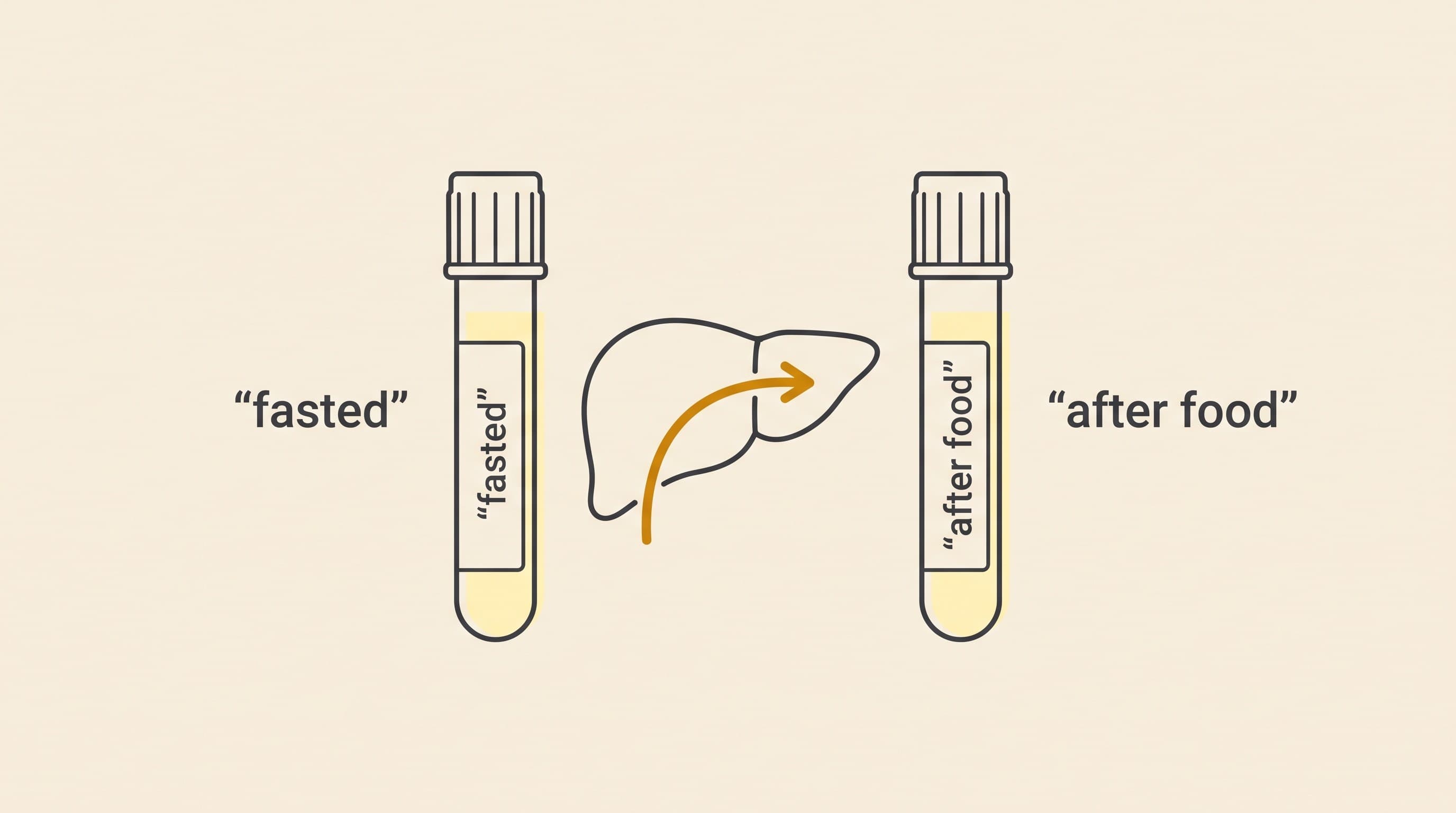
- Your dog is fasted, usually overnight, and the first blood sample is taken. This is the resting, pre-meal level.
- Your dog is given a small, fatty meal to trigger the gallbladder to contract and squeeze its stored bile acids into the gut.
- A second sample is taken roughly two hours later, capturing the peak as those bile acids are reabsorbed and pass back through the liver.
Two points are far more informative than one. The fasting sample is the quiet baseline; the post-meal sample is a deliberate stress test, asking the liver to handle a surge and seeing how well it copes. That's the "stimulation" in "bile acid stimulation test". It's also why your dog genuinely has to eat the meal. If they refuse it, the gallbladder doesn't contract, there's no surge to measure, and the second value can be misleading. Tell your vet if your dog is a fussy eater, because a picky patient can turn a clean test into an ambiguous one.
A quick, reassuring practical note: this is a blood test with a snack in the middle. There's no anaesthetic, no fasting for days, no scan. For most dogs it's a morning at the practice.
What the result tells you
Broadly, there are three ways this comes back.
Both values normal. This is the outcome you're hoping for, and it's genuinely good news. Normal fasting and post-meal bile acids tell you the liver is functioning well and blood is flowing through it properly. Combined with a well dog, this often means a raised enzyme can be watched and rechecked rather than chased with imaging.
A raised post-meal value. This points toward reduced liver function, abnormal blood flow, or both. In a young, small-breed dog, a markedly high post-meal result is the classic flag for a portosystemic shunt, an abnormal vessel routing blood around the liver instead of through it. In an older dog it more often nudges toward significant liver dysfunction that warrants a look at the structure. Either way, it's the natural bridge to the next rung, an ultrasound.
A borderline or mixed result. Bile acids aren't always tidy. Sometimes the fasting value is higher than the post-meal one, or a number sits just over the line. This doesn't mean disaster; it means the result needs interpreting alongside everything else.
I'm going to be deliberately careful about numbers here. The exact reference ranges depend on the individual laboratory and the units they use, so a value that's "high" at one lab may read differently at another. What matters is how your vet interprets your dog's result against your lab's range, not a threshold you read online. If you want to hold on to something concrete, it's this: a clearly normal paired result is reassuring, and a clearly high post-meal value means "let's image the liver", not "the worst has happened".
Where it sits on the ladder
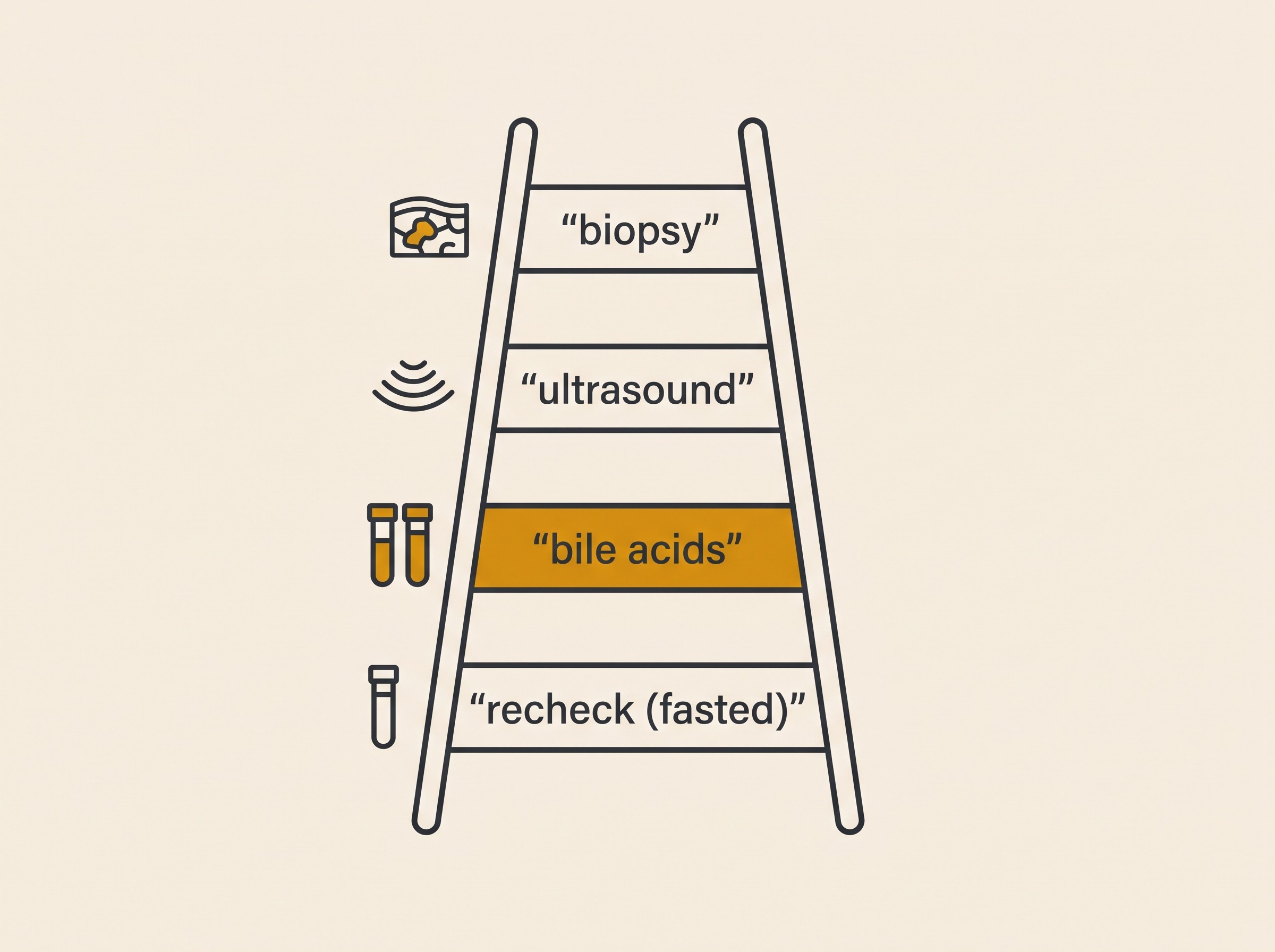
The liver workup is a ladder, and each rung answers a different question:
recheck the bloods (fasted) → bile acids → abdominal ultrasound → liver sampling (biopsy).
Bile acids sit on the second rung for a good reason. They're inexpensive and non-invasive, and they're the test that decides whether the pricier imaging is actually warranted. A normal result can let you and your vet step off the ladder with confidence. An abnormal one justifies the next step rather than leaving you paying for a scan on a hunch.
What bile acids will not do is name the disease. They can't tell you whether a liver has chronic hepatitis, copper accumulation or something else, they can't stage scarring, and they can't measure copper. That's a job for ultrasound (structure) and ultimately a biopsy (the microscopic answer). Our piece [From a blood test to a biopsy] walks the full ladder if you want to see the whole route.
The honest limits
A few things can nudge a bile acids result without meaning your dog's liver is in trouble, and it's fairer to tell you now than to let a wobbly number frighten you later.
- If the gallbladder happens to have already contracted before the fasting sample, or empties at an odd time, the two values can come out in an unexpected order.
- A very sick or upset gut, or delayed stomach emptying, can affect how bile acids are absorbed and timed.
- The test flags a problem; it doesn't diagnose the cause. A high result says "the liver's function or blood flow isn't right, look closer", not "here is what's wrong".
So a single borderline value isn't a verdict. It's one more piece of information your vet weighs alongside the clinical picture, the rest of the panel, and often a repeat or an ultrasound. Please don't let a marginal number send you back into the 11pm spiral.
Where this leaves you
If your dog's bile acids come back normal, that's a real weight off, and it often means a raised enzyme can be followed with rechecks rather than investigated further, exactly the calmer path we want most well dogs on. If they come back high, you haven't received a diagnosis, you've earned the next sensible step: an ultrasound to look at the liver's structure, and, in a young dog, a proper conversation about the possibility of a shunt (our piece [Liver shunts: surgery or medical management?] is there when you need it).
Whichever way it goes, this is a test worth doing. It turns "the enzymes are up and we don't know why" into either genuine reassurance or a clear direction, for the price of a morning and a snack. And once you have the result, log it in the Liver Values Tracker alongside the enzymes, because bile acids, like everything else here, mean more as part of a trend than as a single number on a single day.
References
- Bile acid stimulation testing (paired fasting and post-prandial samples) as an assessment of hepatic function and portal circulation in dogs and cats.
- Post-prandial sampling interval (commonly ~2 hours after a fatty meal) in the canine/feline bile acid stimulation protocol.
- Markedly elevated post-prandial serum bile acids as a sensitive indicator of portosystemic shunting.
- Laboratory- and assay-specific reference ranges for serum bile acids.
- Spontaneous gallbladder contraction and gastrointestinal factors as sources of variability in bile acid results.
- Webster CRL, Center SA, Cullen JM, et al. ACVIM consensus statement on the diagnosis and treatment of chronic hepatitis in dogs. *J Vet Intern Med.* 2019;33(3):1173-1200.
Free downloads
Companion worksheets to put what you've read into practice. Free PDFs, print at home.
Liver Values: A Serial-Labs Tracking Sheet
PDF · 224 KBA write-on sheet to line up repeat liver bloods over time (ALT, ALP, AST, GGT, bilirubin, albumin, bile acids) so you and your vet watch the trend, not a single number. Pairs with the Liver Values Tracker.
High Liver Enzymes: What They Mean (and Don't)
PDF · 245 KBThe calm one-pager on a raised liver result: enzymes are a sign not a diagnosis, ALT (damage now) versus ALP (often not the liver), the watch-versus-work-up rule, and the recheck to bile acids to ultrasound to biopsy ladder.
Keep track of how your pet is doing
The owners who cope best are the ones who notice changes early. A simple health log shows you what is working, and what is not, before the next vet visit.
Start tracking, freeYou're not doing this alone
Compare treatment journeys and talk to owners managing liver & gallbladder. Free to join.
Join PetsLikeMine